
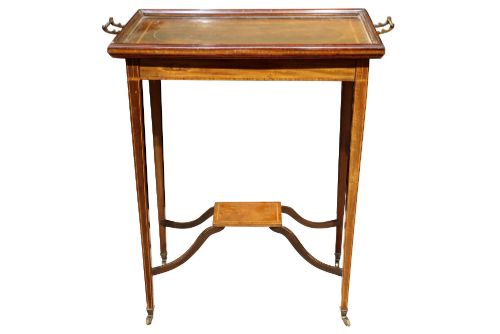
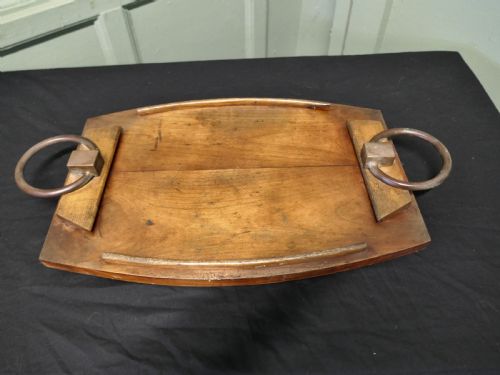
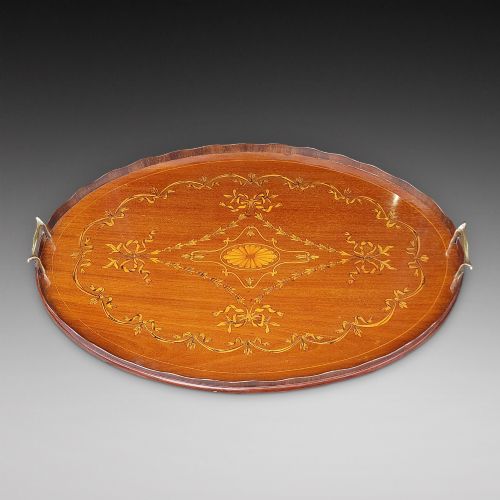
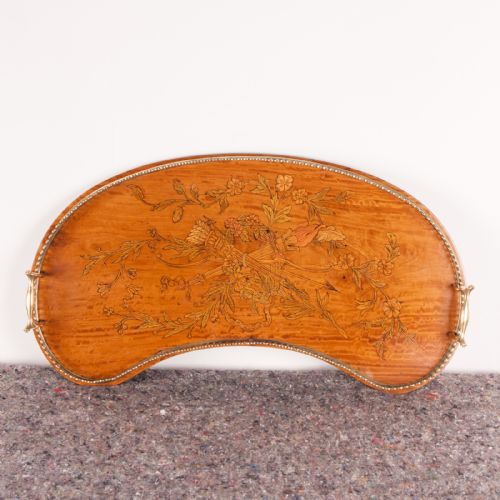


Edwardian Tray with Handles
An Edwardian tray with handles is a sturdy domestic server that brings period elegance to the table.
Edwardian Tray with Handles
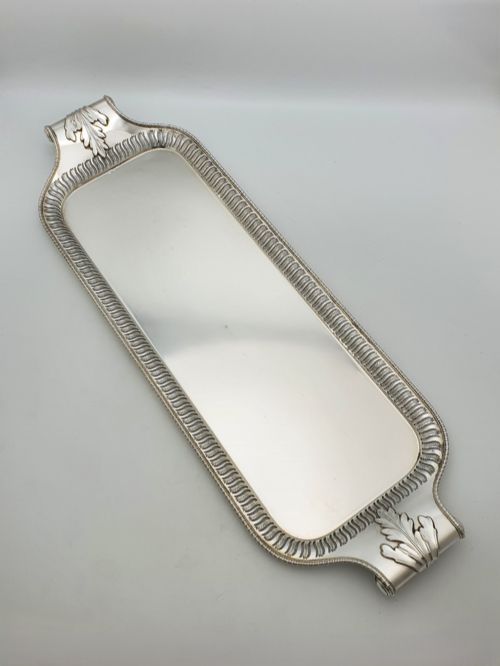
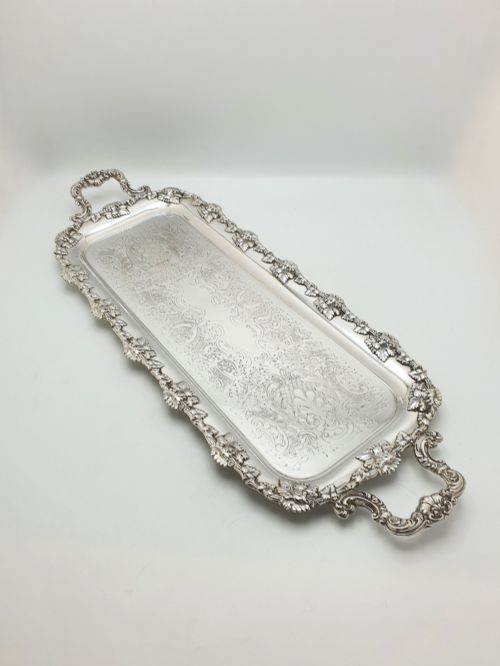
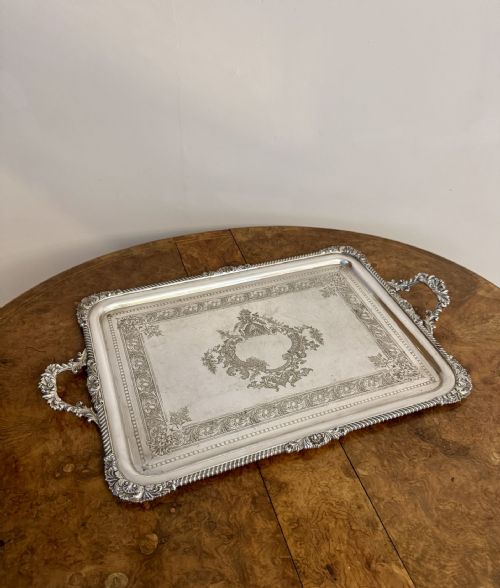
When searching for an edwardian tray with handles, buyers encounter server designs spanning from the 1900s into the 1920s, with Edwardian and Victorian influences prominent among the pieces. These objects appear primarily as serving trays, platters, and salvers intended for tea, cocktails, or general domestic service.
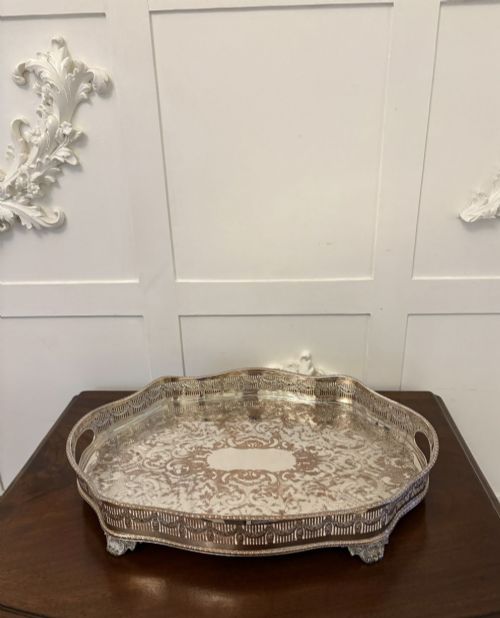
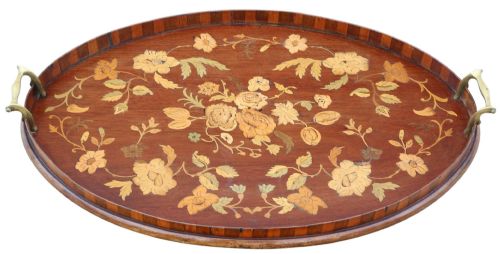
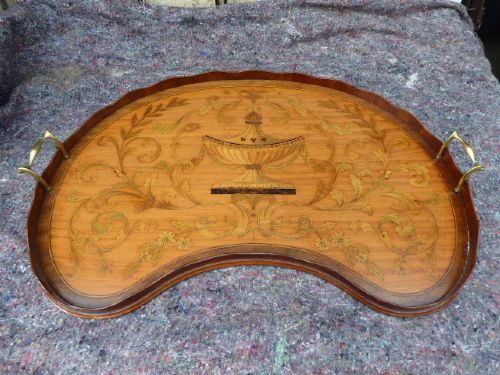
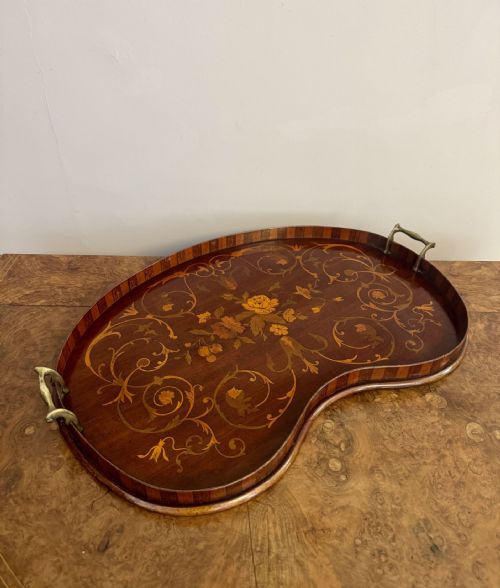
The selection on this page leans heavily toward silver-plated examples alongside timber constructions in mahogany, satinwood, and elm. Makers combined these metals and woods with brass galleries, inlaid marquetry, and glass liners to create functional surfaces equipped with integrated handles.
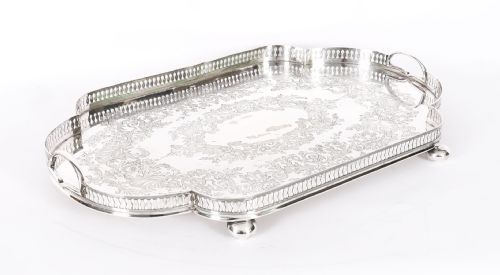
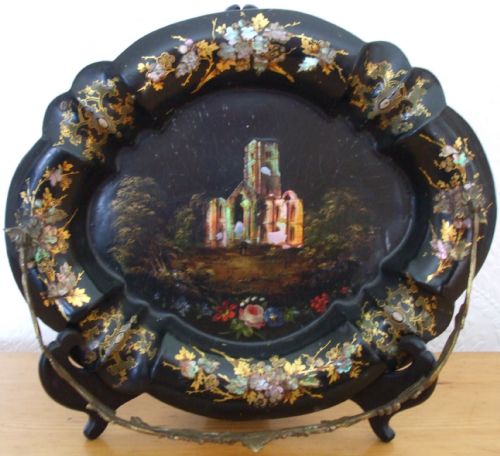
Alongside standard serving trays, the evidence includes ship's trays, cartographer's trays, and gallery trays featuring pierced or scalloped borders. These variations show that domestic service took multiple forms during the period, ranging from plain wooden transport to elaborate silver-plated display.
Materials and Construction
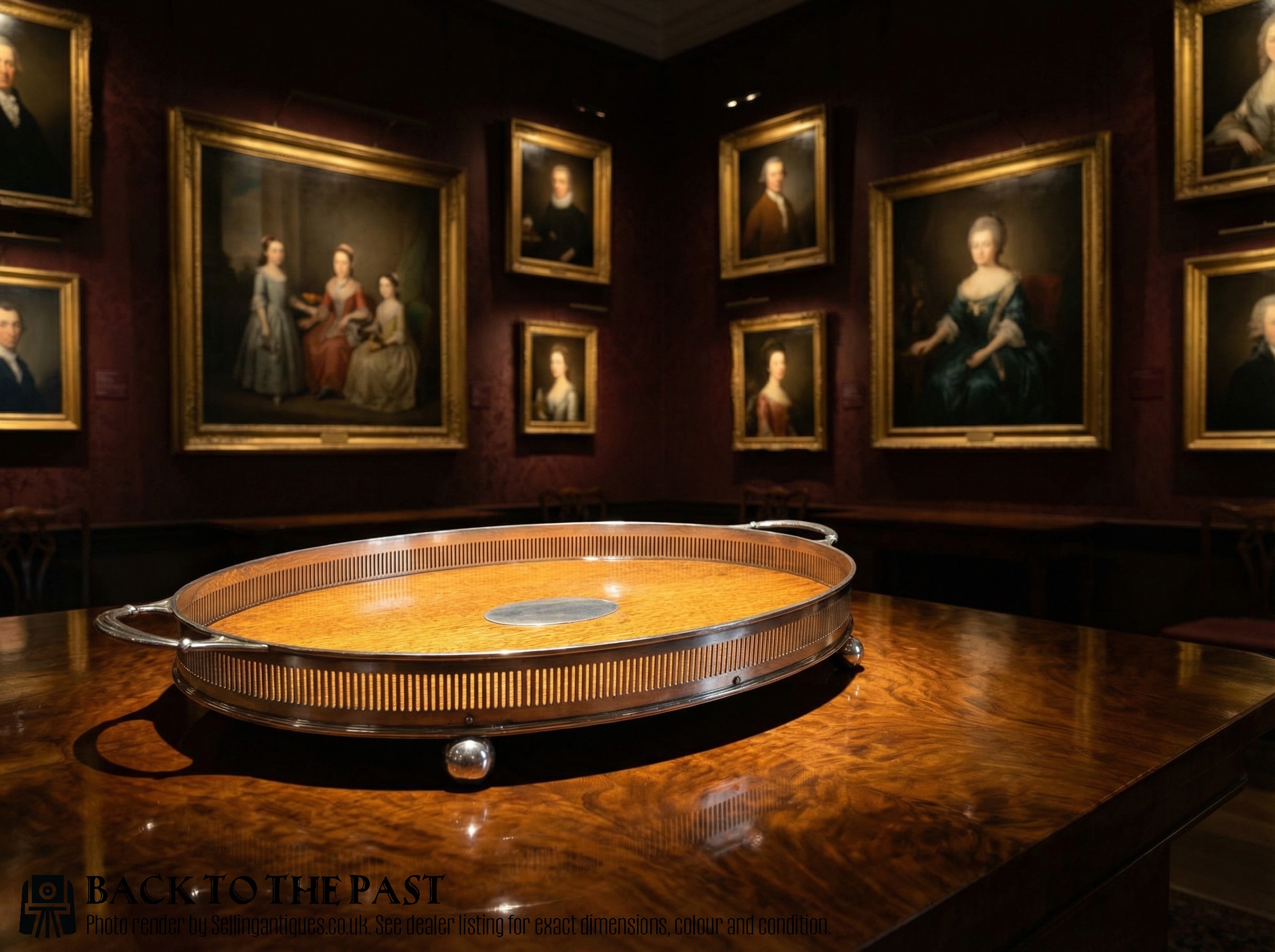
Silver plate and electroplated nickel silver form the metallic body of the majority of these servers, often applied over a base metal to provide a bright reflective surface. Artisans embellished these plates with hand-engraving, grapevine borders, and pierced galleries to lift the visual weight of the metal.
Wooden trays rely on solid mahogany, satinwood, and golden elm, frequently enhanced with marquetry or fine inlay work. Brass galleries and handles are secured to these wooden bases to contain glassware and decanters during transit.
Specialist items incorporate glass liners and ebonised finishes, pointing to modular production methods where metal frames house removable compartments. This combination of materials ensures the tray remains both decorative and practical for holding liquids and dishes.
The archive includes serving trays, gallery trays, salvers, and specialised items such as cartographer's trays and hors d'oeuvres dishes.
Evaluating Quality
The standard of a tray rests upon the crispness of its hand-engraving and the structural integrity of its gallery and handles. Finely cast brass borders and deep, sharp chasing on silver-plate distinguish superior items from plain production pieces.
In wooden examples, the precision of the marquetry inlay and the choice of timbers, such as figured mahogany or satinwood, dictate the standing of the piece. A tight joint between the wooden base and the raised rim indicates careful cabinetmaking.
The preservation of the original surface plating and the secure mounting of handles reveal how well a piece has survived decades of service. Uniform wear across the silver layer and firmly attached galleries demonstrate authentic period usage without compromising stability.
German WMF·Newlyn Arts & Crafts
The Edwardian Tray with Handles Glossary
- Gallery tray
- A serving tray fitted with an upright pierced or solid metal border designed to prevent items from sliding off the edge. This raised rim often incorporates integrated handles for secure lifting.
- Marquetry
- Decorative veneer work arranged in geometric or pictorial patterns across a wooden surface. Craftsmen used contrasting timbers to build up elaborate designs on the tray base.
- Electroplated nickel silver
- A base metal alloy coated with a layer of pure silver through an electrolytic process. This technique allowed manufacturers to produce durable silver-finished items efficiently.
- Jugendstil
- The continental European counterpart to the Arts and Crafts movement, characterised by flowing organic lines. Pieces in this style often display stylised floral motifs.
- Salver
- A flat metal plate or tray used for serving food or drinks. They frequently stand on small feet or feature decorative borders.
Edwardian Tray with Handles: Frequently Asked Questions
How do I clean a silver plated tray?
Use a soft cloth and a gentle cleaning agent formulated specifically for silver plate to preserve the metallic surface. Avoid harsh abrasives that can wear away the thin silver layer over the base metal.
Dry the tray thoroughly after cleaning to prevent water spotting and tarnishing. Regular, light polishing maintains the brightness without damaging hand-engraved details.
Were these trays used only for tea?
While many served tea and afternoon refreshments, surviving examples also function as cocktail trays, decanter stands, and cartographer's platters. Their raised borders and sturdy handles accommodated various domestic tasks.
Specialist pieces like hors d'oeuvres dishes with glass liners handled food service directly. The presence of gallery rims and compartments dictated the specific use of each server.
How can I tell Edwardian from Victorian trays?
Edwardian trays often lean toward lighter satinwood timbers, delicate marquetry, and restrained neoclassical or Arts and Crafts motifs. Victorian pieces tend to feature heavier silver plating, dense engraving, and darker mahogany or oak.
Overlap in styles occurs because production methods continued across the turn of the century. Examining the combination of woods, metalwork techniques, and border designs helps clarify the period of manufacture.
Can I use these trays for daily service?
Most solid timber and silver-plated trays remain robust enough for regular handling and serving drinks. The sturdy construction of their handles and galleries supports the weight of glassware and decanters.
Care should be taken with pieces featuring delicate inlay or fragile glass liners to prevent accidental damage. Storing them on flat surfaces protects the joints and the base materials from unnecessary strain.