
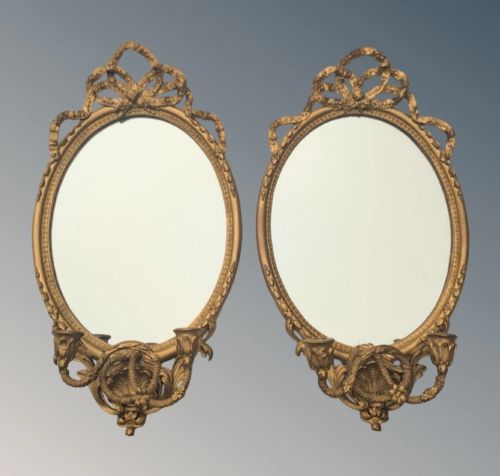
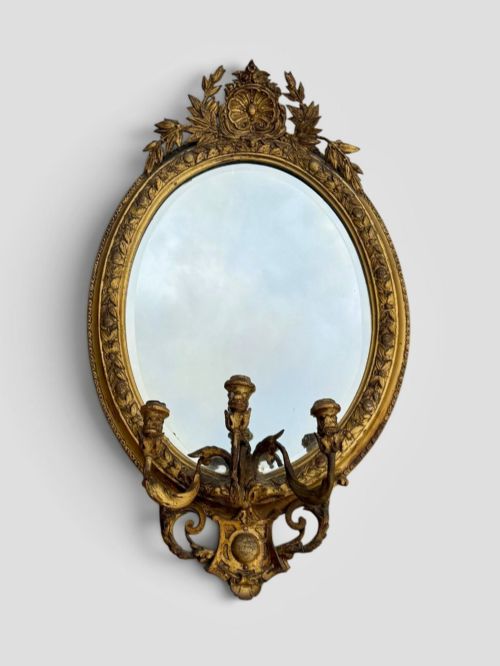
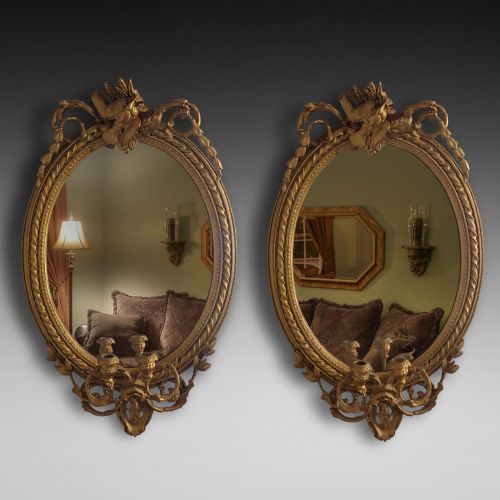

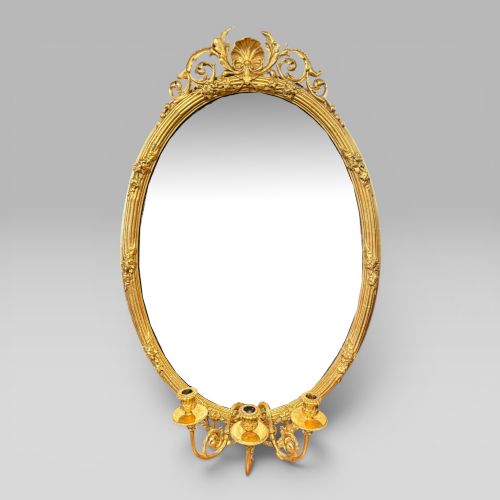


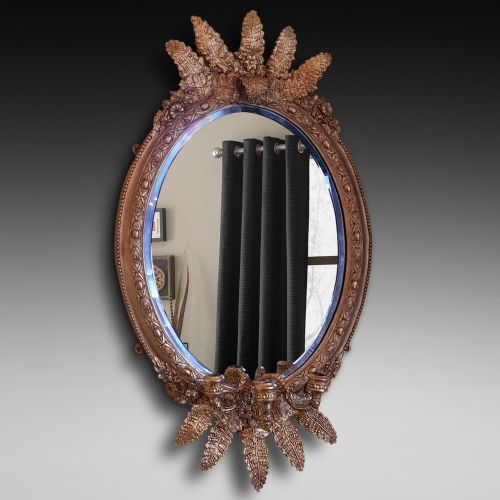
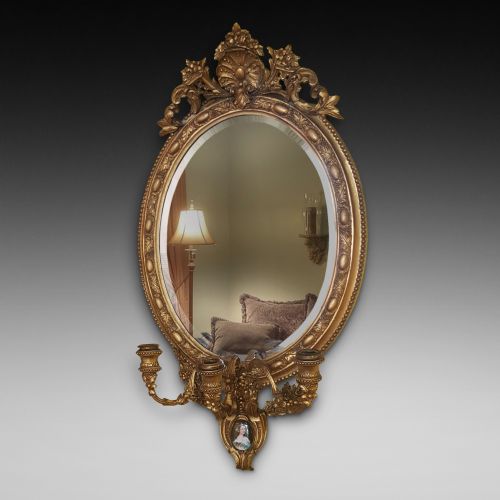

Oval Sconce Mirror
These oval sconce mirror examples combine glass with integrated candle holders, bringing period illumination and reflection to a room.
Oval Sconce Mirror
When you search for an oval sconce mirror, you are looking at wall-hanging reflective pieces that incorporate candle arms, often referred to as girandoles in the trade. The versions most commonly met on this page span the Victorian and 19th-century periods, alongside examples from the 18th century up to the early 20th century.
The primary forms take an oval format designed for wall mounting, frequently incorporating single or multiple candle branches extending from the lower frame. These pieces originate from various historical styles including Victorian Rococo Revival, Neoclassical, Belle Epoque, and French Chateau aesthetics.
Materials and construction
The frames rely heavily on carved giltwood and moulded gesso applied over a wooden base, creating ornate surfaces that catch the light. Gilt brass, metal, and porcelain also appear as primary structural and decorative materials across the inventory.
Makers integrated glass plates with original fittings and candle sconces, utilising techniques such as rope twist carving and applied gilding to achieve the finished ornamental effect.
Listings feature Victorian, 19th-century, and early 20th-century pieces, utilising materials such as giltwood, gesso, porcelain, and brass.
Assessing quality in period sconce mirrors
The distinction between standard examples and finer pieces lies in the depth and crispness of the carving within the giltwood and gesso frames. Relief work that retains sharp definition and subtle hand-applied detail indicates superior craftsmanship.
The integration of the sconce arms relative to the main oval frame demonstrates the maker's structural ambition. Surviving original fittings and bevelled glass plates further elevate the integrity of a piece.
The Oval Sconce Mirror Glossary
- Gesso
- A plaster-like material applied to wood frames and carved or moulded into intricate decorative patterns before gilding. It provides the detailed relief work seen on period frames.
- Giltwood
- Timber that has been coated with a thin layer of gold leaf or gilt paint. This finish offers a bright, reflective surface that complements the mirror glass.
- Rococo Revival
- A design style popular during the 19th century characterised by asymmetrical scrolls, naturalistic plant motifs, and ornate, flowing lines. It appears frequently on Victorian mirror frames.
Oval Sconce Mirror: Frequently Asked Questions
Where should I hang an oval sconce mirror?
These mirrors suit principal reception rooms or hallways where wall space allows the piece to function as a focal point. They were historically positioned to reflect and amplify the light from candles or oil lamps.
Ensure the wall construction supports the weight of giltwood and gesso frames, particularly when candle branches extend outward from the glass.
How do I date a sconce mirror?
Dating relies on examining the framing style, the characteristics of the wood or gesso, and the manufacturing methods of the glass plate. Rococo Revival ornamentation and specific gilding techniques often point toward the Victorian era.
Checking for original backing boards, fixings, and candle fittings provides further confirmation of the period of manufacture.
Can I still burn candles on the sconces?
While the sconces were originally built to hold candles for additional illumination, modern use often treats them as decorative elements. Burning candles requires caution to protect the surrounding gilt frame and gesso from heat and wax drips.
If you choose to use candles, select appropriate drip-free varieties and monitor them closely while lit.
What is the difference between a mirror and a girandole?
A standard wall mirror serves solely for reflection, whereas a girandole specifically incorporates integrated candle branches or sconces into its design. The term is frequently used interchangeably for these mirrored sconce combinations.
Both forms appear across Victorian, Neoclassical, and Belle Epoque styles in oval formats.