

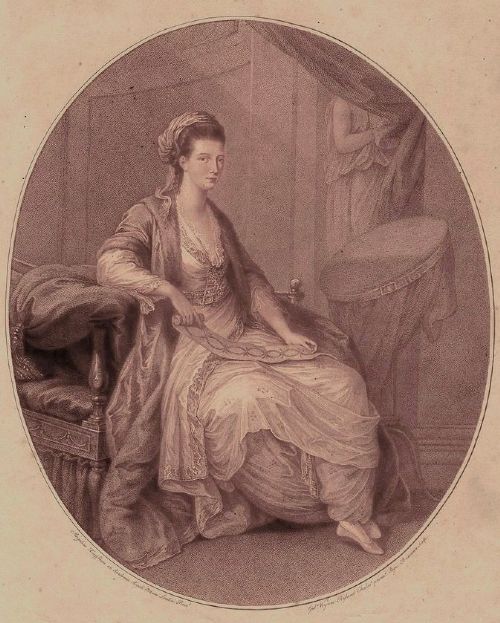
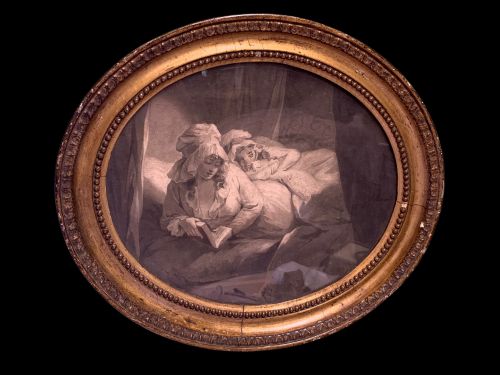
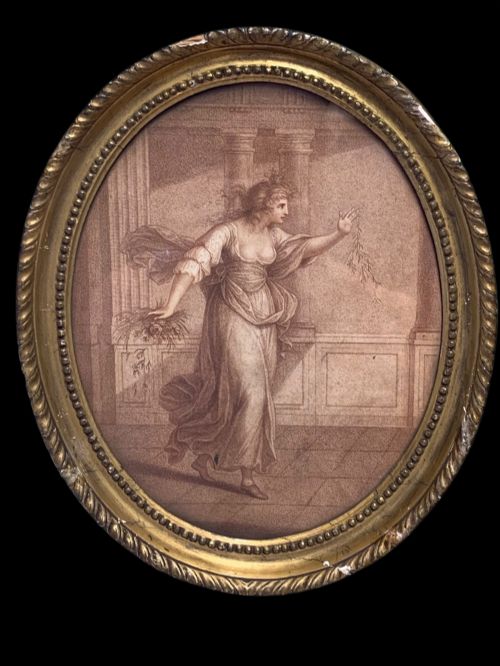
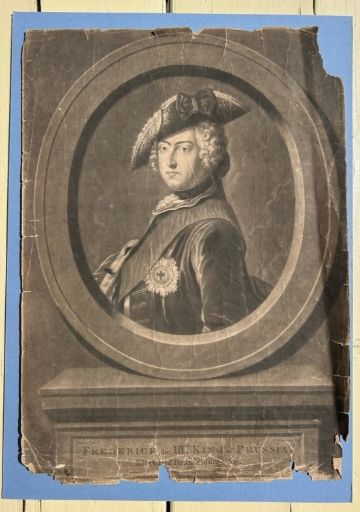

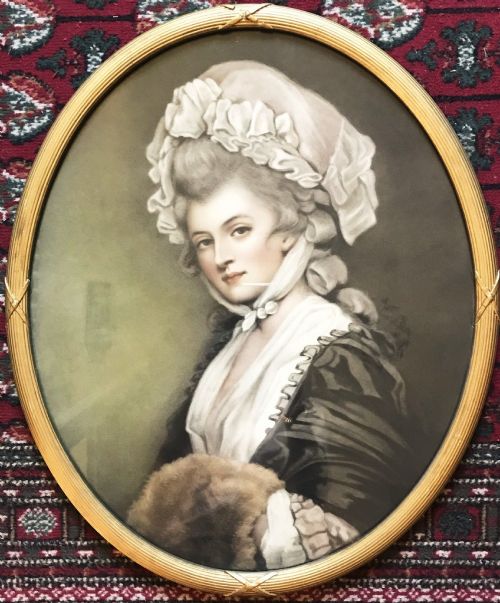
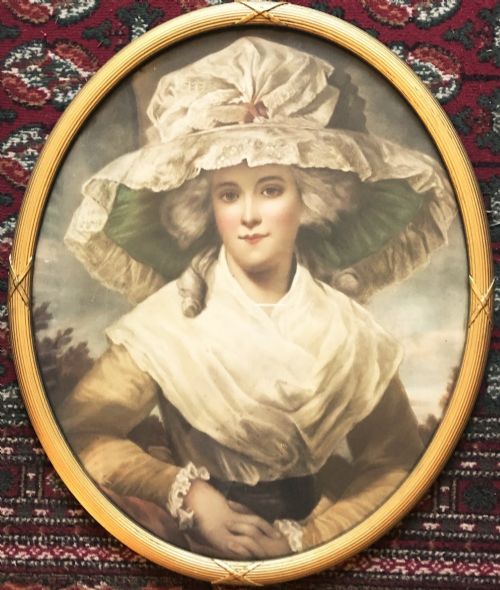
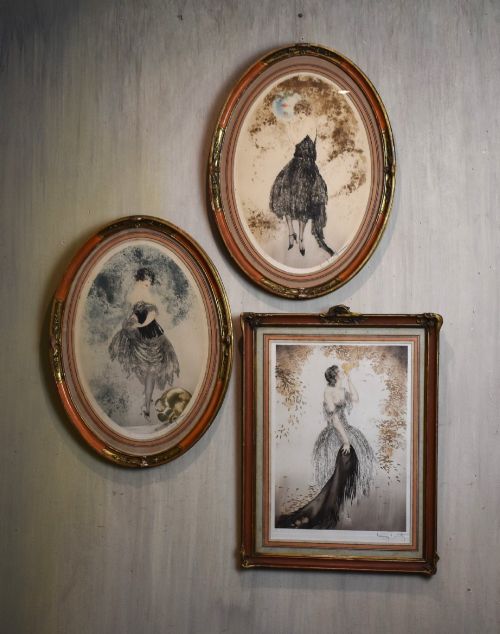


Oval Portrait Print
An oval portrait print brings historic likenesses into modern rooms through traditional framing.
Oval Portrait Print
An oval portrait print captures historical figures, nobility and ladies in framed wall art spanning the eighteenth, nineteenth and early twentieth centuries. These pieces appear as engravings, mezzotints, stipple-engravings and hand-coloured works housed in period wooden and gilt frames.
The selection here encompasses eighteenth-century royal engravings, Regency depictions of naval officers, Edwardian mezzotints and later twentieth-century impressions. Buyers encounter both single framed works and matched sets portraying royalty, children and romantic subjects.
Makers and artists referenced include John Smith, Richard Houston, Jacobus Houbraken, Sir Thomas Lawrence, Hans Holbein, Bartolozzi, Louis Icart and Élisabeth Louise Vigée Le Brun. The primary forms combine paper prints behind glass with protective wooden or giltwood surrounds.
How they were made
Printmakers utilised paper, ink and sometimes hand colouring to create the portraits, employing techniques such as line engraving, mezzotint and stipple-engraving. These impressions often replicate earlier oil paintings by notable artists.
The frames rely on wood, giltwood, brass and gold leaf, occasionally featuring gilded gesso or dome-fronted glass to protect the paper within the oval aperture. Materials reflect Georgian, Regency, Victorian and Edwardian manufacturing traditions.
Listings feature paper, glass, wood, giltwood and brass materials across eighteenth, nineteenth and twentieth-century periods.
What varies in quality
Quality rests upon the crispness of the ink impression upon the paper and the fidelity of the print technique to the original painting. Early eighteenth-century plates and skilled stipple work display finer detail than later reproductions.
The integrity and age of the surrounding frame contribute substantially to the piece. Original period giltwood and dome-fronted glass housings distinguish superior examples from later replacements.
The Oval Portrait Print Glossary
- Stipple-engraving
- A printmaking technique using dots to render tonal gradations and flesh tones. This method was frequently employed in the eighteenth century for portraits.
- Mezzotint
- A print process where the plate is roughened to achieve deep darks and subtle tonal variations. It produces soft, painterly portrait effects.
- Giltwood
- Wood carved and coated with gold leaf or metallic paint. It frames many Georgian and Victorian works.
- Portrait miniature
- A small-scale likeness executed with fine detail. These hand-coloured pieces often date from the Regency era.
- Line engraving
- An intaglio print method using sharp lines cut into a metal plate. It yields clear, precise outlines of historical subjects.
Oval Portrait Print: Frequently Asked Questions
How should I hang an oval portrait print?
Hang these pieces at eye level where the curve of the frame complements nearby furniture or architectural mouldings. Ensure they stay clear of direct sunlight to protect the paper and ink.
Pairing a single portrait with smaller framed prints or grouping a set creates a balanced wall display without overcrowding the room.
Are these prints original to their frames?
Many listings preserve their period timber or giltwood surrounds, which often date from the same century as the paper within. Examining the backboards and fixings reveals how long the print and frame have lived together.
Original dome-fronted glass and historic gesso frames add context to eighteenth and nineteenth-century works.
How do I identify the period of a print?
Look to the print technique, paper ageing, and costume details of the sitter to gauge the era. Eighteenth-century examples frequently utilise line engraving or mezzotint, while Edwardian and later pieces show distinct publishing styles.
Frame styles also offer clues, shifting from Georgian simplicity to ornate Victorian and Edwardian gilding.
Can I clean the glass on these frames?
Wipe the glass gently with a dry microfibre cloth, avoiding any liquid sprays that might seep beneath the rim and damage the paper print inside. Old glass requires careful handling.
Leave the internal paper and backing undisturbed to preserve the integrity of the antique assembly.