
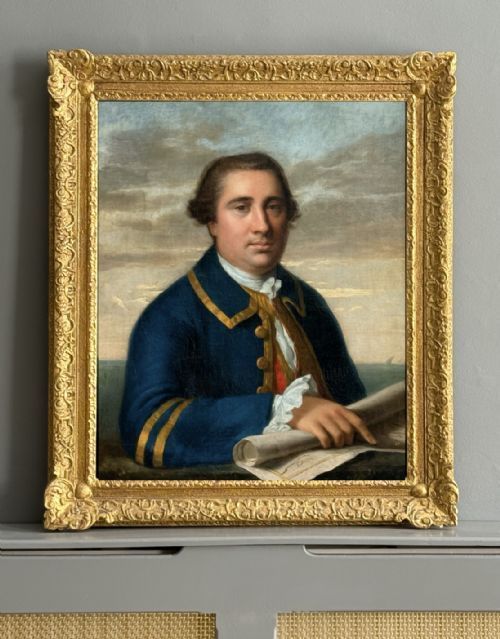
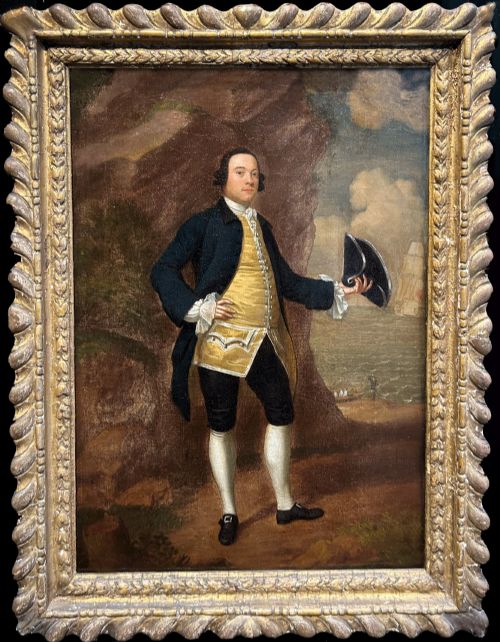


Georgian Naval Portrait
A georgian naval portrait captures the resolute gaze of officers who commanded wooden ships through turbulent seas.
Georgian Naval Portrait
A georgian naval portrait depicts sea captains, admirals, and privateers who served during the eighteenth and nineteenth centuries. These works record the physical likeness and rank of naval figures through formal oil paintings and intimate miniatures.
The versions met most frequently on this page range from full oil on canvas works from the eighteenth century to delicate portrait miniatures rendered on agate panels or paper. Styles span the Georgian and Regency periods, reflecting the maritime dominance of Britain during those eras.
Collectors encounter subjects wearing distinct naval jackets and orders, often attributed to notable portraitists of the period. Each piece serves as a visual record of naval history, preserving the countenance of commanders from the age of sail.
Materials and Technique
Artists relied primarily on oil paint applied to stretched canvas, building up rich dark tones to contrast with the crisp white collars and gold-laced jackets of naval uniforms. Pigments were worked with fine brushes to capture the texture of wool, brass buttons, and epaulettes.
Miniature works utilised alternative supports such as agate panels, enamel, and paper, framed sometimes in gold or giltwood. Watercolour and engraving techniques also recorded naval officers, requiring precise line work and careful application of pigment on a smaller scale.
Listings feature works spanning the eighteenth century through to the nineteenth century, executed in oil on canvas, watercolour, and enamel.
Assessing Quality and Execution
Provenance and attribution elevate certain works, particularly those linked directly to documented artists or depicting named admirals and captains. The integrity of the original canvas, frame, and medium preservation significantly influence the standing of each piece.
Lemuel Francis Abbott·Francis Hayman·Henry Bone ARA·John Simmons·Sir Thomas Lawrence PRA·George Frederick Clarke·Samuel Lane·Sir William Charles Ross·Robert Ker Porter·Ambrosini Jerome
The Georgian Naval Portrait Glossary
- Oil on Canvas
- Pigment mixed with drying oil applied to a woven fabric support stretched over a wooden frame. This primary medium allows for deep colour saturation and gradual tonal blending.
- Portrait Miniature
- A small, highly detailed painting created for personal display or intimate keeping. These works frequently utilised enamel, ivory, or agate panels.
- Giltwood
- Wood carved and coated with a thin layer of gold leaf or gold paint. Frames of this material often accompanied significant fine art portraits.
- Privateer
- A privately owned vessel or its captain commissioned by state government to carry out hostile operations. Portraits of privateers record irregular naval service.
- Regency
- The period in British history from 1811 to 1820, characterised by distinct artistic and architectural styles. Items from this era often display refined classical influence.
Georgian Naval Portrait: Frequently Asked Questions
What is a naval portrait?
A naval portrait is a painting, engraving, or miniature depicting an officer or captain who served in maritime military forces. These artworks document the appearance, dress, and status of sea commanders during historical conflicts.
Most examples date from the eighteenth and nineteenth centuries, capturing subjects in formal naval uniforms complete with brass buttons and decorations.
How were portrait miniatures painted?
Portrait miniatures required exceptionally fine brushes and steady hands to apply oil, watercolour, or enamel onto compact surfaces like paper, enamel, or agate. Artists worked under strong light to achieve minute facial details.
These small pieces were designed for close viewing and often housed in protective gold or giltwood frames.
How do I identify a Regency period piece?
Regency items align with the early nineteenth century and typically exhibit cleaner classical lines and leaner silhouettes in portraiture compared to earlier Georgian excesses. Uniform styles and hairstyles of the sitters also shift to reflect the fashion of the 1810s.
Examination of the materials, backing, and framing often provides additional clues to the exact era of production.
Where should I hang an oil painting?
Oil paintings on canvas require stable environmental conditions away from direct sunlight, high humidity, and extreme temperature fluctuations. Consistent indoor climates prevent the canvas from sagging and the paint from cracking.
Displaying these works on interior walls ensures the pigments and original frames remain well preserved for years.