


Oval Painted Table
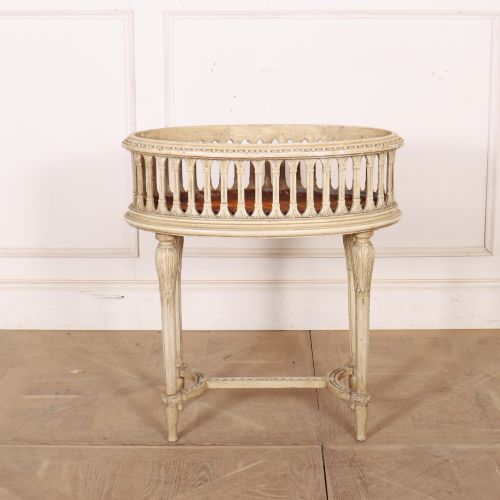
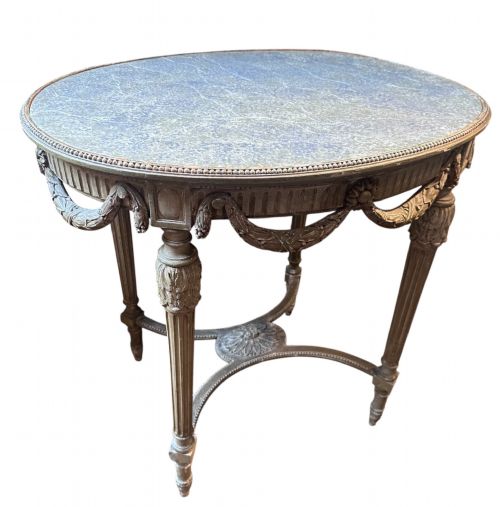
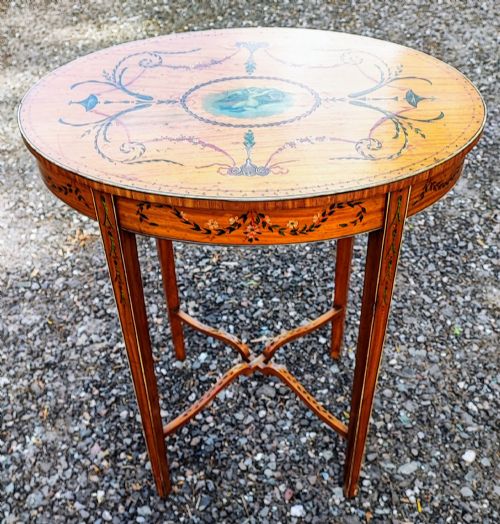
An oval painted table brings delicate surface decoration and graceful curves to a room, ranging from Edwardian satinwood to French Louis XVI revival forms.
Oval Painted Table
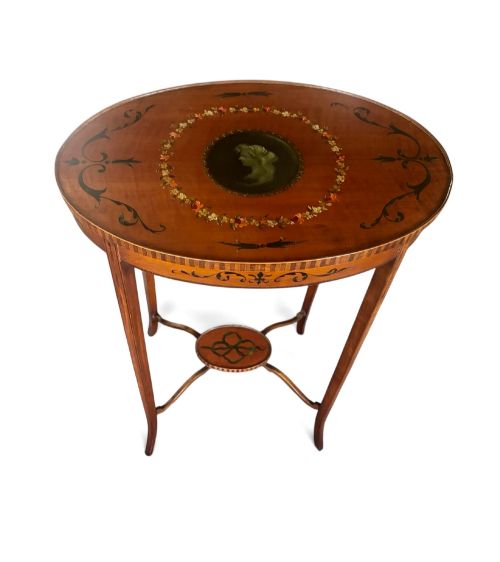
When someone searches for an oval painted table, they encounter a variety of decorative surfaces applied to timber frames. The most common examples on this page are Edwardian and nineteenth-century occasional, centre, and bedside tables.
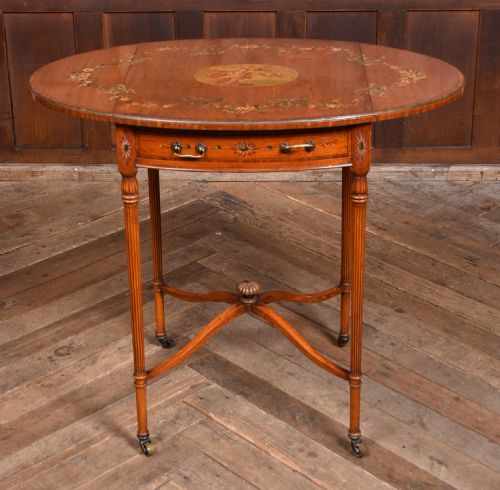
These items take several functional forms, including Pembroke tables, lamp tables, and drop-leaf designs. Makers combined soft woods and hardwoods with hand-painted floral, neoclassical, or chinoiserie motifs.
Origins span English satinwood pieces to French Louis XVI style works and Swedish drop-leaf gateleg tables. Their shared characteristic is the curved top adorned with decorative paintwork rather than plain polished grain.
How they were made
Construction relies on timber foundations such as satinwood, mahogany, and general painted wood, often shaped into curved frames. Artisans built occasional and centre tables using traditional joinery before preparing the surfaces for decoration.
Decoration involved hand-applied paint, sometimes paired with parcel gilding, trompe l'oeil, or floral motifs. Certain pieces integrated inset marble tops, brass fittings, or cane lower tiers to complement the painted woodwork.
Several pieces feature trompe l'oeil details designed to trick the eye into seeing inlaid wood where only paint exists.
What varies in quality
The distinction between standard examples and finer pieces lies in the crispness and preservation of the hand-painted decoration. Tables retaining original, untouched painted surfaces on satinwood hold greater artistic merit than later or heavily restored finishes.
Structural refinement also defines the tier, from simple bedside variants to elaborate Sheraton Revival or Louis XVI style centre tables with detailed Neo-Classical scenes. The integration of materials like genuine marble tops and brass mounts elevates the standard of the piece.
The Oval Painted Table Glossary
- Satinwood
- A durable, yellowish timber often used as a smooth canvas for fine painted decoration on Edwardian and Georgian tables.
- Pembroke table
- A small occasional table with hinged drop leaves on either side, useful for compact spaces.
- Sheraton Revival
- A late nineteenth-century design movement inspired by eighteenth-century neoclassical furniture, frequently featuring painted satinwood.
- Chinoiserie
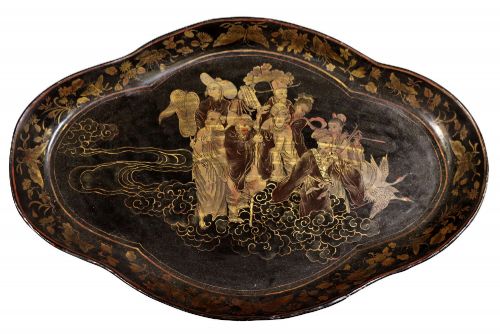
- European decorative style reflecting Chinese artistic motifs, often applied in painted gold and colours on dark or light lacquer grounds.
- Ormolu
- Gilded bronze mounts applied to furniture edges and legs, commonly seen on French revival pieces.
Oval Painted Table: Frequently Asked Questions
Where should I place an oval painted table?
These tables suit hallways, drawing rooms, or bedrooms as lamp, side, or bedside tables where their decorative tops can be seen.
Because of their curved profiles, they fit well beside sofas or in corners without blocking movement.
How do I care for the painted surface?
Dust gently with a dry, soft cloth and avoid chemical polishes that can damage aged paint.
Keep them away from direct sunlight and excessive moisture to preserve the delicate pigments.
Are these tables sturdy enough for daily use?
Most occasional and centre tables are built for light display purposes, such as holding lamps or small decorative items.
Heavier items should be avoided to protect the joints and the painted top from wear.
How can I tell an Edwardian piece from an earlier one?
Edwardian painted satinwood pieces often feature lighter wood frames and bright floral or neoclassical garlands characteristic of the revival period.
Georgian and early nineteenth-century examples tend to display heavier timber construction and different patination.