
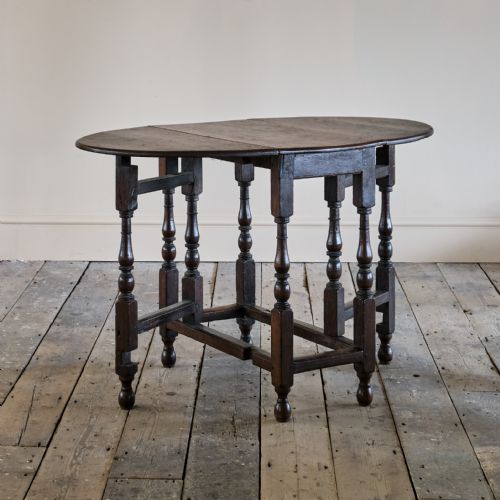


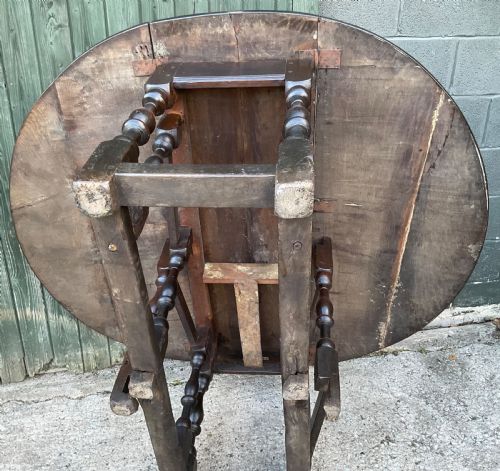


Oval Oak Drop Leaf
An oval oak drop leaf table offers a practical surface that folds away neatly when not in use.
Oval Oak Drop Leaf
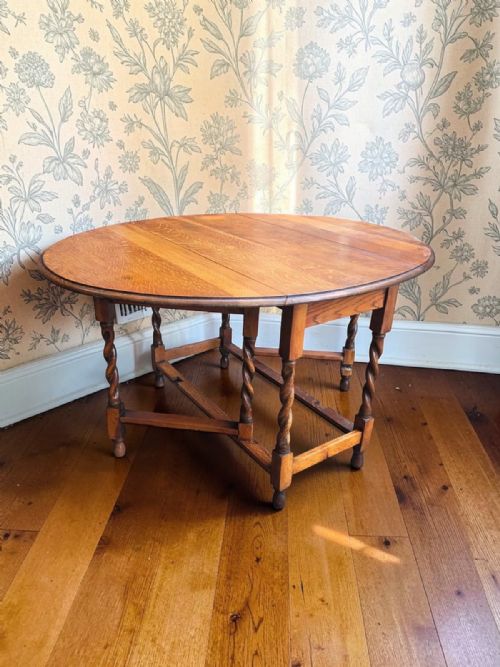
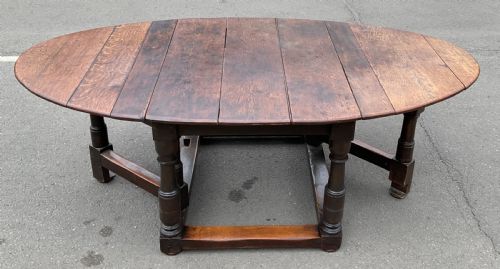
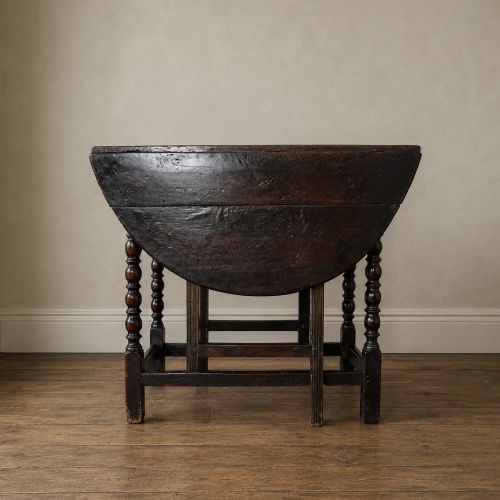
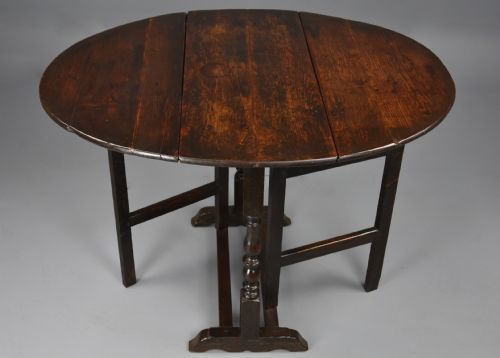
When searching for an oval oak drop leaf table, buyers encounter formats ranging from compact coffee tables to large dining tables designed to seat six or more people. The most common examples on this page are gateleg dining tables originating from the 17th and 18th centuries, alongside later revivals from the early 20th century.
Smaller versions function as occasional or side tables, while larger pieces serve as principal dining furniture. Construction styles span traditional English country pieces to revival pieces incorporating 17th-century details such as bobbin or barley twist supports.
Quality Markers
Quality in an oval oak drop leaf table rests in the proportion of the timber and the integrity of the gateleg action. Tables with sturdy structural joints, uniform turning on the legs, and well-fitted leaves demonstrate superior cabinet work.
The depth of the surface patina and the use of solid oak throughout the frame rather than mixed timbers distinguish finer examples from standard workshop production. Proportion also plays a role, with smaller, well-balanced proportions often commanding attention.
The Oval Oak Drop Leaf Glossary
- Gateleg table
- A table with hinged leaves supported by one or more legs that swing out like a gate.
- Drop leaf
- A tabletop featuring movable flaps that fold down when the supporting brackets or legs are tucked away.
- Patina
- The surface sheen and colour developed on wood over many years through handling and polishing.
- Barley twist
- A decorative turning style resembling a spiral rope, popular in 17th-century furniture and later Edwardian revivals.
Oval Oak Drop Leaf: Frequently Asked Questions
How do I seat six people at a drop leaf table?
Raise both hinged leaves on either side of the central fixed top to create a full oval surface. Swing the pivoting gatelegs outward firmly until they lock beneath the extended flaps to support the weight.
Arrange chairs around the perimeter of the extended table, ensuring the swung legs do not obstruct legroom for diners. When the meal finishes, clear the surface, fold the leaves down, and tuck the legs back into place.
What is the difference between a gateleg and a wake table?
A gateleg table utilises pivoting legs attached to a central frame to support drop leaves on one or both sides. This mechanism allows a large surface to fold down into a narrow profile.
A wake table is typically a larger variant designed to seat many guests, often featuring additional legs to support long oval leaves. Both forms utilise oak timbers, but wake tables generally offer greater length and capacity.
Can I use an antique drop leaf table every day?
Solid oak construction provides the durability required for daily domestic use in kitchens or dining rooms. The robust timber resists normal wear when protected from excessive moisture and heat.
Operate the folding leaf mechanism with care to avoid straining the original hinges and wooden joints. Regular polishing helps maintain the protective surface sheen against daily spills.
How do I date an antique oak table?
Examine the construction methods, tool marks, and turning styles visible on the legs and frame. 17th-century pieces often display hand-split timber, pegged joints, and heavy bobbin or barley twist turnings.
Compare the timber colour, hardware types, and overall proportion with documented examples from periods such as the Georgian era or later 20th-century revivals.