




Oval Mantel Clock
An oval mantel clock brings curved glass and polished brass to a shelf, offering a softer silhouette than traditional rectangular timepieces.
Oval Mantel Clock
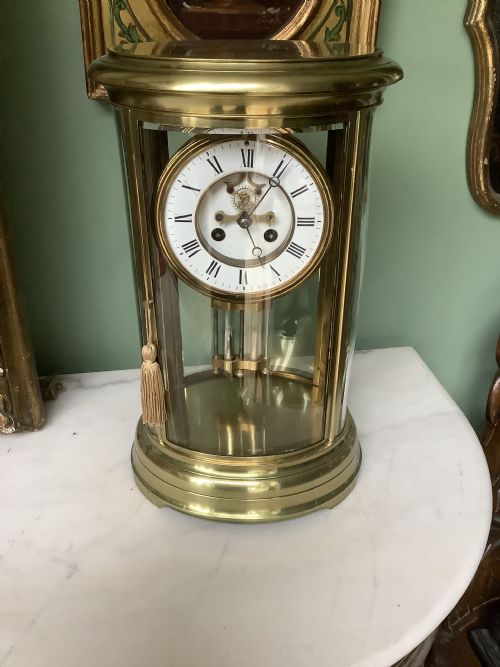
An oval mantel clock is a domestic timepiece housed within a rounded or curved housing, designed to stand upon a fireplace shelf or table. The examples found here span the Victorian, Edwardian, and Art Deco periods, encompassing both British makers and French workshops.
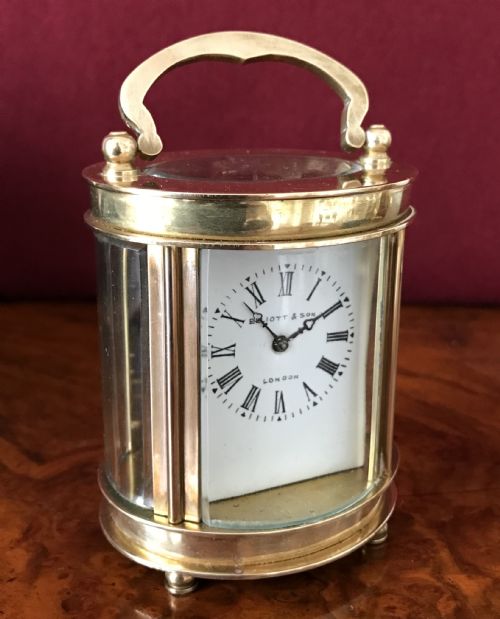
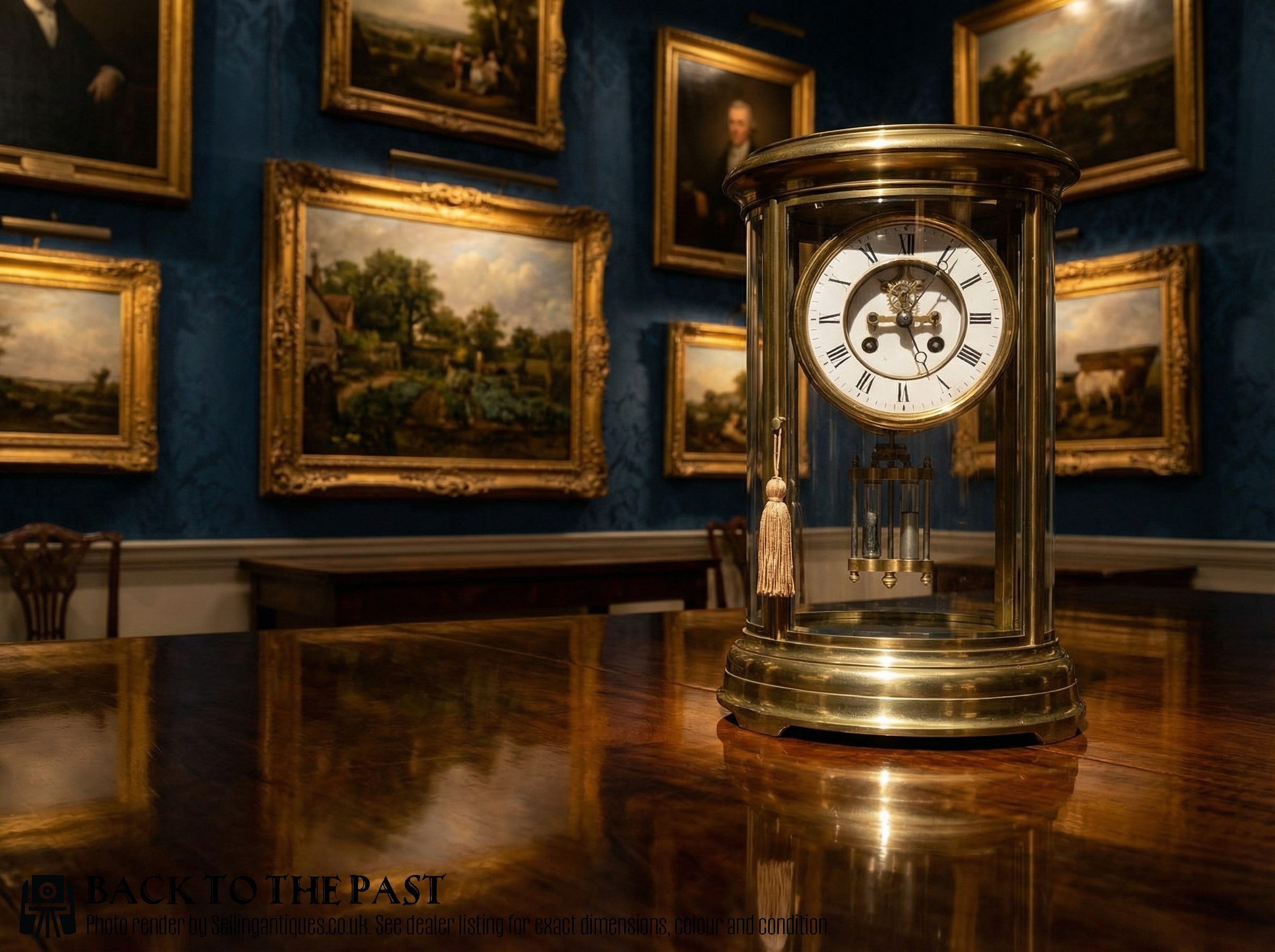
The dominant forms on this page divide into two main styles: the four glass clock, which reveals the movement from all sides, and the brass-framed carriage clock with an oval glass casing. These pieces range from miniature travel models to large bracket clocks intended for prominent domestic display.
French manufacture strongly represents this category, particularly through pieces bearing the signatures of makers such as Ad Mougin, Richard and Co, and Claude Grivolas. Alongside these, British retailers and Sheraton inlaid wooden designs appear, showing how different cabinetmakers adapted the curved format.
What varies in quality
Quality in these clocks rests upon the crispness of the brass casting, the thickness and bevel of the glass panels, and the refinement of the dial work. Finer movements include striking trains, repeater mechanisms, or torsion systems that demonstrate advanced clockmaking skill.
The integration of decorative elements such as cloisonne enamel, fine gilding, or signed backplates by makers like Howell & James elevates certain pieces above standard production models. The weight of the metal and the precision of the case fit separate the finest domestic examples from simpler variations.
Oval Mantel Clock Retail Price Guide 2026
Typical asking prices for oval mantel clock among the pieces listed under this phrase on Sellingantiques today, from the lower quarter to the upper quarter. They describe what is for sale here now, not the wider market.
Several miniature models were made small enough to travel inside a fitted leather case, keeping time while bouncing across Europe in a Victorian railway carriage.
Howell & James·Ad Mougin·Richard and Co Paris·Claude Grivolas
The Oval Mantel Clock Glossary
- Four glass clock
- A mantel clock housed in a glazed brass frame that allows light to pass entirely through the movement. This style gained popularity during the late nineteenth century.
- Carriage clock
- A portable timepiece originally designed for travelling, featuring a carrying handle and a glass-panelled brass case. Many oval variants were produced in France for the export market.
- Repeater
- A mechanism in a clock that chimes the hours and quarters upon demand when a lever or button is pressed. This complication was favoured in better quality travel and mantel pieces.
- Torsion clock
- A timepiece controlled by a slow-rotating pendulum suspended on a thin strip of metal, often known as a 400-day clock. These movements appear inside glass-domed or glazed oval cases.
- Cloisonne
- An ancient decorative technique where metal wires form raised barriers on a surface, creating compartments filled with enamel paste before firing.
Oval Mantel Clock: Frequently Asked Questions
How do I wind an oval mantel clock?
Most of these clocks utilise a key inserted into specific arbors on the dial or movement backplate to tension the mainspring. Care must be taken not to overwind the mechanism once resistance is felt.
Striking and repeating models may require specific care regarding the sequence of the chimes to prevent jamming the gear train.
Where should I place a four glass clock?
A stable, level surface away from direct sunlight and heavy vibrations ensures the delicate pendulum or balance wheel operates correctly. Placing the clock on a mantelpiece or a secure console table allows the glazed sides to catch ambient light.
Because the movement is visible from all angles, positioning the piece where light can pass through the glass enhances its visual appeal.
How do I identify the maker?
Maker marks, registry numbers, or foundry stamps generally appear engraved on the brass backplate of the movement. Prominent French and British firms often signed both the dial and the interior mechanism.
Matching the style of the numerals, hands, and case construction helps contextualise unsigned pieces within their specific Victorian or Edwardian production era.
What is the difference between a carriage clock and a mantel clock?
Carriage clocks traditionally feature a rigid handle on top and heavy protective brass framing designed for travel. Mantel clocks are generally larger, heavier, and intended to remain stationary upon a shelf.
Oval variations blur this distinction slightly, as many smaller carriage clock designs served primarily as decorative table timepieces in nineteenth-century homes.