
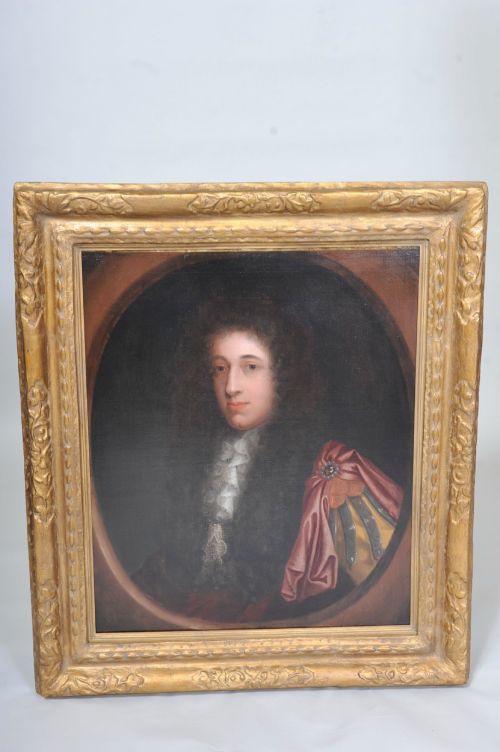
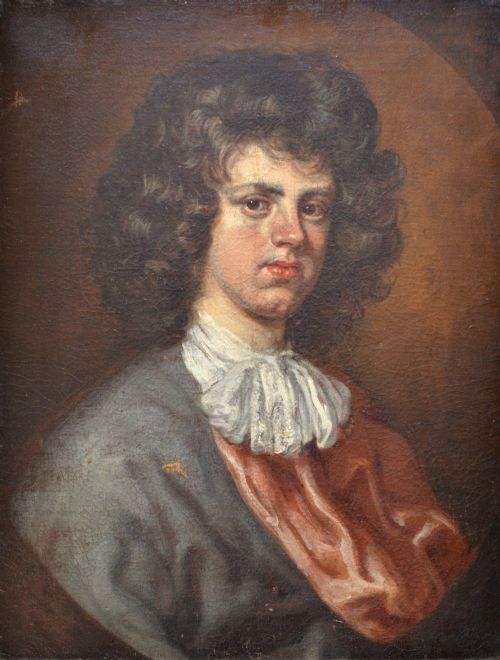
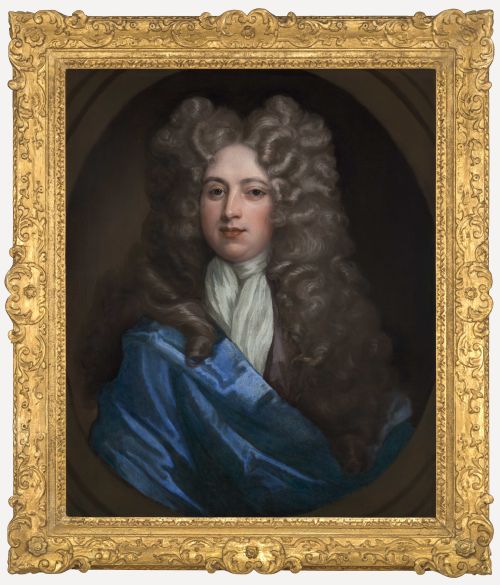
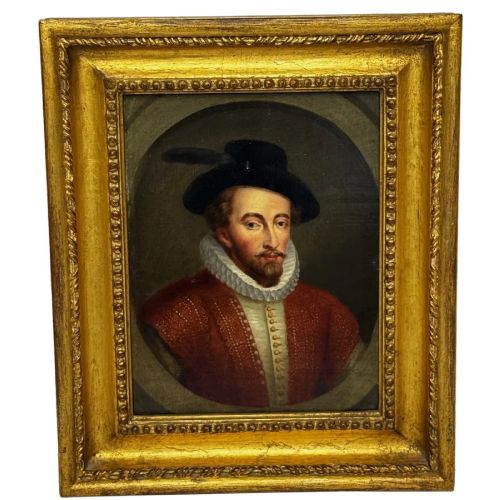
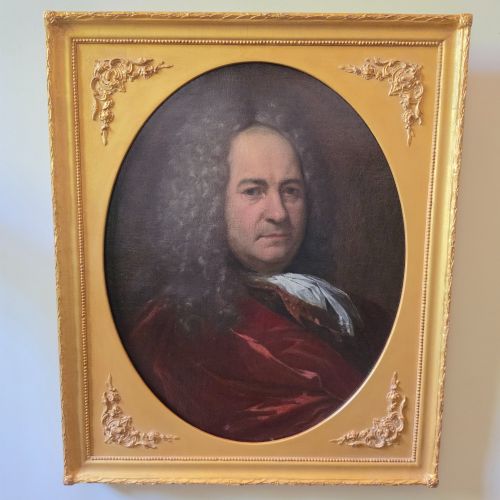
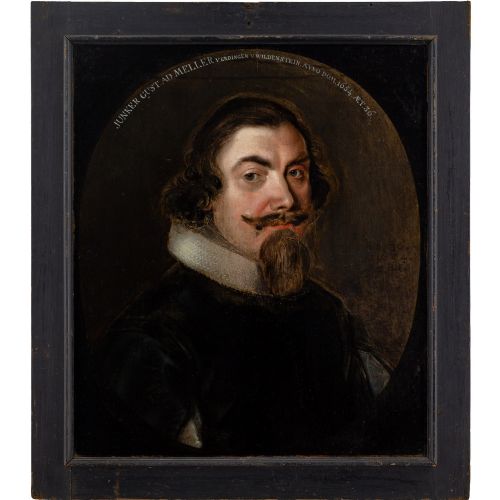
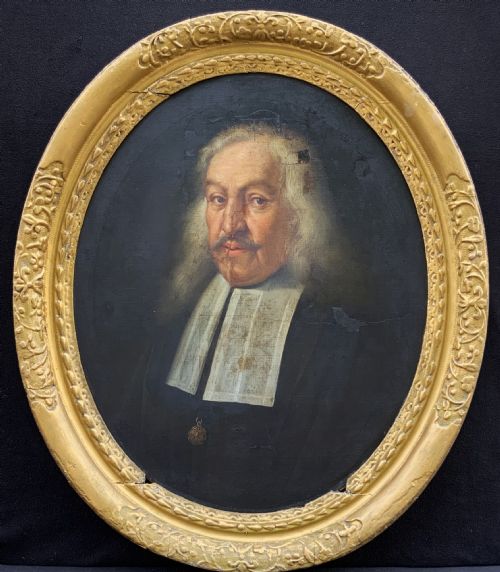
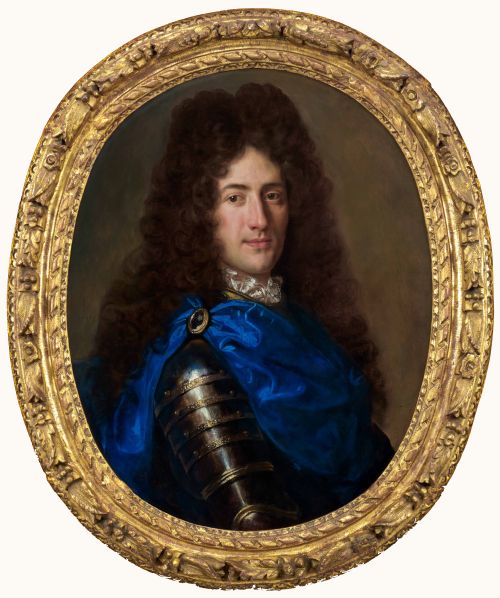


Oval Male Portrait Painting
An oval male portrait painting brings centuries of aristocratic presence and finely observed character directly to your wall.
Materials and Technique
Artists painted primarily in oil on stretched canvas, building luminous flesh tones through successive layers of translucent glaze and pigment. This technique allowed painters to render delicate lace, velvet drapery, and realistic skin textures with lasting depth.
The distinctive curved shape relies on wooden stretcher frames custom-built to support the canvas tension without warping over centuries. Master framers then housed these works in heavy, carved giltwood or gilded wood frames finished with gesso to catch ambient light.
Assessing Quality
Quality rests primarily on the anatomical precision of the hands and face, alongside the painter's ability to render fabrics with convincing weight and texture. Master practitioners within a circle or school achieved a psychological depth that lesser workshop assistants simply missed.
The integrity of the original canvas and the survival of the primary giltwood frame heavily influence the standing of a piece. Works retaining undisturbed varnish layers and contemporary inscriptions offer greater historical coherence than heavily restored examples.
The selection includes notable British, Flemish, German, and French school portraits depicting scholars, physicians, and titled nobility.
Mary Beale·Thomas Murray·Joseph Vivienne·William Millar·Frans van der Mijn·William Denune·John Riley·Willem Wissing·Michael Dahl·Arnold van Boonen·Sir Godfrey Kneller·Thomas Hudson·John Ward Dunsmore
The Oval Male Portrait Painting Glossary
- Giltwood
- Wood carved and coated with a thin layer of gold leaf over gesso. This material defines the opulent frames common to period portraiture.
- Gesso
- A paint mixture consisting of a neutral binder mixed with chalk, gypsum, and pigment. It provided the smooth white base for intricate gilding on wooden frames.
- Periwig
- A voluminous horsehair or human hair wig worn by elite men during the late seventeenth and early eighteenth centuries. Its presence helps date portraits to specific decades.
- Circle of
- A designation indicating the artist worked in close association with a named master, often sharing studio practices and techniques. It denotes high competency close to a primary hand.
- Canvas
- Heavy woven fabric stretched tightly across a wooden frame to serve as the painting support. Oil pigments adhere securely to its textured weave.
Oval Male Portrait Painting: Frequently Asked Questions
How do I date an oval male portrait painting?
Examine the clothing, hairstyle, and collar styles depicted on the sitter, as these changed rapidly across the seventeenth and eighteenth centuries. Periwigs, lace cravats, and velvet coats offer reliable chronological markers.
Material analysis of the canvas and the construction style of the wooden stretcher frame also help confirm the period of creation.
Where should I hang a large giltwood portrait?
Hang these works at eye level in rooms with stable humidity and away from direct sunlight to protect the oil paint and delicate gold leaf. A traditional reception room or study provides an appropriate architectural setting.
Ensure the wall can support the substantial weight of the timber and gesso frame.
What does attribution to a circle mean?
Attribution to a circle indicates that an anonymous artist painted the work while closely associated with a recognised master's studio. These painters absorbed the exact techniques and stylistic traits of the principal artist.
Such works often match the quality of signed pieces from the same era.