
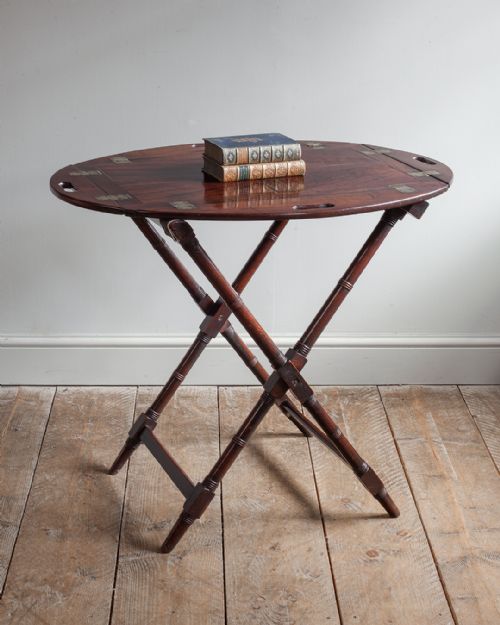


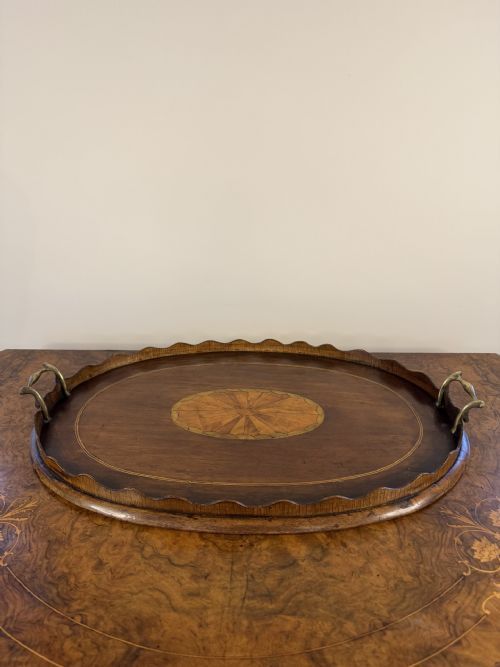


Oval Mahogany Serving Tray
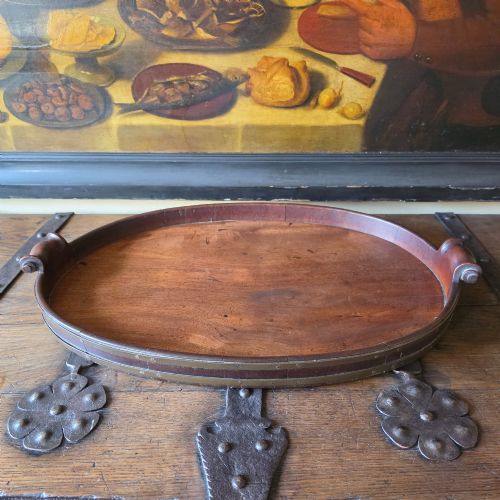
An oval mahogany serving tray brings the deep grain and warm timber of Georgian and Victorian rooms directly to the modern table.
Oval Mahogany Serving Tray
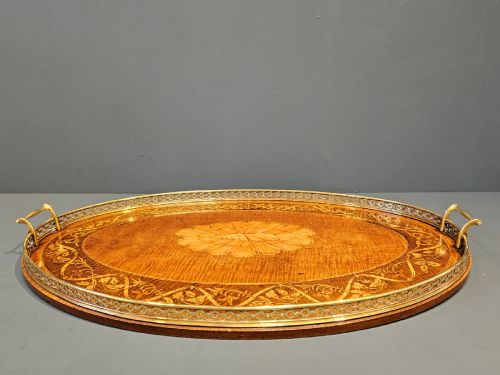
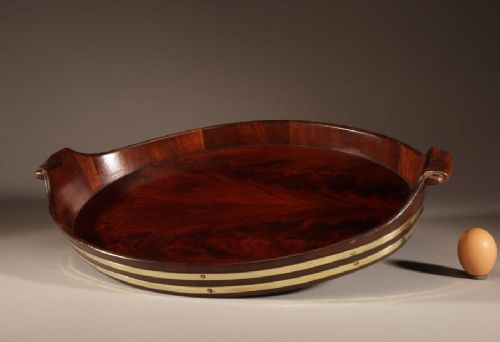
An oval mahogany serving tray is a functional domestic piece designed for carrying tea or spirits, shaped with curved ends and built primarily from rich tropical timber. When you search for an oval mahogany serving tray, you will encounter examples spanning from the eighteenth century through the Edwardian period, often featuring raised galleries or integrated handles.
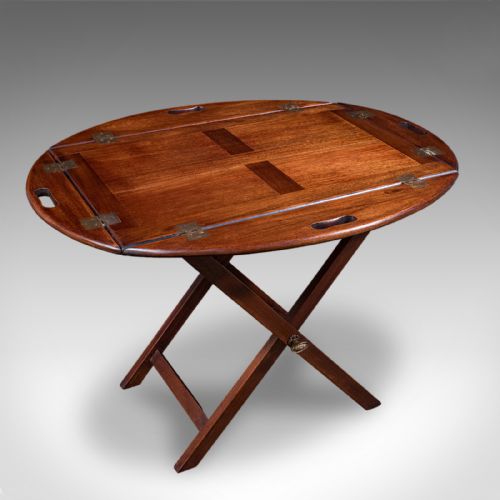
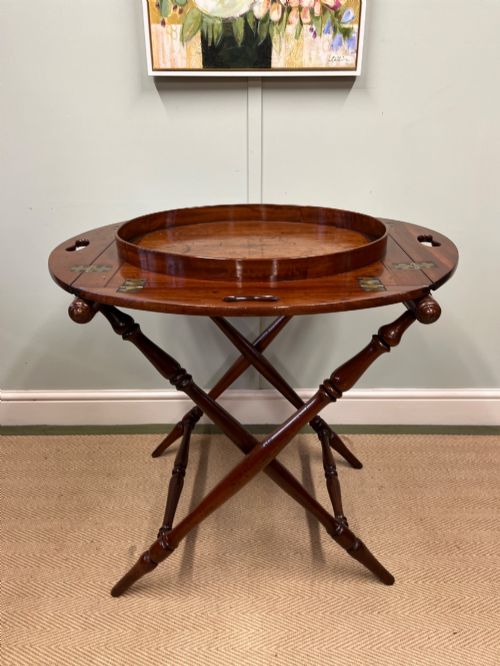
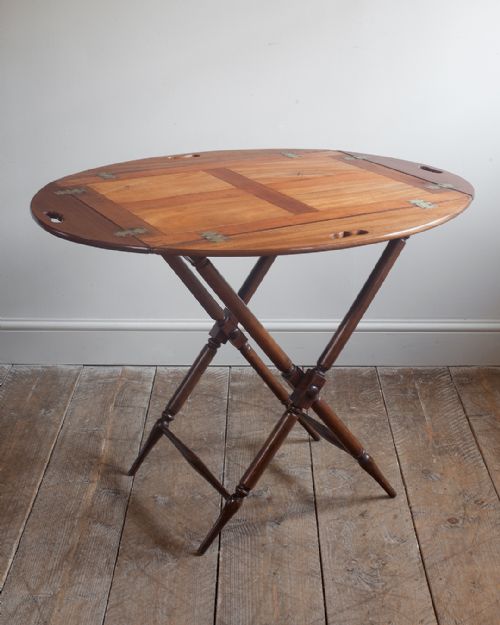
The assortment on this page includes standard handheld serving trays alongside drop-flap butler's trays mounted on folding stands and occasional side tables with detachable glass tops. These pieces originate across the Georgian, Victorian, and Edwardian eras, demonstrating how cabinet makers adapted a simple domestic form for changing social rituals.
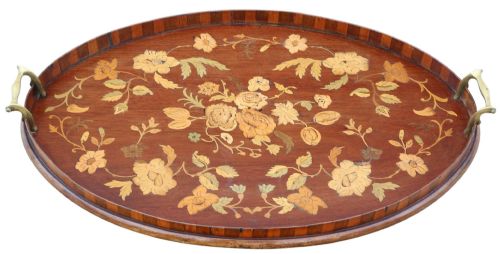
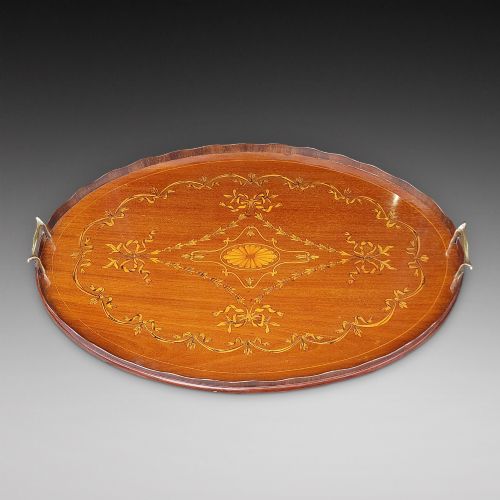
Georgian and George III iterations frequently showcase crisp galleried edges and delicate satinwood inlay, whilst nineteenth-century and Edwardian examples lean towards broader marquetry motifs and robust brass fittings. Whether resting upon its original folding stand or utilised independently, each piece displays the distinct figuring of its timber.
Judging quality in antique trays
The distinction between ordinary and exceptional pieces rests in the handling of the timber and the crispness of the inlay. Superior examples display tightly figured mahogany with a deep, natural patina, whereas lesser pieces rely on heavy stain to mask plain wood.
Inlaid details reveal the maker's hand clearly, with top-tier trays showing precise, flush fitting of satinwood and contrasting veneers without visible gaps or excessive filler. The structural integrity of the raised gallery or the seating of the drop-flaps also dictates value, separating robust daily items from fragile survivors.
The Oval Mahogany Serving Tray Glossary
- Mahogany
- A durable tropical hardwood known for its reddish-brown colour and stable grain, heavily utilised in quality cabinet making. It forms the primary structural body of these trays.
- Gallery
- A raised wooden border surrounding the edge of a tray to prevent items from sliding off during transit. These rims are often pierced or shaped from solid timber.
- Satinwood
- A pale, lustrous timber native to India and Ceylon, used extensively for contrasting inlay and stringing on dark mahogany surfaces. It provides sharp visual definition against the deeper background.
- Butler's tray
- A removable tray featuring hinged or drop-down sides, typically designed to sit upon a folding X-frame stand. This form allowed servants to clear rooms swiftly.
- Coopered
- Constructed using vertical staves of wood joined side by side with curved profiles, similar to barrel-making techniques. This method created sturdy, rounded tray walls.
- Marquetry
- The art of applying pieces of veneer to a structure to form decorative patterns and pictures. It differs from simple inlay by covering the surface more completely.
Oval Mahogany Serving Tray: Frequently Asked Questions
How do I date an antique mahogany tray?
Dating relies upon construction methods, timber choice, and decorative styles visible across the piece. Earlier Georgian trays often feature simpler, hand-planed surfaces and galleried edges, whilst Edwardian and Victorian versions frequently introduce elaborate satinwood marquetry and standardised brass hardware.
Examining the underside and the method used to join the gallery to the base reveals the period's workshop practices. Hand-cut dovetails and dense Cuban mahogany generally point to earlier eighteenth or early nineteenth-century production.
Were these trays used by servants?
Many of the larger examples with folding stands, known as butler's trays, were indeed utilised by household staff to transport tea services or dining equipment between rooms. The folding stands allowed the entire assembly to be stored flat when not in service.
Smaller handheld trays served similar domestic functions within drawing rooms, where family members or guests poured tea without requiring a full staff. Their dual utility made them essential furnishings in formal households.
Can I use an antique tray for serving drinks?
These trays remain fully functional for serving drinks and displaying items, provided they receive appropriate care. Sturdy construction and durable mahogany timber make them well-suited for light modern use.
To preserve the antique finish, owners should use coasters and avoid placing sweating glasses directly onto historic polished surfaces. Regular dusting and occasional wax application maintain the wood's protective barrier.