



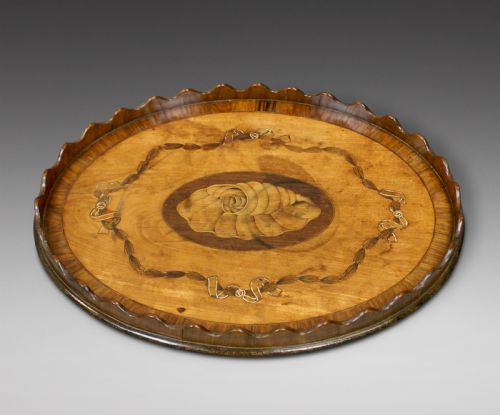


Oval Inlaid Tea Tray
An oval inlaid tea tray brings structured service and timber contrast to a room, uniting utility with the quiet warmth of period craftsmanship.
Oval Inlaid Tea Tray
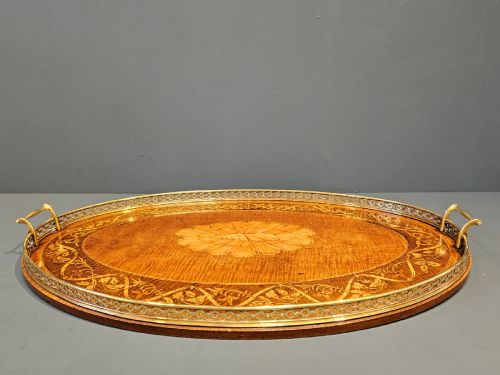
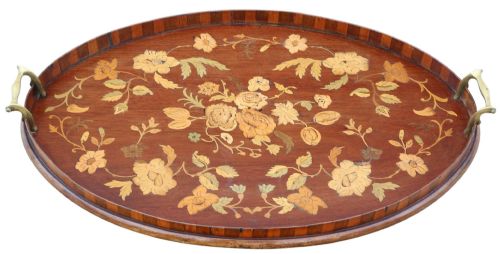
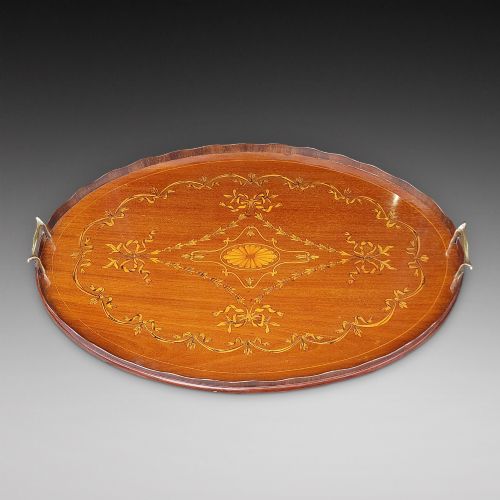
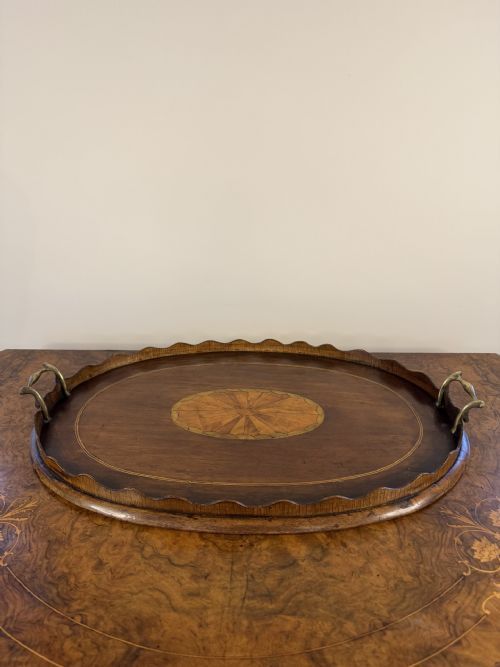
An oval inlaid tea tray is a domestic serving piece or display surface, with examples appearing across the Georgian, Victorian and Edwardian periods in mahogany, satinwood and marquetry. These trays range from standard serving sizes to pieces mounted upon stands as etageres or coffee tables, showing how functional objects transitioned into decorative furniture.
The versions most frequently met on this page date from the Edwardian era and the nineteenth century, constructed primarily in mahogany with contrasting satinwood inlay or elaborate marquetry. They bridge the gap between portable servingware and stationary occasional tables, often featuring raised edges or brass galleries to secure glassware and porcelain.
How they were made
Makers constructed these trays using solid mahogany foundations embellished with delicate satinwood inlay and marquetry motifs, cutting contrasting timbers to form floral or geometric patterns across the timber surface. Some iterations incorporate brass galleries secured around the perimeter, whilst others rely on raised wooden rims to contain the tea service.
Surface finishing relied on traditional polishing techniques that deepened the natural grain of the mahogany and highlighted the lighter tones of the satinwood work. The underside structure often reveals crossbanding or reinforcement to prevent warping in larger serving surfaces.
The listings span the 19th Century, Georgian, Victorian, and Edwardian periods, utilising mahogany, satinwood, brass, and marquetry inlay.
What varies in quality
Quality rests upon the crispness of the timber inlay and the precision with which the satinwood and marquetry elements fit into the mahogany base. Superior examples display tight, seamless joints in the decorative banding and retain firm structural integrity across the rim and handles.
The choice of secondary timbers and the finesse of the brass gallery work also distinguish finer items from simpler production pieces. A well-balanced weight and smooth surface finish separate standard utility trays from those intended for formal drawing-room display.
The Oval Inlaid Tea Tray Glossary
- Inlay
- A technique where pieces of contrasting timber, such as satinwood, are inserted into recessed cavities within a mahogany base to create a flat decorative surface. This method defines the primary ornamentation seen on these trays.
- Marquetry
- An elaborate form of pictorial inlay using various tinted woods to assemble complex patterns or floral motifs. It requires considerable skill from the artisan to align the grain and colour tones correctly.
- Etagere
- A set of tiered shelves or trays designed for display and small service items, frequently mounted on legs to function as an occasional table. Several pieces in this category take this elevated form.
- Brass gallery
- A pierced or solid metal rail fitted around the perimeter of a tray to prevent items from sliding off during transport. This fixture often includes integrated handles for practical use.
Oval Inlaid Tea Tray: Frequently Asked Questions
Were these trays used for actual serving?
These trays were originally designed to carry tea services, glassware and porcelain between rooms, fulfilling a strictly practical domestic function in grand households.
Over time, many of these pieces transitioned into static display items or were mounted onto dedicated stands to serve as coffee tables and occasional furniture.
How do I tell an Edwardian tray from a Victorian one?
Edwardian trays frequently exhibit lighter satinwood surfaces and Sheraton Revival motifs, reflecting a taste for brighter, delicate drawing-room furniture.
Victorian pieces tend to use darker mahogany with heavier marquetry work, though stylistic crossover remains common across the nineteenth century.
Can I use an antique tray on a coffee table?
An oval tray provides a stable surface for books, candles and decorative objects when placed flat upon a low table or ottoman.
One should consider the condition of the base and inlay before placing heavy or damp items directly onto antique polished wood.
What is the purpose of the brass gallery?
The raised metal rail secures cups, saucers and teapots in place while the tray is carried by hand across carpeted and polished floors.
It also frames the inlaid timber surface, adding a polished metallic contrast to the warm tones of the mahogany and satinwood.