
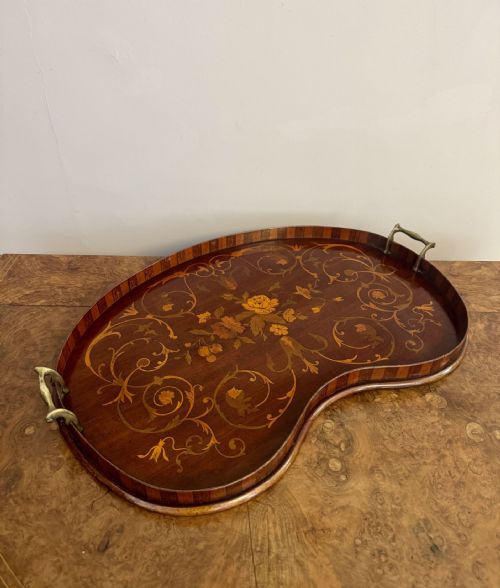
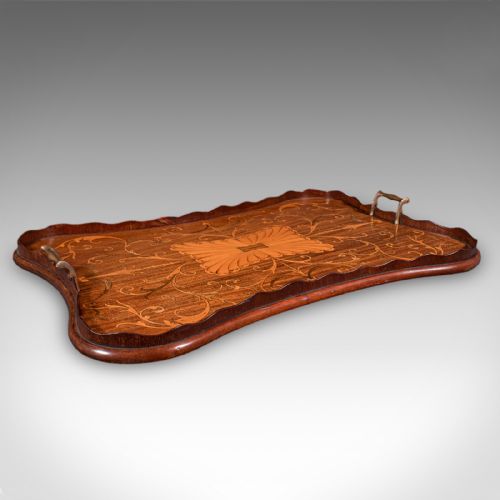
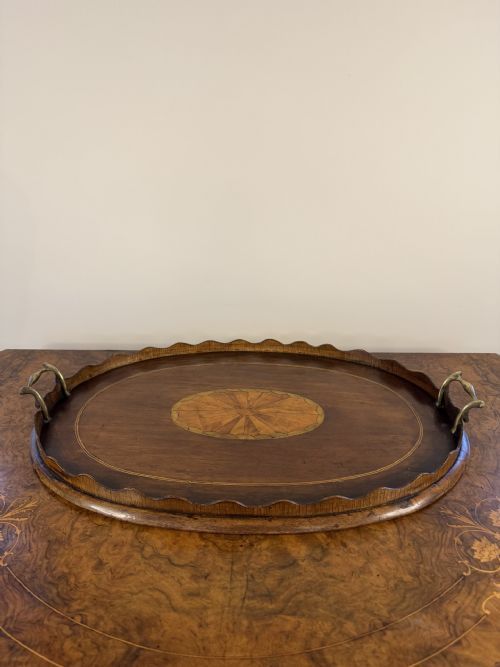
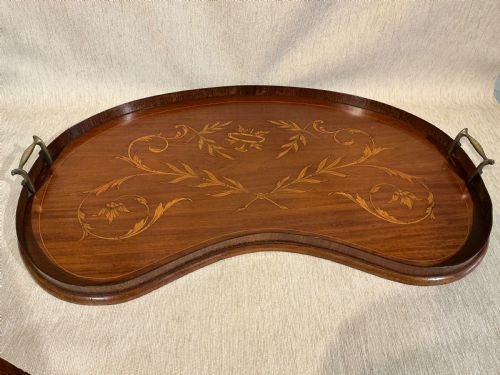


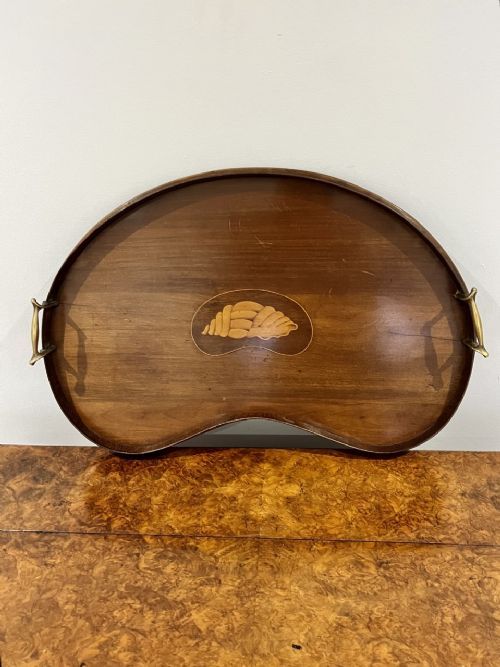

Inlaid Wooden Serving Tray
An inlaid wooden serving tray brings domestic service history to the table through fine timbers and intricate craft.
Inlaid Wooden Serving Tray
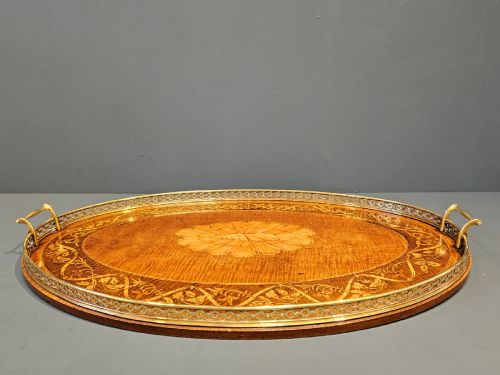
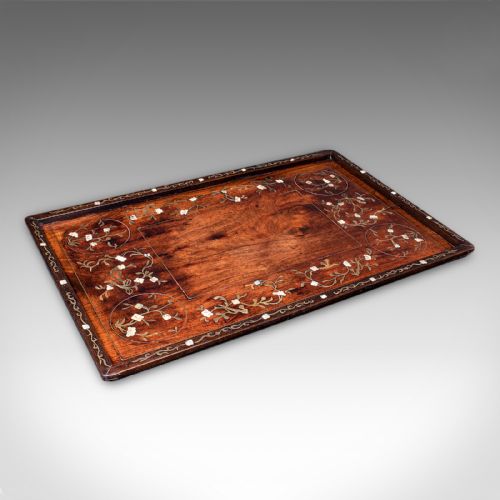
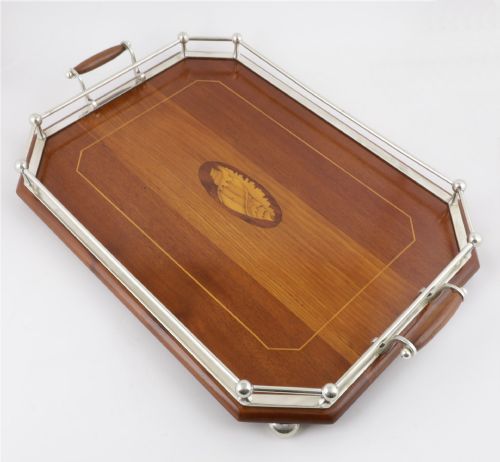
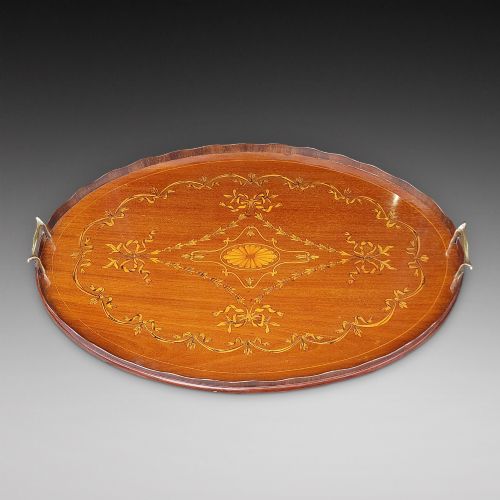
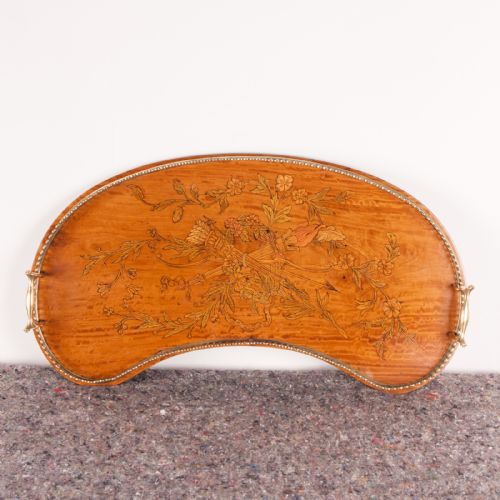
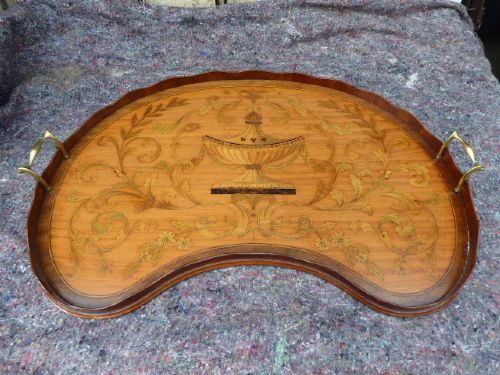
An inlaid wooden serving tray spans multiple periods from Georgian origins through Victorian interpretations to Edwardian revivals, appearing in forms such as oval, kidney-shaped, octagonal, circular, and rectangular platters. These serving pieces include butler's trays, afternoon tea platters, drinks trays, and wine trays, sometimes accompanied by stands or fitted with brass galleries.
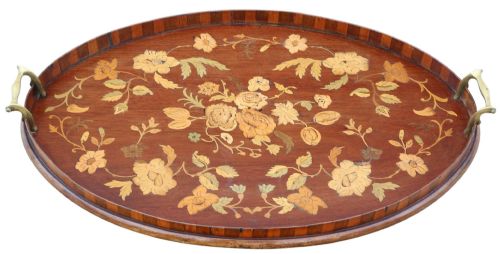
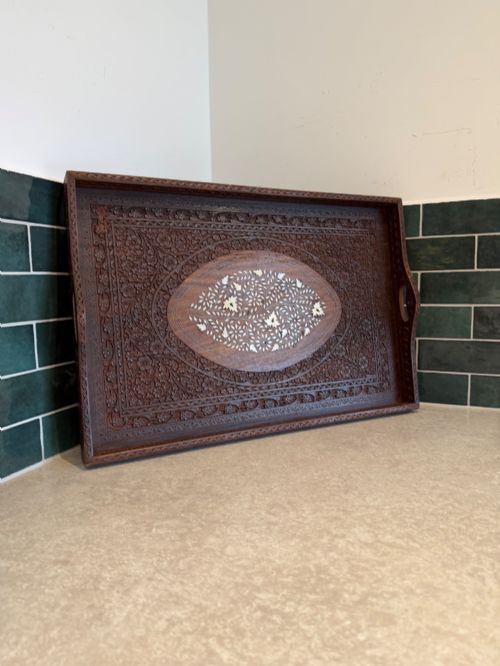
Edwardian and Victorian examples in mahogany or satinwood dominate the selection, often featuring marquetry inlay alongside contrasting timbers like boxwood, burr yew, and rosewood. Variations range from standard servingware to unusual miniature oval trays and Anglo-Indian teak versions with afternoon tea slides, connecting utility with decorative presentation.
How they were made
Cabinetmakers utilised primary structural timbers such as mahogany, satinwood, teak, and walnut, often combining them with boxwood, rosewood, and burr yew for detailed decorative accents. These woods provide both the sturdy base required for a serving tray and the contrasting colour fields necessary for intricate patterns.
Decoration relies on marquetry inlay and shell inlay techniques, where thin veneers of various woods are meticulously fitted into carved recesses to form floral, geometric, or pictorial motifs. Metal elements such as brass galleries and silver plate mountings occasionally edge the wooden platforms, securing handles and containing items during use.
Materials recorded across the selection include brass, mahogany, satinwood, silver plate, boxwood, walnut, burr yew, and rosewood.
What varies in quality
The sophistication of the timber selection and the precision of the marquetry inlay determine the standing of an inlaid wooden serving tray. Pieces featuring balanced combinations of satinwood, mahogany, boxwood, and burr yew display a higher level of artisanal skill than simpler single-wood constructions.
Form and proportion dictate the upper tier, where complex shapes like kidney contours, oval boundaries, and octagonal geometries require superior woodworking expertise. The integration of functional hardware, such as solid brass galleries and sturdy handles, separates standard utility trays from exceptional decorative servingware.
Edwards and Roberts
The Inlaid Wooden Serving Tray Glossary
- Marquetry inlay
- The art of applying small pieces of veneer to a structure to form decorative patterns. This technique creates pictorial or geometric surface designs using contrasting timbers.
- Satinwood
- A durable, lustrous timber native to India and Sri Lanka with a yellowish sheen. It serves as a prized background or inlay material in Georgian and Edwardian pieces.
- Brass gallery
- A low pierced metal railing fitted around the perimeter of a tray. It prevents items from sliding off during transport.
- Butler's tray
- A portable wooden tray designed for carrying food and drink, occasionally paired with a folding stand. These pieces formed an essential part of formal domestic service.
Inlaid Wooden Serving Tray: Frequently Asked Questions
How were these trays used historically?
These trays served in domestic settings for carrying afternoon tea, wine, and drinks between rooms. Servants utilised them to transport china and glassware.
Over time, many pieces transitioned from functional kitchenware into decorative drawing-room display items. Their sturdy construction allowed them to handle daily service while remaining visually striking.
What materials appear most frequently?
Mahogany and satinwood form the foundation of the majority of these pieces. Cabinetmakers paired them with boxwood, rosewood, and burr yew for contrast.
Metal additions like brass galleries and silver plate also appear frequently around the wooden edges. Marquetry inlay unites these various materials into cohesive decorative surfaces.
How do I tell Edwardian pieces from Victorian ones?
Edwardian examples often lean towards lighter satinwood bodies, kidney shapes, and Sheraton Revival styles. Victorian versions tend to utilise darker mahogany and heavier proportions.
Revival styles bridge the gap, meaning form and timber colour provide the clearest indicators of period origin. Examining the specific type of inlay helps confirm the era of manufacture.
Can I still use an antique tray for serving?
These pieces remain structurally capable of light serving tasks when handled with appropriate care. Their original design intended them for carrying tea and drinks.
Protecting the wood and delicate marquetry from moisture prevents damage to the antique surfaces. Many owners choose to display them on stands or tables rather than risking daily wear.