


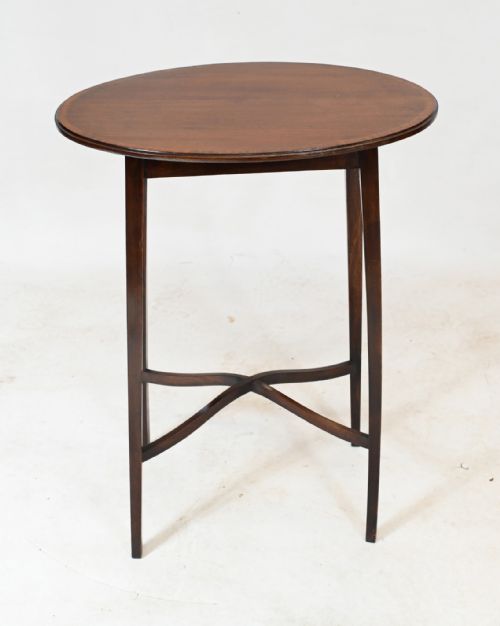
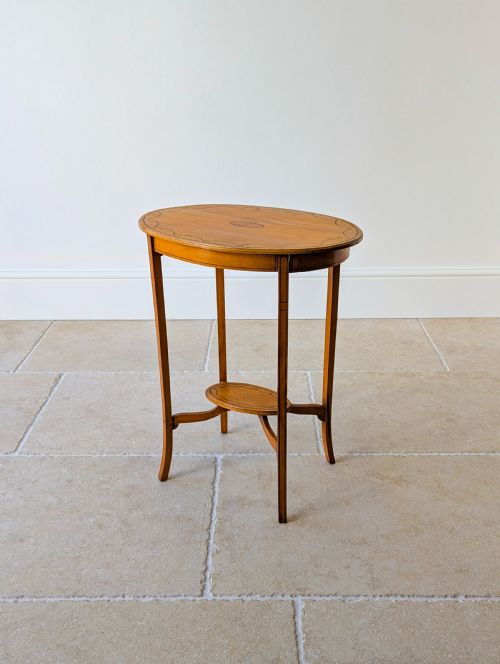


Oval Inlaid Lamp Table
An oval inlaid lamp table brings subtle curves and intricate woodwork into a room, serving as a practical stand with genuine period character.
Oval Inlaid Lamp Table
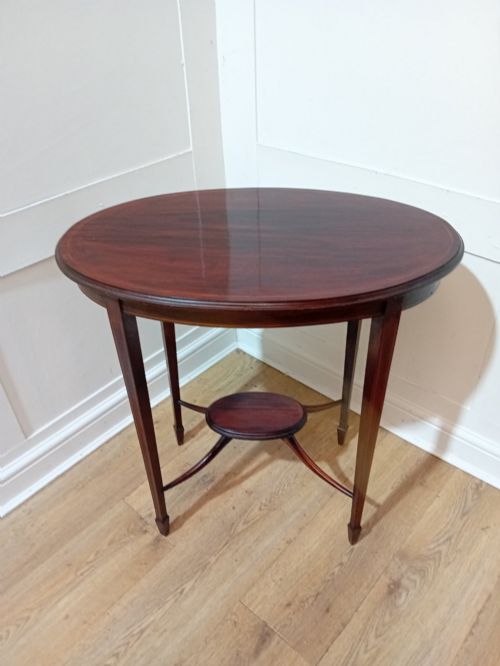
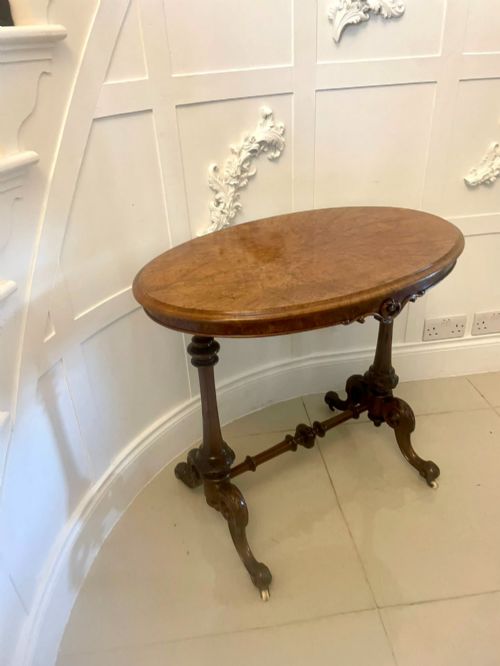
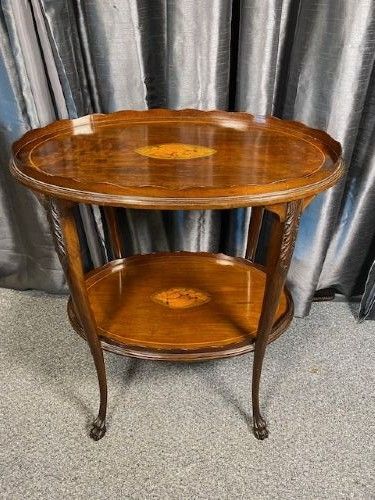
When you search for an oval inlaid lamp table, you encounter compact occasional pieces designed to sit beside seating or in corners. These items frequently appear from the Edwardian period and the nineteenth century, executed in forms such as occasional tables, side tables, and two-tier designs.
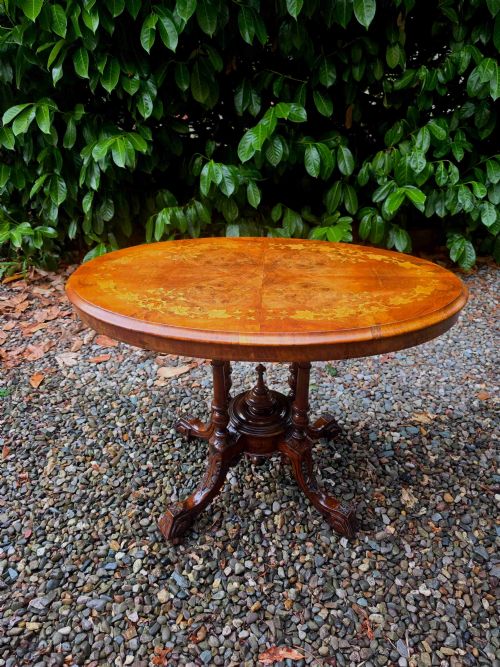
The surface shape offers a softer silhouette than rectangular equivalents, while inlay work introduces contrasting timbers and decorative motifs. Edwardian satinwood and mahogany examples dominate the selection, alongside Victorian burr walnut variants.
Originating predominantly from British workshops influenced by Sheraton styles, these tables occasionally include continental European or Anglo-Indian pieces. They function reliably as lamp stands, display surfaces, or small occasional tables within modern interiors.
Materials and construction
Cabinetmakers built the structural carcases of these tables using solid timber frames from mahogany, walnut, or rosewood, often applying fine veneers to the expansive oval top surfaces. Satinwood and burr walnut provided decorative grain patterns that contrasted sharply with darker surrounding woods.
Inlay work relied on boxwood and contrasting timbers, meticulously cut and fitted into recessed channels to form geometric borders, swags, or floral ribbons. Joinery techniques combined traditional mortise and tenon frames with turned or tapered legs, occasionally incorporating lower tiers for structural stability.
The selection includes Edwardian, Victorian, and George III periods, utilising mahogany, satinwood, burr walnut, and rosewood.
Distinctions in quality
The distinction between ordinary and superior pieces rests upon the precision of the timber selection and the execution of the marquetry. Finer examples display carefully matched burr veneers and crisp, tightly fitted boxwood inlay without visible gaps or excessive filler.
Structural integrity also separates the grades, visible in the stability of the leg joints and the thickness of the top veneer. Master craftsmen ensured that secondary woods used for framing were equally sound, whereas lesser workshop pieces utilised thinner veneers that proved prone to lifting.
Haentgos Freres Paris
The Oval Inlaid Lamp Table Glossary
- Inlay
- The technique of inserting pieces of contrasting wood, bone, or shell into a prepared recess to form a decorative design on the surface.
- Satinwood
- A hard, durable tropical timber with a lustrous yellow or golden sheen, frequently utilised in fine eighteenth and nineteenth-century cabinetmaking.
- Marquetry
- The art of forming decorative patterns by fitting together multiple veneers applied to a structural wooden carcase.
- Burr Walnut
- Timber taken from the warted growth on a walnut tree, yielding highly figured and swirling grain patterns prized for tabletops.
- Sheraton Revival
- A late nineteenth-century design movement recreating the lighter, neoclassical furniture forms associated with designer Thomas Sheraton.
Oval Inlaid Lamp Table: Frequently Asked Questions
Where should I place an oval inlaid lamp table?
These tables suit corners, hallways, or beside armchairs where their curved edges prevent sharp corners from obstructing walkways. Their compact footprints make them ideal for holding lighting or small decorative objects without dominating the room.
Ensure they sit away from direct heat sources to protect the delicate wood veneers and boxwood inlay from drying out and lifting over time.
How do I distinguish Edwardian pieces from Victorian ones?
Victorian examples frequently utilise darker timbers such as burr walnut and mahogany, often featuring heavier proportions and richer, deeper polish. Edwardian pieces tend to display lighter satinwood surfaces, greater use of Sheraton Revival motifs, and slender tapered legs.
Examining the underside and the interior secondary woods often provides additional clues regarding the age and manufacturing techniques employed.
How do I care for antique wood veneer?
Maintain the finish by dusting with a dry, soft cloth and occasionally applying a traditional beeswax to nourish the timber. Avoid liquid polishes containing silicones, which can degrade antique finishes over extended periods.
Keep the table away from direct sunlight and fluctuating radiator heat to prevent the wood from warping and the fine inlay from cracking.
What is the difference between inlay and marquetry?
Inlay involves embedding individual pieces of wood or other materials into carved recesses within a solid wooden base. Marquetry assembles an entire picture or pattern from various veneers before gluing the completed sheet onto the furniture surface.
Both techniques appear frequently across the surfaces of nineteenth-century occasional and lamp tables.