




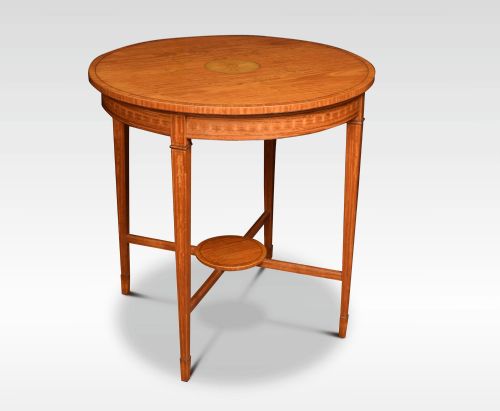


Satinwood Foyer Table
These satinwood foyer table pieces bring shimmering timber and refined forms into an entrance, offering both surface utility and period elegance.
Satinwood Foyer Table
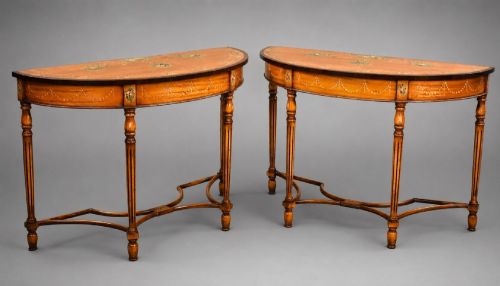
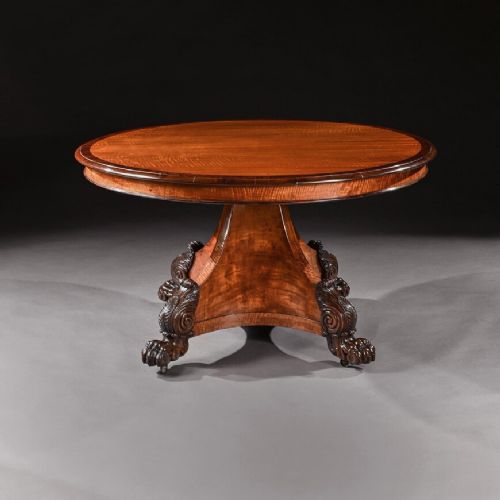
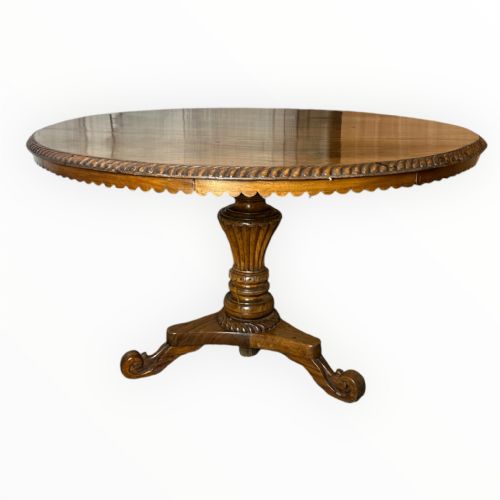
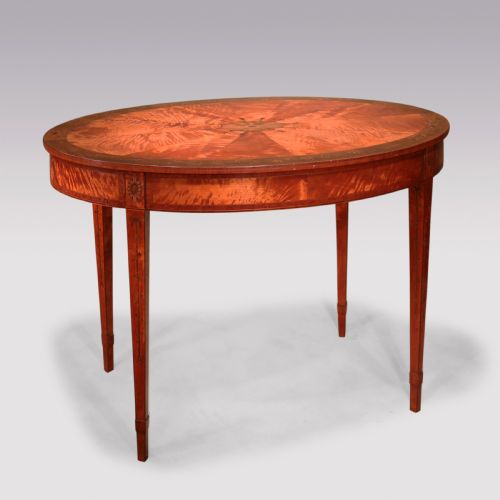
When searching for a satinwood foyer table, buyers encounter a curated selection of entrance and hall furnishings spanning the nineteenth and twentieth centuries. These pieces predominantly take the form of centre tables, console tables, and occasional tables designed to anchor a hallway or landing.
The assortment on this page reflects distinct historic revivals and regional interpretations, ranging from Sheraton Revival demi-lune consoles to Swedish birch oval centre tables and Anglo-Indian colonial works. Buyers are most likely to meet nineteenth-century examples and Edwardian iterations featuring refined geometric or curved silhouettes.
Materials and construction
Cabinetmakers utilised pale, figured satinwood alongside contrasting timbers such as mahogany, rosewood, and boxwood to build these entrance pieces. The timber surfaces frequently incorporate intricate marquetry inlay, hand-painted enamel decoration, and brass mounts.
Construction techniques span the joinery methods of the nineteenth century through to the cleaner lines of the nineteen-thirties Art Deco period. Workshops combined solid carcases with veneered table tops, often arranging grain patterns symmetrically for visual impact.
The listings on this site span the nineteenth century, the Edwardian era, and the nineteen-thirties, featuring satinwood, mahogany, and rosewood.
Markers of quality
Quality in these hall furnishings rests upon the crispness of the marquetry inlay and the depth of figure within the satinwood veneer. Superior examples display meticulous hand-painted details and harmonious timber selection across the entire top surface.
The structural refinement of the legs and apron, whether shaped as a serpentine curve or a demi-lune console, distinguishes standard production from more ambitious cabinet work. Maker attribution and well-preserved original finishes further elevate the standing of a piece.
Edward and Roberts·Peters of Genoa
The Satinwood Foyer Table Glossary
- Demi-lune
- A half-moon shape typical of console and hall tables designed to sit flush against a wall. This format is common in Sheraton Revival pieces.
- Marquetry inlay
- The decorative technique of applying small pieces of veneer to form intricate geometric or floral patterns. It defines the decorated surfaces of many nineteenth-century tables.
- Satinwood
- A hard, durable timber known for its golden colour and reflective, satin-like sheen. It forms the primary visual identity of these entrance furnishings.
- Console table
- A table supported against a wall by decorative brackets or legs, frequently utilised in entryways and foyers. These often feature curved or serpentine fronts.
- Centre table
- A freestanding table designed to be viewed from all sides, placed in the middle of a room or a spacious hall. Many examples in this selection adopt this versatile format.
Satinwood Foyer Table: Frequently Asked Questions
Where should a satinwood foyer table go?
These tables suit entryways, hallways, and landings where a shallow profile or a freestanding centrepiece fits the room plan. Demi-lune and serpentine hall tables sit flat against a wall to preserve walking space.
Larger oval or circular centre tables require an open layout so the figured timber top remains visible from all sides.
How do I identify a Sheraton Revival piece?
Sheraton Revival pieces date from the late nineteenth or early twentieth century and adopt the neoclassical proportions of the eighteenth-century designer. Look for painted enamel details, satinwood veneers, and tapered legs.
They often combine marquetry inlay with delicate classical motifs inspired by the original Georgian aesthetic.
What is the difference between a console and a centre table?
A console table is built to stand against a wall, frequently featuring a flat back and a semi-circular or serpentine front. These anchor entrance halls without obstructing movement.
A centre table is freestanding and finished on all sides, designed to sit in the middle of a space or a generous foyer.
How do I care for satinwood veneer?
Protect the polished timber surface from direct sunlight and excessive moisture to prevent the golden satinwood from fading or lifting. Dust gently with a dry, soft cloth.
Avoid chemical polishes that can damage the historical finish and proprietary waxes unless formulated for antique furniture.