






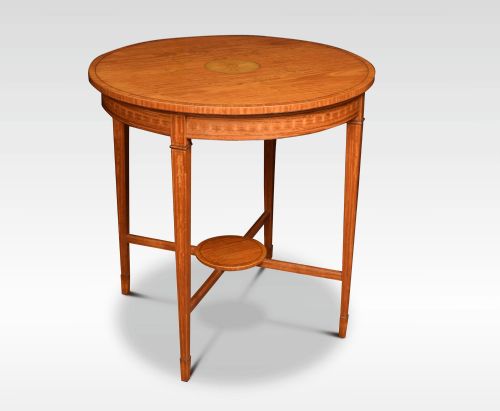


Golden Satinwood Centre Table
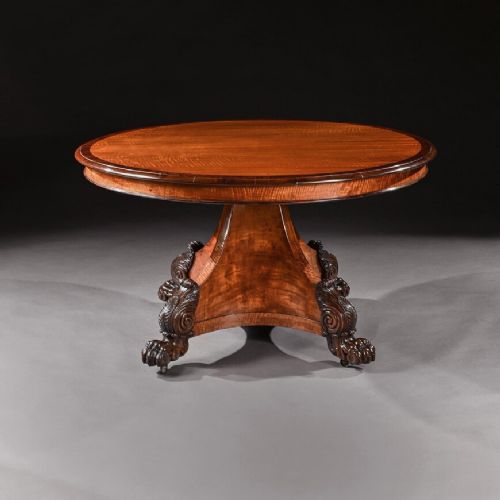
A golden satinwood centre table brings warmth and rich grain to a room, standing as a focal point crafted from timber with a natural golden glow.
Golden Satinwood Centre Table
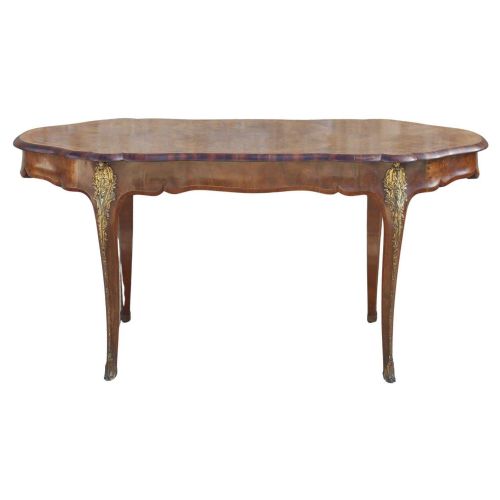
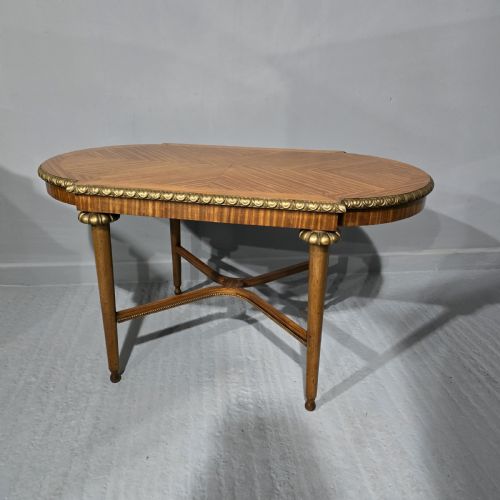
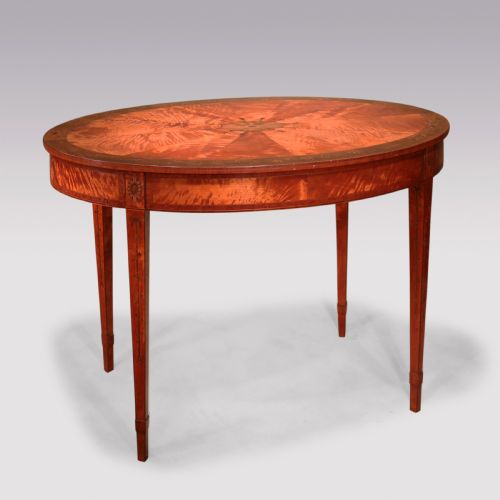
A golden satinwood centre table is a freestanding piece designed to sit in the middle of a room rather than against a wall, allowing it to be viewed from every angle. The selection spans the nineteenth century through the Edwardian period, encompassing styles from Sheraton Revival to French Louis XV Revival.
Most examples function as centre tables, occasional tables, or coffee tables, with variations including oval shapes, tilt tops, and two-tier designs. Originating across English and continental workshops, these pieces often incorporate contrasting woods and detailed marquetry inlay.
Materials and construction
The primary material is satinwood, frequently paired with rosewood, satin birch, or burr walnut to create striking contrasts in colour and grain. Artisans employed marquetry inlay using boxwood and darker timbers to form geometric or floral patterns across the surface.
Fine examples incorporate cast brass and ormolu mounts, particularly on pieces influenced by French rococo and Louis XV revivals. Structural support often comes from hardwood framing, finished with cabriole legs or turned pedestals depending on the period.
Some tables tilt their heads like curious birds, waiting for breakfast to begin.
Distinctions in quality
Quality rests upon the choice of timber and the dexterity of the veneer work, where tightly figured grain commands greater attention. The precision of the marquetry inlay and the crispness of ormolu mounts separate standard production from exhibition pieces.
Structural integrity reveals itself in the stability of the tilt mechanisms, the alignment of oval or serpentine tops, and the smooth execution of cabriole legs. Finer tables demonstrate meticulous hand-finishing that preserves the luminous quality of the satinwood.
Peters of Genoa
The Golden Satinwood Centre Table Glossary
- Satinwood
- A durable, highly lustrous hardwood prized for its pale yellow to golden hue and silky sheen. It serves as the primary surface timber for fine nineteenth-century and Edwardian cabinetmaking.
- Marquetry inlay
- The art of applying small pieces of veneer to a structure to form decorative patterns. Boxwood and darker hardwoods are typically used to create contrast against the satinwood background.
- Ormolu
- Gilded bronze used for decorative mounts and accents on furniture. It gained prominence in French revival styles during the nineteenth century.
- Cabriole leg
- A furniture leg that curves outward and then tapers inward, inspired by the shape of an animal's leg. This form appears frequently on revival pieces from the Victorian and Edwardian eras.
- Tilt top
- A table construction allowing the surface to pivot to a vertical position when not in use. This mechanism appears on breakfast and occasional tables from the mid-nineteenth century.
Golden Satinwood Centre Table: Frequently Asked Questions
Where should a centre table be placed?
A centre table is designed to stand free in the middle of a room rather than pushed against a wall. This allows the finished grain, inlay, and detailing on all sides to be fully appreciated.
Ensure there is sufficient clearance around the piece for movement, making it practical for daily use as a focal point in a principal room.
How do I care for satinwood furniture?
Satinwood benefits from minimal interference, requiring only a soft, dry cloth to remove dust. Avoid placing the table in direct sunlight or near heat sources, which can dry out the timber and fade the golden colour.
Applying a specialist wax polish occasionally helps to maintain the lustre of the wood without building up a heavy residue.
What is the difference between an occasional table and a centre table?
A centre table is traditionally built to anchor the middle of a room, often featuring detailed ornamentation visible from every direction. Occasional tables are generally smaller and lighter, intended to be moved about as needed for specific tasks.
Both forms utilise golden satinwood and marquetry, but their historical function dictated their scale and sturdy construction.
How do I date a satinwood table?
Dating relies on observing the combination of primary woods, hardware, and stylistic revival influences. Pieces from the mid-nineteenth century often display heavy figuration and robust proportions, whereas Edwardian examples tend toward lighter, refined frames.
Details such as boxwood inlay, ormolu mounts, and cabriole legs help place the piece within the Victorian, Edwardian, or specific revival periods.