
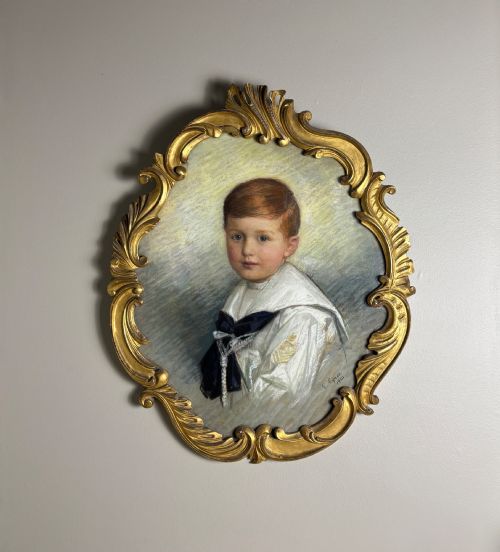
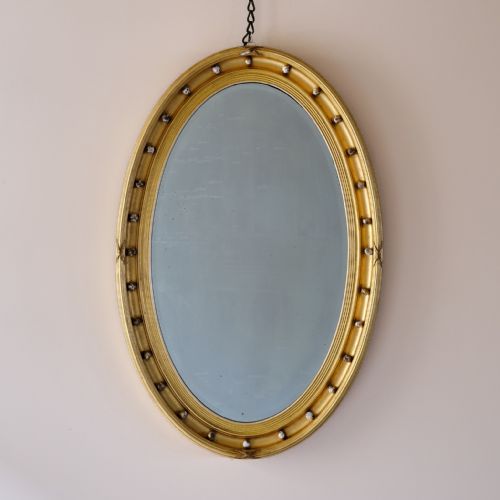


Oval Giltwood Framed Portrait
When you search for an oval giltwood framed portrait, you are looking at historical likenesses encased in carved, gilded surrounds.
Oval Giltwood Framed Portrait
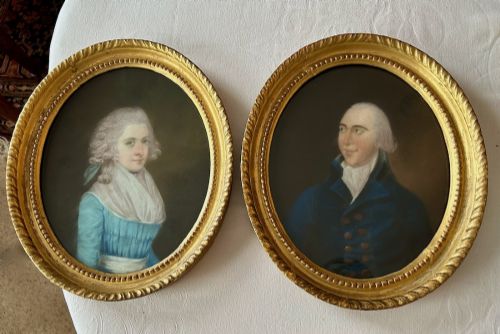
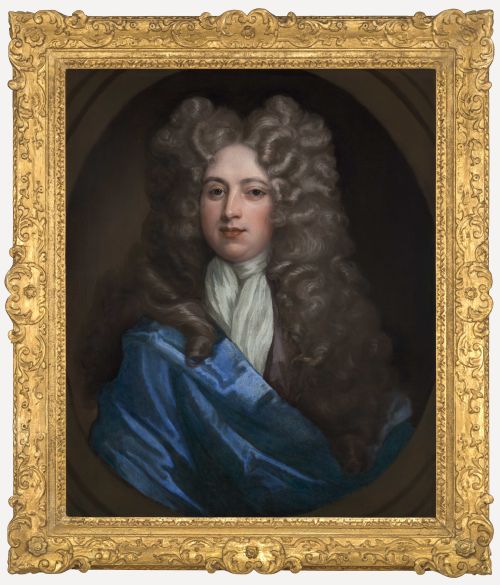
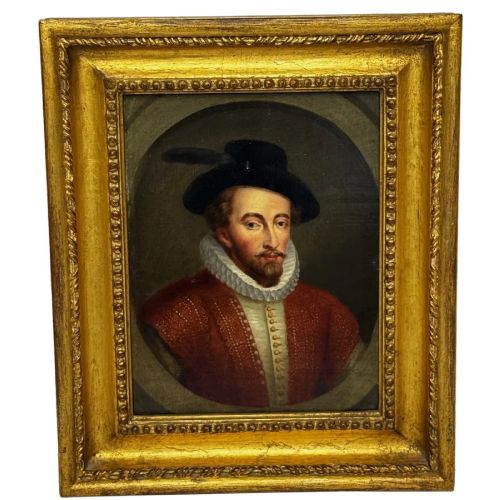
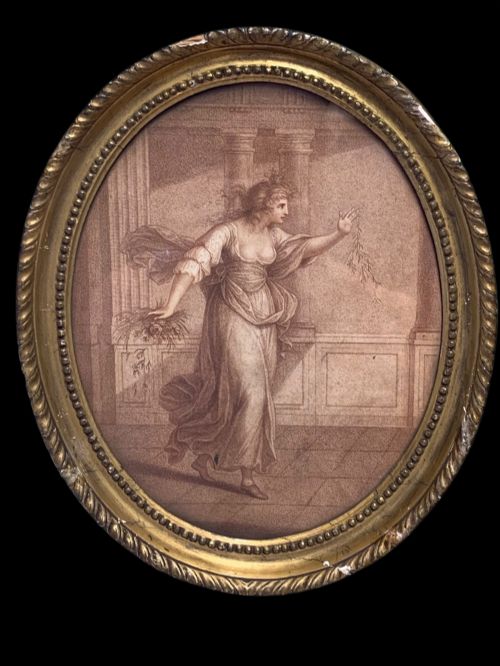
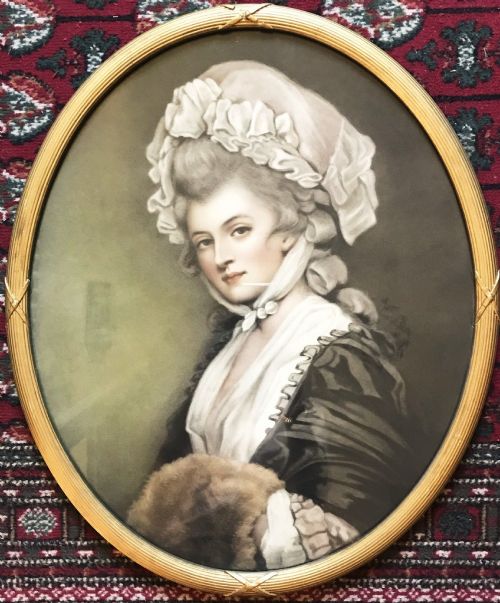
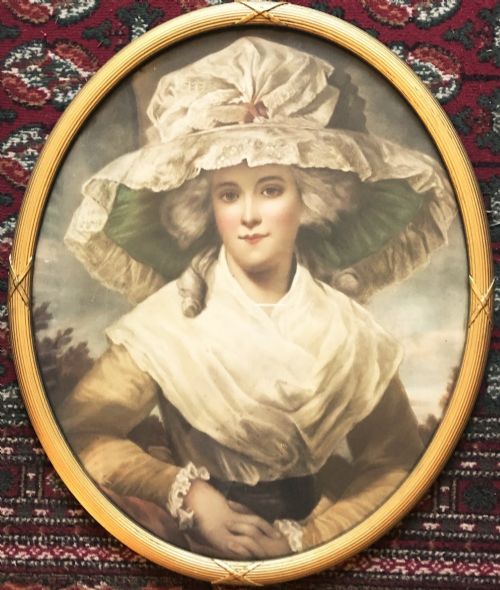
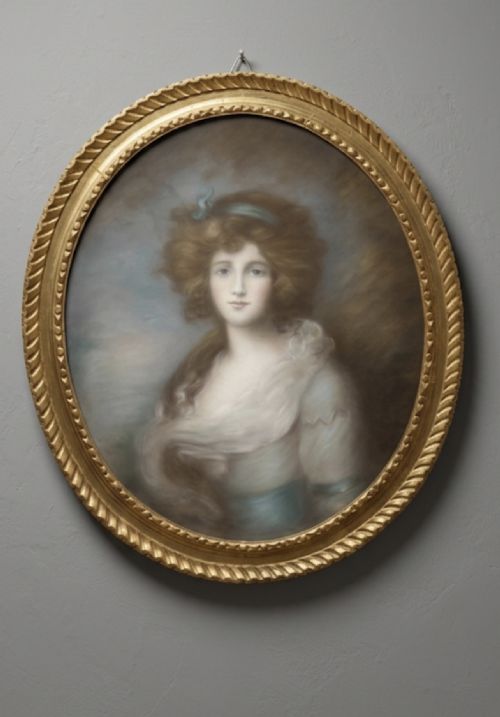
An oval giltwood framed portrait brings together historic subjects and curved, gilded framing. These works span from the seventeenth century through to the Edwardian period, capturing sitters ranging from gentlemen with periwigs to elegant female beauties.
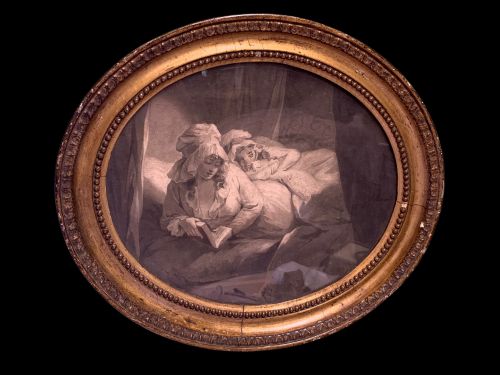
The format includes oil paintings on canvas, delicate pastels, watercolours, and glazed prints after original works. English, Scottish, and continental European schools are all represented alongside portrait pairs and single studies.
How they were made
Makers built the frames from wood, applying layers of gesso before gilding them with gold leaf to achieve a brilliant metallic sheen. Canvases, paper sheets, and porcelain plaques then received oil, pastel, or watercolour pigments.
The joinery and sculptural ornamentation of the frames required skilled hand-carving to fit the specific curvature of each oval aperture.
Several sitters gaze outward wearing elaborate periwigs and blue cloaks.
What varies in quality
Original matching between the artwork and its period frame elevates the integrity of the piece, as does the survival of early glass and backing materials.
Thomas Murray·Emily Eyres·Robert Kemp·Enoch Seeman·Frans van der Mijn·George Knapton·Robert Byng·John Riley·Andrea Soldi·John Closterman·Michael Dahl
The Oval Giltwood Framed Portrait Glossary
- Giltwood
- Wood that has been coated with gold leaf or a metallic gilding finish. This technique creates a luminous surface that catches candlelight and natural illumination.
- Gesso
- A plaster-like mixture applied to wood frames to create a smooth base for gilding. It allows craftsmen to model intricate relief ornamentation.
- Pastel
- A medium made of powdered pigment bound into stick form. It produces velvety textures on paper, frequently seen in eighteenth-century portraiture.
- Mezzotint
- A printmaking process of the tonal engraving variety. It allows for rich gradations of light and shade in reproduced portraits.
Oval Giltwood Framed Portrait: Frequently Asked Questions
How do I hang a heavy framed portrait?
Secure fixings directly into wall studs or utilise appropriate heavy-duty wall anchors rated for the weight of wood and plaster.
Ensure the hanging wire or brackets on the back match the support capacity to keep the frame stable.
Can I place these portraits in direct sunlight?
Direct sunlight causes pigments in oil paints, pastels, and watercolours to fade over time. Giltwood surfaces can also suffer from excessive heat exposure.
Position these works on interior walls away from windows to preserve the colours and materials.
How should I clean the giltwood frame?
Dust the carved surfaces gently with a soft, dry brush or a feather duster. Avoid moisture and commercial cleaning sprays, which can strip the gold leaf.
Professional conservation is recommended if the gesso or gilding shows signs of flaking.
Are these portraits always painted on canvas?
While many seventeenth and eighteenth-century examples utilise oil on canvas, other materials appear across the period range. Surviving works include pastels on paper, watercolours, and ceramic plaques.
The framing format remains consistently curved into an oval shape regardless of the internal medium.