


Oval Gilded Looking Glass
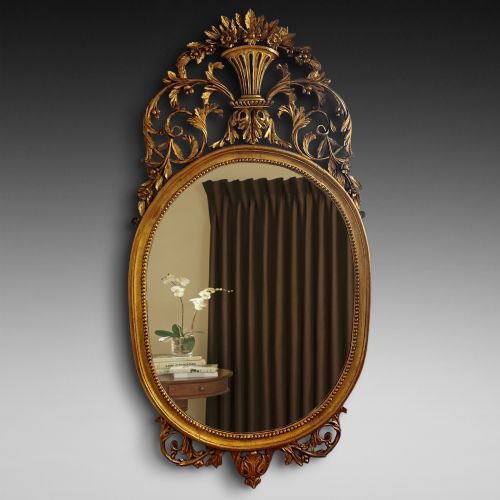
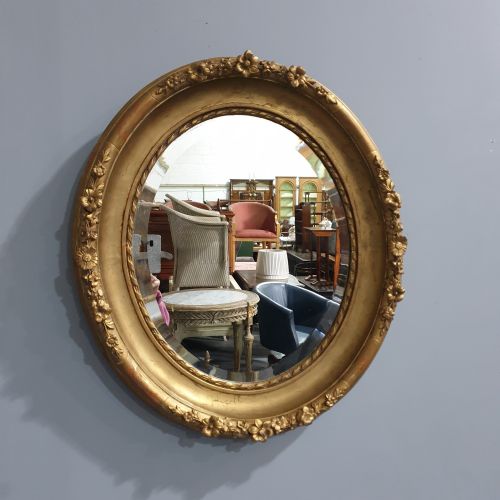
An oval gilded looking glass brings light and proportion to a room, offering the curved lines of the Georgian, Victorian, and Regency periods.
Oval Gilded Looking Glass
An oval gilded looking glass is a wall mirror designed to reflect light and soften the corners of a room through its curved frame. When you search for an oval gilded looking glass, you encounter pieces spanning from the Georgian and Regency eras through the Victorian period. The version you are most likely to meet on this page is a Victorian or Georgian wall mirror featuring a gilt frame in styles ranging from Rococo Revival to Neoclassical.
How they were made
The construction of an oval gilded looking glass typically begins with a timber base, such as pine, shaped to form the curved frame. Artisans applied layers of gesso onto the wood to create a smooth surface suitable for carving or moulding decorative details like rope twists, ribbons, and bows.
The finish relies upon gold leaf or gilt applied over the prepared gesso ground, sometimes utilising water gilding techniques for a brilliant shine. Mirrored glass is then fitted into the rebate at the rear, secured to complete the hanging wall mirror.
Listings feature items from the Georgian, Regency, Victorian, and Edwardian periods, utilising pine, gesso, timber, and gold leaf.
What varies in quality
The distinction between tiers of quality in an oval gilded looking glass rests upon the depth and crispness of the carved ornamentation on the giltwood frame. Finer examples display hand-carved relief work in the wood and gesso, whereas simpler pieces rely on moulded composition ornament.
The condition and type of the original mirrored glass and the preservation of the gold leaf surface further differentiate the pieces. Original mercury or silvered glass showing gentle age oxidation sits at the upper end of the scale compared to modern mirror plate replacements.
The Oval Gilded Looking Glass Glossary
- Giltwood
- Timber carved and coated with gold leaf or metal leaf. This material forms the primary structure of many period wall mirrors.
- Gesso
- A mixture of plaster of Paris or chalk with glue, applied to wood. Artisans use it as a smooth base for subsequent gilding and carving.
- Girandole
- A wall mirror featuring attached candle sconces. These fixtures direct candlelight forward into the room.
- Rope twist
- A carved decorative motif resembling intertwined rope. This pattern frequently edges the frames of nineteenth-century looking glasses.
- Neoclassical
- A style drawing inspiration from classical antiquity. It introduces symmetry, swags, and ribbons to the design of the frame.
Oval Gilded Looking Glass: Frequently Asked Questions
How do I hang an antique wall mirror safely?
These heavy timber and gesso frames require secure wall fixings suited to the weight of the specific piece. Use professional mirror brackets attached directly to wall studs or masonry anchors.
Ensure the hanging wire or integrated rings on the reverse are robust enough to support the vertical load without slipping.
Can I clean the antique gilt frame?
Dust the gilded surface gently with a very soft, dry brush to remove loose particles without disturbing the delicate gold leaf. Avoid all liquid cleaners, commercial polishes, and moisture, which damage historical gilt finishes.
Professional conservators should handle any deeper cleaning or repair work on flaking gesso.
How do I identify a Georgian mirror?
Georgian looking glasses often exhibit hand-carved timber frames with distinct period motifs like pierced crestings and classical foliage. The wood behind the gilt layer is typically older pine or hardwood joined with traditional period methods.
Examination of the mirror plate can also reveal bevels and silvering characteristics consistent with eighteenth-century production.
Where should I place an oval mirror?
An oval shape works well above mantelpieces, console tables, or in hallways where the curved silhouette softens rectangular architectural lines. Positioning the glass opposite a window maximises the reflection of natural light into the space.
Keep the piece away from direct dampness and strong heat sources to protect the wooden substrate and gesso.