

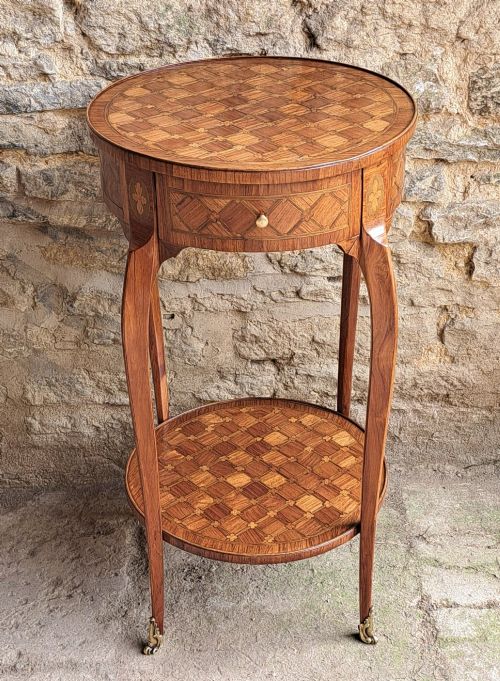


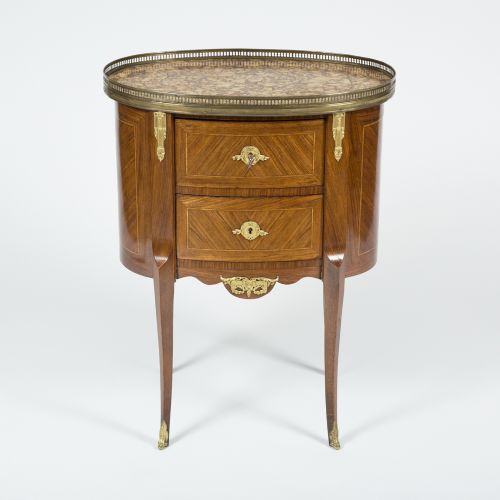


Oval French Nightstand
These oval french nightstand pieces bring continental elegance to a bedroom, offering practical surface space wrapped in classic period styling.
Oval French Nightstand
An oval french nightstand serves as a refined bedside table or small cabinet, designed to hold a lamp and evening essentials while softening the geometry of a room. These pieces appear in forms such as bedside tables, side tables, occasional tables, bedside cabinets, and commodes.
The selections span the nineteenth century, including specific dates from eighteen sixty to nineteen ten, along with Victorian era examples. Buyers encounter revival aesthetics including Louis XV style, Louis XVI style, French Belle Epoque, and French Chateau designs.
Makers and inspirations referenced in the archive point towards high-end cabinet making traditions, associated with names like François Linke and Charles Topino. Most pieces arrive in classic proportions suitable for placement beside a traditional bed.
How They Were Made
Cabinet makers utilised a rich palette of timbers, combining mahogany, walnut, kingwood, amboyna, and painted wood surfaces. Parquetry and marquetry inlay techniques create intricate geometric and floral patterns across the curved wooden carcases.
Many examples incorporate fine details such as cast or chased ormolu mounts and polished brass accents around the legs and framing. Insets of marble, including breche d'alep, provide a durable and luxurious top surface to the oval tables.
Oval French Nightstand Retail Price Guide 2026
Typical asking prices for oval french nightstand among the pieces listed under this phrase on Sellingantiques today, from the lower quarter to the upper quarter. They describe what is for sale here now, not the wider market.
Design influences span Louis XV and Louis XVI revivals alongside French Belle Epoque and Victorian aesthetics.
What Varies in Quality
The distinction between standard production and exceptional workshop output lies in the crispness of the marquetry and the weight of the bronze or ormolu mounts. Finer examples display seamless curved veneer work that follows the difficult oval geometry without lifting or cracking.
Surface finishing and the choice of stone also divide the range, with thick, heavily figured marble tops marking out superior commissions. The integration of cane work, hand-painted details, and signed or attributed mounts elevates certain commodes and cabinets above simpler utility pieces.
François Linke·Charles Topino
The Oval French Nightstand Glossary
- Ormolu
- Gilded bronze mounts applied to furniture for decoration. This technique was widely employed on nineteenth century French pieces to highlight structural lines.
- Marquetry
- The art of applying small pieces of veneer to a structure to form decorative patterns. Craftsmen utilised various coloured woods to create pictorial designs.
- Parquetry
- Geometric mosaic woodwork used for flooring and furniture surfaces. It creates repeating patterns across tabletops and cabinet doors.
- Breche d'alep
- A specific type of quarried marble featuring varied brecciated tones. It frequently forms the heavy inset tops of continental commodes and night tables.
- Table en chiffonnière
- A small French occasional table fitted with drawers. These portable pieces gained popularity for holding needlework or personal items.
Oval French Nightstand: Frequently Asked Questions
Where should I place an oval french nightstand?
These pieces suit positions beside a bed where the curved edges help prevent sharp corners in tight spaces. They also function independently as decorative side tables in living areas.
The compact oval footprint allows them to sit comfortably in hallways or corners where rectangular furniture might block movement.
How do I identify a Louis XV style nightstand?
Louis XV pieces typically feature cabriole legs, asymmetrical curves, and floral marquetry work. The overall silhouette avoids straight lines in favour of flowing organic shapes.
Ormolu mounts on these items usually accentuate the knee of the leg or trace the curved apron beneath the drawer.
What materials are common on these tables?
Common timbers include mahogany, walnut, and exotic veneers like kingwood and amboyna. Many incorporate contrasting lighter wood inlays to form detailed decorative motifs.
Marble tops are frequently fitted to the upper surface, offering a smooth, heat-resistant shelf for water jugs and lamps.
How do I date a nineteenth century nightstand?
Dating relies on observing construction methods, timber choices, and stylistic revivals present in the carved or inlaid decoration. Pieces often align with specific periods like Victorian or Belle Epoque.
Makers' signatures, stamps on the bronze mounts, or labels within drawers can occasionally narrow down the decade of production.