




Cream Painted Bedside Tables
Cream painted bedside tables bring subtle texture and historical character to a room, offering practical surface space alongside varied decorative traditions.
Cream Painted Bedside Tables
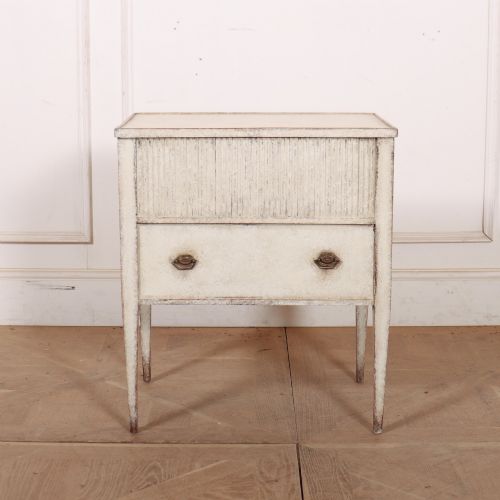
Cream painted bedside tables encompass a range of compact bedroom furniture pieces, typically taking the form of small cabinets, chests, or open lamp tables designed to sit beside a bed. The selection includes matched pairs and individual pieces originating from the nineteenth and early twentieth centuries, spanning periods such as eighteen-sixty up to nineteen-thirty.
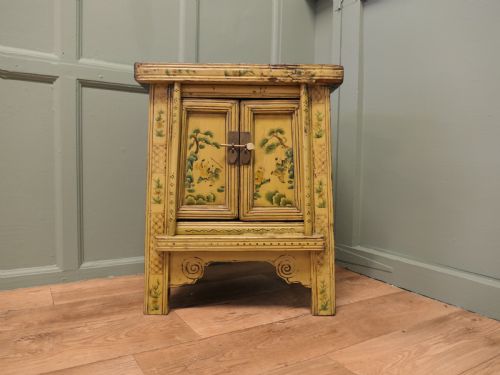
The aesthetic leans heavily toward continental European designs, with French styles, Louis XV and Louis XVI influences, Gustavian simplicity, and Dutch craftsmanship appearing frequently. Alongside these European examples, the listings contain items reflecting distinct international traditions like Anglo-Indian forms and Japanese Meiji aesthetics, often adapted into bedside storage or lighting.
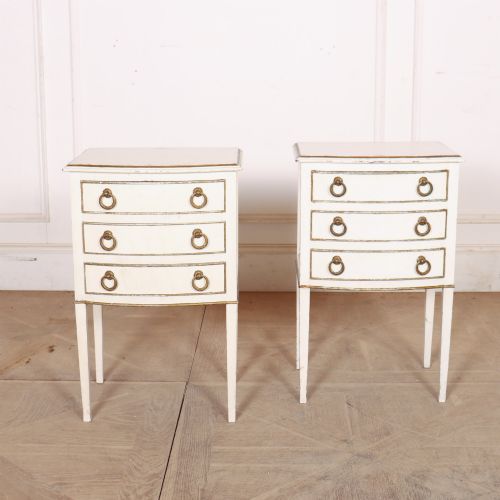
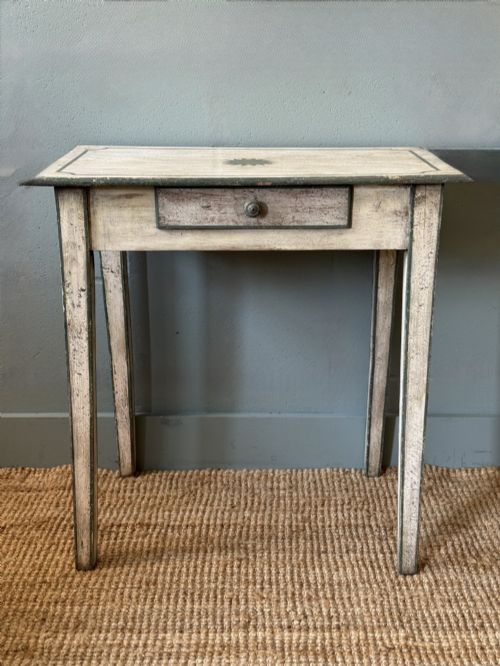
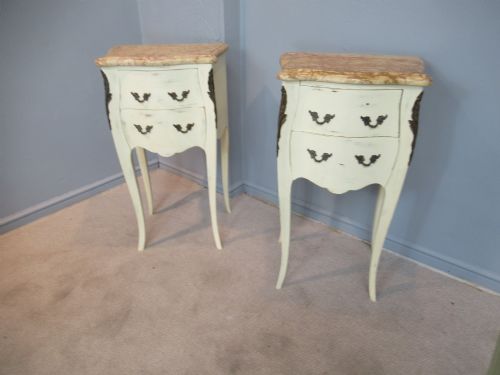
Buyers seeking cream painted bedside tables will encounter both utilitarian cupboards with doors and drawers, and more decorative console or demi-lune shapes. Many of these pieces arrive as matched pairs, making them well-suited for symmetrical placement on either side of a bed frame.
Materials and construction
Wood serves as the primary structural material, utilising painted wood surfaces finished in varying shades of cream, sometimes accompanied by gilding or hand-painted decorative motifs such as Chinoiserie scenes. Certain items incorporate fruitwood beneath their painted finishes, while other variations introduce contrasting elements like inset marble tops.
Hardware and secondary details integrate metals such as brass, alongside fabric elements where appropriate. Surface ornamentation relies on traditional hand-painting techniques, creating aged patinas and layered decorative effects that define the appearance of these nineteenth and early twentieth-century pieces.
Cream Painted Bedside Tables Retail Price Guide 2026
Typical asking prices for cream painted bedside tables among the pieces listed under this phrase on Sellingantiques today, from the lower quarter to the upper quarter. They describe what is for sale here now, not the wider market.
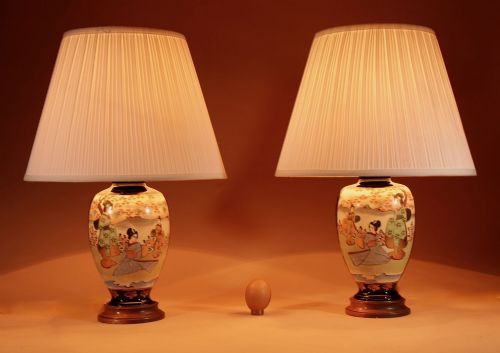
Some bedside tables share shelf space with Japanese Meiji porcelain and French Paris ware lamps.
Distinguishing quality
The distinction between standard examples and finer pieces rests upon the precision of the joinery and the execution of the painted decoration. Hand-painted motifs, delicate gilding, and integrated details like marble tops elevate the visual and material standard of a bedside table.
Originality of surface finish and the integrity of the underlying wood structure dictate the long-term character of the furniture. Pieces retaining their early paint layers demonstrate greater historical consistency than later re-paintings.
The Cream Painted Bedside Tables Glossary
- Demi-lune
- A half-moon shape used for tables and cabinets, allowing the piece to sit flush against a wall while occupying minimal floor space.
- Gustavian
- A Swedish neoclassical design style characterised by restrained ornamentation, lighter colour palettes, and simplified classical motifs.
- Chinoiserie
- A European decorative style emulating Chinese artistic traditions, featuring hand-painted motifs of landscapes, figures, and floral patterns.
- Neoclassical
- A revival style drawing inspiration from classical antiquity, marked by symmetry, straight lines, and understated architectural details.
Cream Painted Bedside Tables: Frequently Asked Questions
Are these bedside tables sold as pairs?
Many of the listed bedside tables and cabinets are offered as matched pairs, which facilitates symmetrical arrangement in a bedroom scheme.
Other listings comprise individual pieces, allowing for eclectic placement or use as standalone lamp tables.
What periods do these pieces date from?
The selection spans from the nineteenth century through the early twentieth century, including specific decades like eighteen-sixty, nineteen-hundred, and nineteen-thirty.
Construction dates align with traditional European cabinet-making eras such as the Louis periods and the Gustavian movement.
What materials are used in their construction?
Primary construction relies on painted wood and fruitwood, often finished with layered cream paint, gilding, and hand-painted decorative elements.
Selected pieces incorporate contrasting materials such as marble tops and brass hardware to add functional and visual texture.
How do French and Swedish styles differ?
French styles like Louis XV and Louis XVI often feature more ornate carved details, curved lines, and decorative hardware suited to formal interiors.
Swedish Gustavian pieces lean toward restrained lines, brighter painted finishes, and a lighter neoclassical aesthetic.