
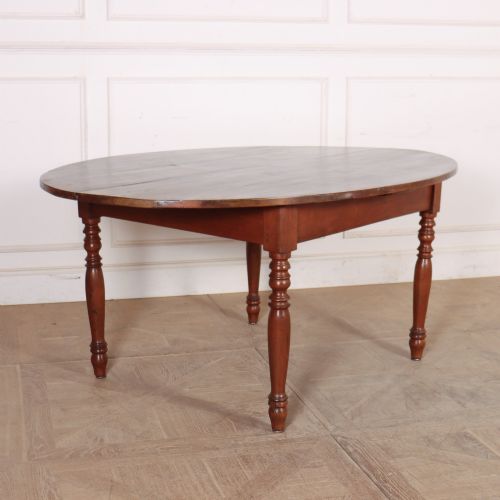


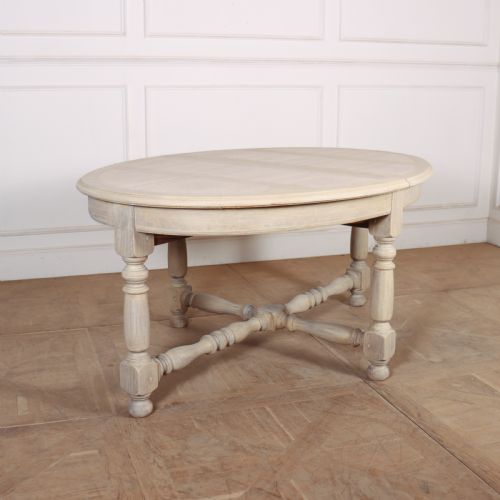


Oval French Dining Table
An oval french dining table brings warmth and curves to a room, offering a sociable shape that avoids hard corners.
Oval French Dining Table
An oval french dining table is a dining surface shaped with rounded ends, drawing on centuries of European craft from provincial farmhouses to chateaux. When you search for an oval french dining table, you meet pieces built from solid timbers like oak, fruitwood, walnut, and cherrywood, spanning the eighteenth, nineteenth, and early twentieth centuries.
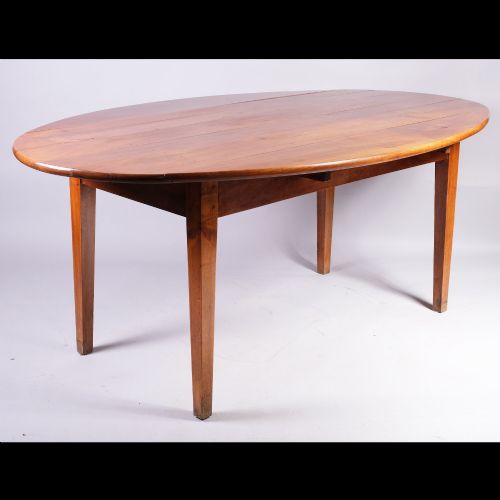
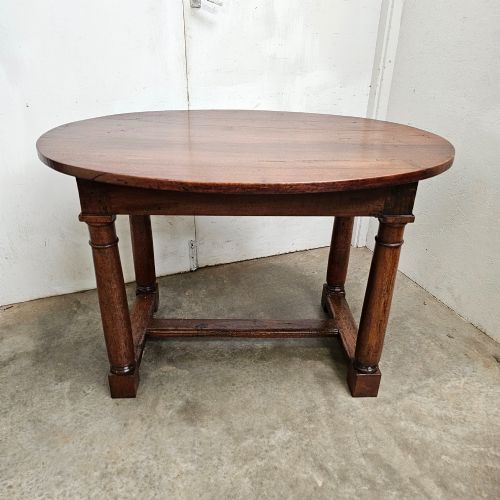
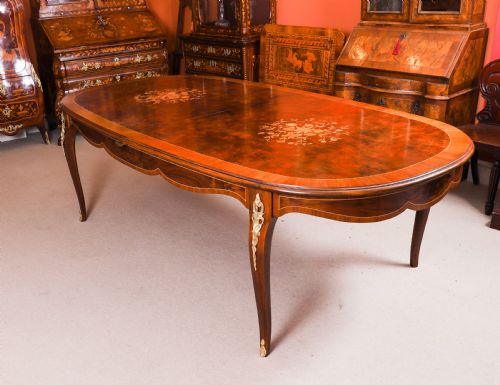
The versions most common on this page range from rustic farmhouse and vendange tables to ornate revival styles mounted in ormolu. You find pieces defined by French provincial, Louis XV, Louis XVI, and Art Deco aesthetics, ranging from humble gate-leg designs to grand ten-foot dining lengths.
These tables serve everyday family meals and large gatherings alike, fitting naturally into spaces where rectangular edges feel too severe. Their varied provenance includes wine-harvest origins, country kitchens, and formal dining suites.
What varies in quality
The distinction between ordinary and exceptional work lies in the selection of timber and the integrity of the joinery. Tables fashioned from thick, figured walnut or quarter-sawn oak demonstrate greater structural stability and visual depth than utilitarian pieces built from mixed secondary woods.
Artisanal execution separates standard workshop production from high-style pieces, visible in the crispness of hand-carved details and the precision of marquetry or ormolu placement. The harmony of proportions and the balance between the top and its base determine the enduring elegance of each table.
The selection here spans from the eighteenth century through the Art Deco era, encompassing oak, fruitwood, walnut, and exotic veneers.
The Oval French Dining Table Glossary
- Ormolu
- Gilded bronze mounts applied to furniture for decoration. This technique is frequently found on Louis XV and Louis XVI revival pieces.
- Marquetry inlay
- Patterns formed by fitting different veneers into a primary surface. It appears on finer tables to create intricate floral or geometric designs.
- Vendange table
- A round or oval harvest table historically used during the grape picking season. These often feature folding or gate-leg bases for easy storage.
- Book-matched
- Veneers sliced and placed side by side to mirror each other. This creates a symmetrical pattern across the surface of the table top.
- Fruitwood
- Timber sourced from fruit-bearing trees such as cherry, pear, or apple. It yields a dense surface with a warm, mellow tone.
Oval French Dining Table: Frequently Asked Questions
How do I choose the right size?
Consider the length of the room and the number of people you plan to seat regularly. Large tables stretching to ten feet accommodate bigger dining spaces, while gate-leg variants offer flexibility for smaller rooms.
Take precise measurements of your floor area, leaving enough clearance around the perimeter for chairs to pull out comfortably. An oval shape naturally helps traffic flow past the ends of the table.
Are these tables suitable for everyday use?
Most of these pieces were built as working furniture for farmhouses, kitchens, or chateaux, meaning they are inherently sturdy. Solid oak, fruitwood, and walnut withstand daily meals and family life.
Protect vulnerable polished surfaces with placemats and coasters to prevent heat marks or moisture rings. Regular maintenance with appropriate wax or oil keeps the timber nourished.
How do I identify a revival style?
Revival pieces copy the curves, ornamentation, and proportions of earlier monarchical periods, such as the reigns of Louis XV or Louis XVI. Makers in the nineteenth and early twentieth centuries frequently returned to these aesthetic models.
Look for clues in the timber ageing, construction hardware, and tool marks underneath. Ormolu mounts and specific carving motifs signal whether a piece dates to the original period or a later revival.
What is a vendange table?
A vendange or vigneron table originates from French wine-growing regions where growers used them for seasonal estate work and dining. They frequently feature folding mechanisms or gate-leg frames so workers could clear them away quickly.
These pieces typically showcase fruitwood, oak, or elm construction with simple, practical lines. Their historical use gives them a casual, rustic charm well-suited to country kitchens.