
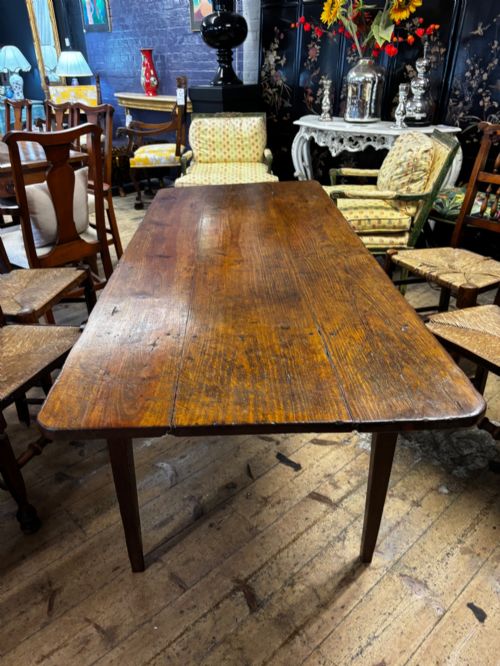

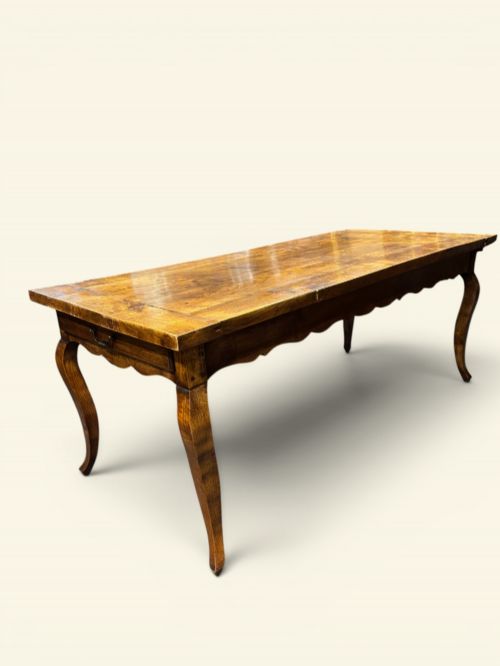
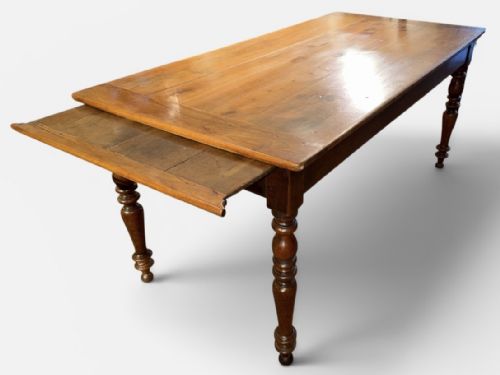


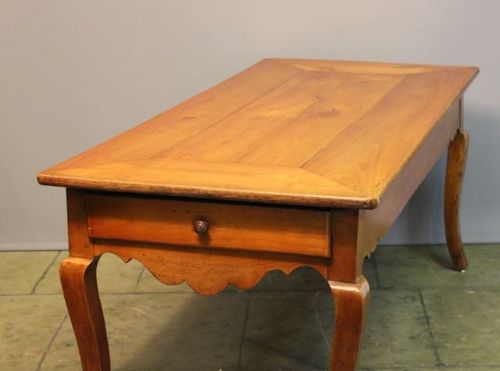
French Fruitwood Harvest Table
A french fruitwood harvest table brings warmth and enduring utility to any dining space through honest craftsmanship and rich timber tones.
French Fruitwood Harvest Table
A french fruitwood harvest table represents the sturdy heart of rural domestic life, designed for communal dining and daily labour alike. When exploring these pieces, buyers encounter substantial dining tables and serving furniture shaped by French provincial and rustic farmhouse traditions.
The selections on this page span the nineteenth century, including specific dates from eighteen hundred to eighteen eighty. These items frequently manifest as farmhouse refectory or kitchen dining tables, occasionally incorporating pine, oak, iron, or brass alongside the primary timber.
The forms range from compact examples to large kitchen tables and D-end configurations. Each piece carries the distinct character of nineteenth-century French country craftsmanship, built to serve practical household needs over generations.
What Varies in Quality
Quality rests upon the selection and integrity of the timber, particularly the depth of grain and warmth found in the fruitwood surface. Superior examples display a harmonious integration of secondary woods like pine or oak without compromising the visual weight of the top.
The refinement of the form also dictates standing, distinguishing straightforward utilitarian boards from more sophisticated D-end shapes or refectory proportions. Proportion and timber patination ultimately separate everyday utility items from more distinguished provincial examples.
Listings span the nineteenth century, featuring dates from eighteen hundred to eighteen eighty alongside fruitwood, oak, and pine materials.
The French Fruitwood Harvest Table Glossary
- Fruitwood
- Timber derived from fruit-bearing trees such as cherry, pear, or apple. It is prized for its fine grain and rich colour that deepens with age.
- Refectory table
- A long, narrow dining table traditionally used in communal dining halls. These pieces offer substantial length and sturdy underframes.
- French provincial
- A style reflecting the regional cabinet-making traditions of rural France. It prioritises honest utility and local materials over ornate urban decoration.
- D-end
- A table design featuring semi-circular ends that allow sections to stand independently or join together. This configuration provides flexibility in dining arrangements.
French Fruitwood Harvest Table: Frequently Asked Questions
What is a french fruitwood harvest table?
These pieces are large, sturdy tables built in rural France during the nineteenth century for daily domestic use and communal meals.
They combine practical forms with warm fruitwood timbers, often incorporating oak, pine, or iron structural elements.
How were these tables used originally?
Rural households used them for food preparation, daily dining, and general domestic labour in the farmhouse kitchen.
Their robust construction ensured they could withstand heavy handling by large families and farm workers alike.
How do I style a harvest table?
Pair the table with simple wooden seating to maintain the honest character of the rustic French farmhouse tradition.
Allow the natural fruitwood surface to remain unhidden so the grain and patination can serve as the focal point of the room.
How do I identify the period?
Examine the timber patination, tool marks, and construction joints to gauge nineteenth-century manufacturing methods.
Look for structural clues like refectory proportions or D-end configurations typical of the eighteen-hundreds.