


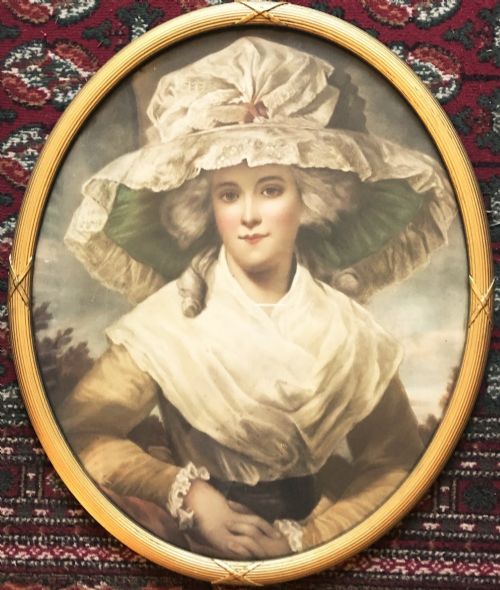
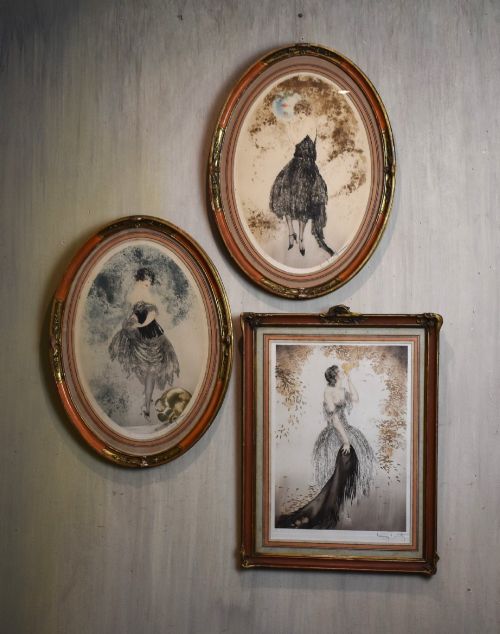


Oval Framed Portrait Print
An oval framed portrait print brings historical likenesses to interior walls through period framing and graphic techniques.
Oval Framed Portrait Print
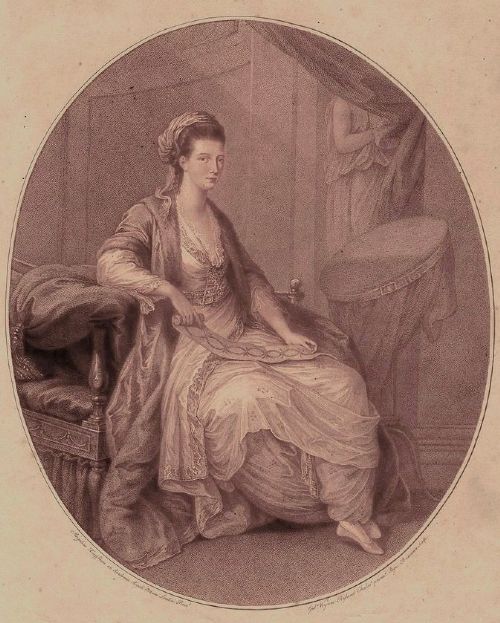
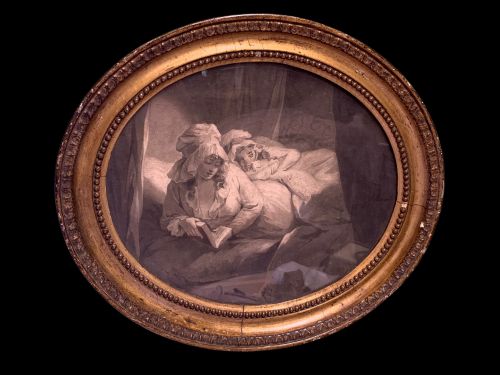
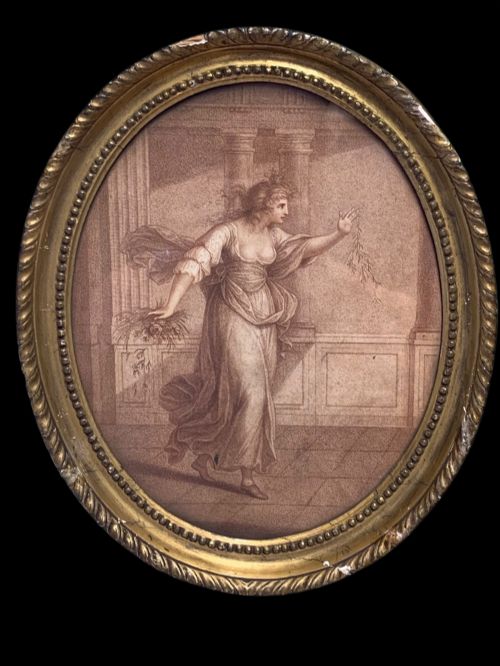
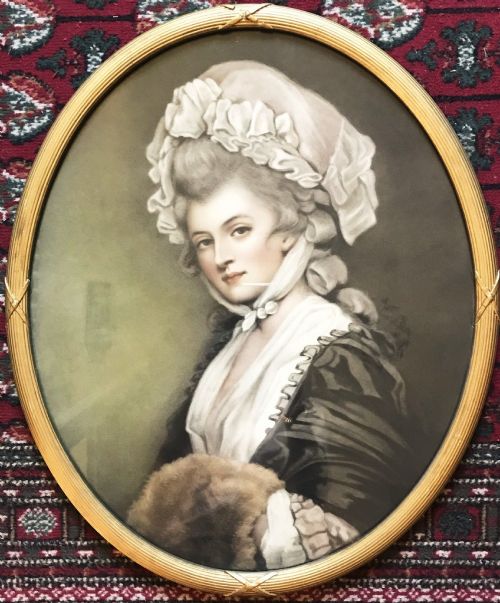
An oval framed portrait print captures likenesses of historical figures, royalty, and fictional subjects within curved enclosures. These works draw from periods including the eighteenth century, nineteenth century, and Edwardian era.
The selections on this page encompass line engravings, stipple engravings, etchings, mezzotints, and hand-coloured portrait miniatures. Subjects range from nobility and military officers to fashionable ladies and children.
How they were made
Maker techniques rely upon paper supports marked by ink through etching, engraving, stipple, and mezzotint methods. Some examples incorporate hand colouring applied directly over the printed image.
Frames utilise wood, giltwood, gold leaf, and brass components. Glazing protects the paper surfaces, occasionally appearing as dome fronted glass.
Listings feature paper prints supported by wood, giltwood, and brass materials across Georgian, Regency, and Victorian styles.
What varies in quality
Quality differences emerge through the crispness of the ink impression and the fidelity of the print to the original portrait source. Finer impressions reveal delicate lines and subtle tonal gradations.
The construction of the surrounding frame contributes significantly to the character of the piece. Giltwood, carved gesso, and period joinery distinguish superior mountings from simpler surrounds.
John Smith·Jacobus Houbraken·Louis Icart·Sir Thomas Lawrence·Hans Holbein
The Oval Framed Portrait Print Glossary
- Stipple engraving
- A printmaking technique using dots to create tonal areas and soft shadows. This method allows for subtle rendering of flesh and fabric in portraiture.
- Mezzotint
- A tonal printmaking process where the copper plate is roughened to produce rich dark areas and smooth gradations. It gained popularity for translating oil paintings into print.
- Line engraving
- A sharp method where lines are cut directly into a metal plate with a burin. The resulting prints exhibit clean, precise outlines.
- Gesso
- A plaster mixture applied to wood frames before gilding or painting. It provides a smooth surface for detailed moulding.
Oval Framed Portrait Print: Frequently Asked Questions
How do I date an oval framed portrait print?
Dating relies upon the style of the engraving technique, the clothing and hair of the sitter, and the construction methods of the frame. Examining the paper type and any inscribed lettering provides further chronological clues.
Matching the portrait subject to known historical painters or publishers helps narrow the decade of production. Period frames often share characteristics with furniture designs of their respective centuries.
Were these prints made to be oval originally?
Some portrait prints were designed specifically to fit curved apertures, while others were trimmed from rectangular sheets to suit round or oval frames. Circular and oval formats became particularly popular during Georgian and Victorian interior decoration.
Framing rectangular engravings into oval mounts required cutting the paper edge. Examining the margin space reveals whether the print was created for this specific geometry.
What is the difference between an engraving and a mezzotint?
An engraving uses lines and cross-hatching gouged into metal plates to form an image. This technique produces sharp contours and defined linear detail suitable for architectural and portrait subjects.
By contrast, a mezzotint builds up rich tonal areas and smooth shadows from dark backgrounds. Portrait printmakers favoured this method for replicating the softness of painted skin and textiles.
How should I display these framed prints?
Hanging these works away from direct sunlight protects the paper support and any applied hand colouring from fading. Stable indoor humidity prevents warping in the wooden and gilded frames.
Grouping several pieces together reflects historical gallery wall arrangements seen in period interiors. Ensuring secure wall fixings supports the weight of glazed and gilded frames.