
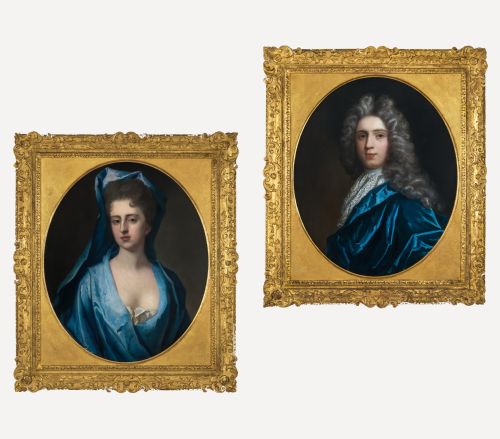
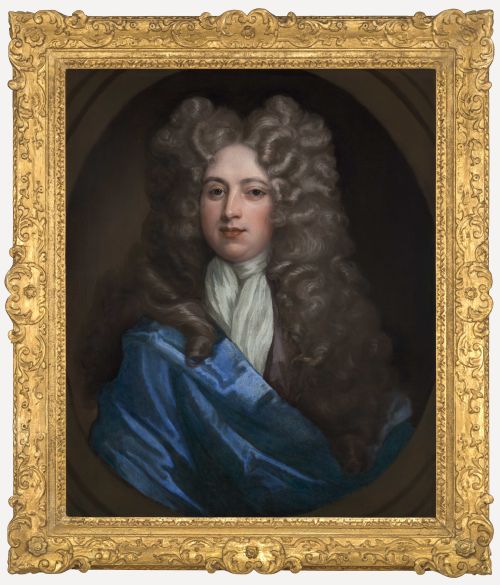
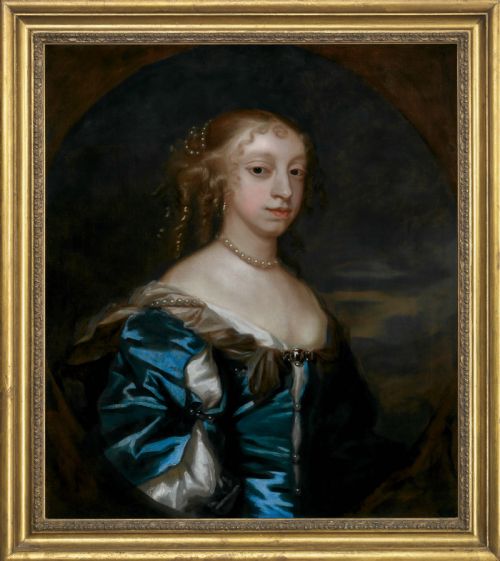
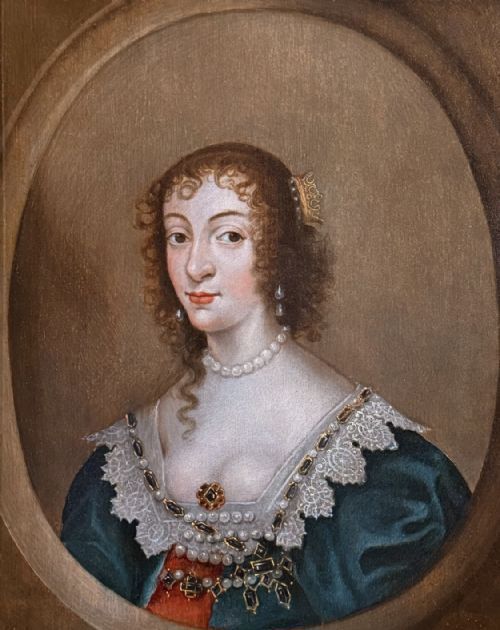


Oval Feigned Frame Painting
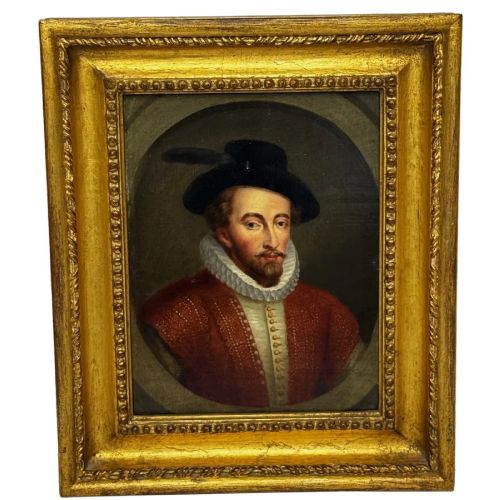
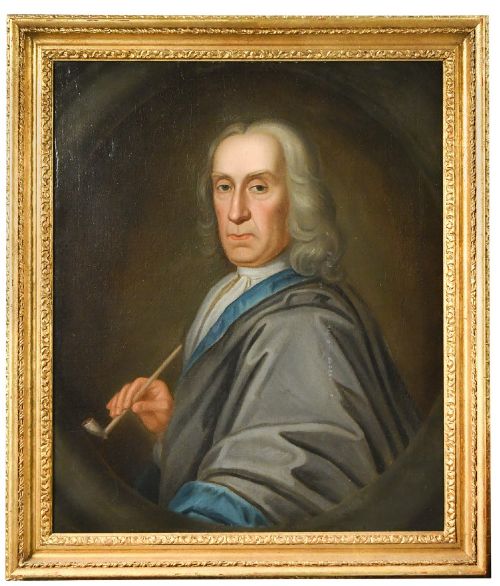
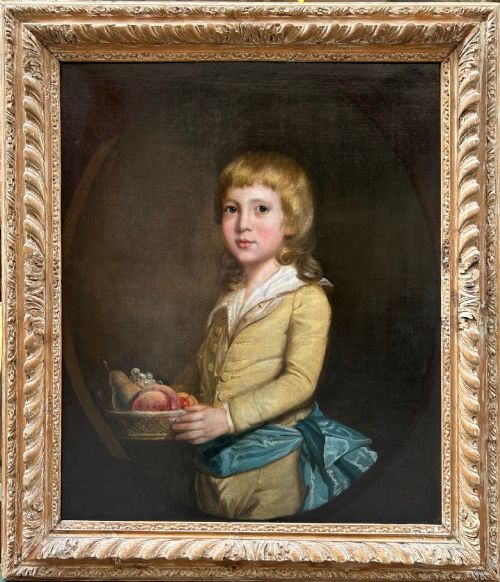
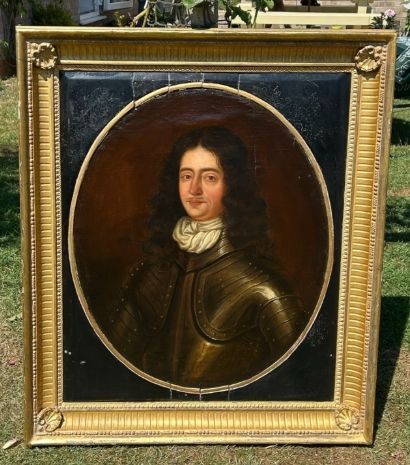
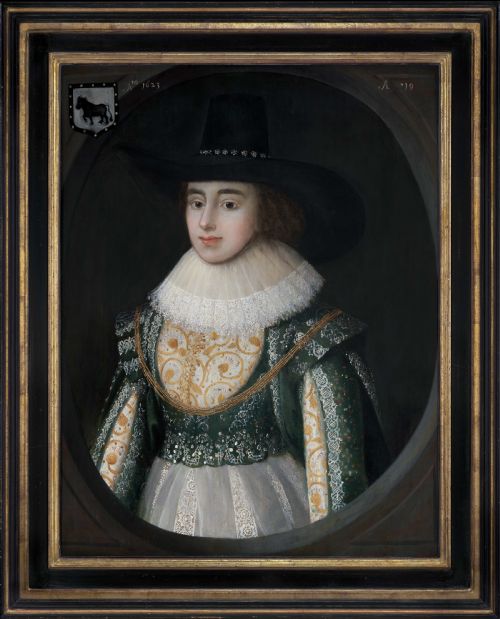
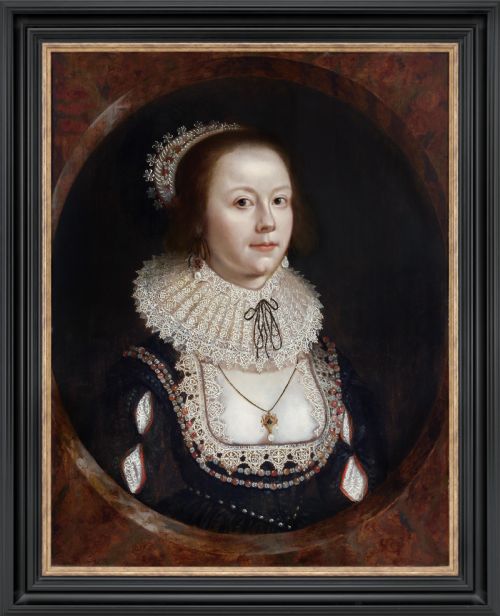
These oval feigned frame painting works present sitters within simulated borders, creating a clever spatial trick that draws the eye directly to the portrait.
Oval Feigned Frame Painting
An oval feigned frame painting uses a painted trompe l'oeil aperture, making the subject appear as though viewed through a carved stone or wooden opening. This page focuses primarily on portrait paintings from the seventeenth and eighteenth centuries, executed in oil on canvas or oil on panel.
The selections span the Georgian and Baroque periods, including examples from English, British, and European schools. Subjects range from named sitters like Lady Elizabeth Wheeler and Sir John Wentworth to anonymous gentlemen and ladies in period attire.
How They Were Made
Artists built these works using oil paint applied to canvas or wood panels, often framing the central bust within a simulated oval cartouche. The illusion relied on precise shading around the inner painted border to create depth and relief.
Many historical frames utilise carved giltwood and gold leaf to house the canvas, complementing the internal trompe l'oeil geometry of the artwork itself.
Listings feature works spanning the seventeenth and eighteenth centuries, executed in oil on canvas and oil on panel.
What Varies in Quality
Skill in handling facial expression and fabric texture separates workshop output from master portraiture. The execution of the simulated frame itself also dictates the piece's success, requiring subtle tonal gradation to achieve genuine three-dimensional depth.
Attribution plays a role in the standing of a work, distinguishing pieces by recorded hands or established circles from broader regional school productions.
Michael Dahl·Thomas Murray·Cornelius Johnson·Pieter Nason·Mary Beale·George Knapton·John Closterman·Andrea Soldi
The Oval Feigned Frame Painting Glossary
- Feigned frame
- A painted illusion of a border, arch, or cartouche enclosing the main subject. This technique makes a flat canvas appear as a sculptural window.
- Oil on canvas
- Pigment bound in drying oil applied to a stretched woven fabric support. This medium allowed portraitists to achieve rich colour depth and smooth blending.
- Oil on panel
- Pigment bound in oil applied to a wooden board rather than fabric. Panel supports were common in earlier seventeenth-century works.
- Baroque
- An artistic style spanning the seventeenth and early eighteenth centuries characterised by drama, rich detail, and dynamic composition. Portraiture from this era emphasises texture and presence.
- Giltwood
- Wood carved and coated with a thin layer of gold leaf. It provided opulent framing for important seventeenth and eighteenth-century portraits.
Oval Feigned Frame Painting: Frequently Asked Questions
What is a feigned frame?
A feigned frame is a painted illusion on the canvas that mimics a physical stone, wood, or gilt surround.
This device pulls the viewer's focus towards the sitter while adding a sense of architectural depth to the portrait.
How do I date these portraits?
Dating relies on costume details such as periwigs, lace collars, cut sleeves, and doublet styles visible in the painting.
Comparative analysis with known dated works by the same artist or school further narrows the timeline.
Where were these paintings hung?
These works hung primarily in the reception rooms, galleries, and stairhalls of substantial country houses and town residences.
They served as family records, displays of lineage, or representations of historical and literary figures.
How do I care for oil on canvas?
Keep the artwork away from direct sunlight and maintain stable relative humidity to protect both the canvas and the stretcher bars.
Dust the surface gently with a soft, dry brush and avoid using any liquid cleaners on the paint film.