

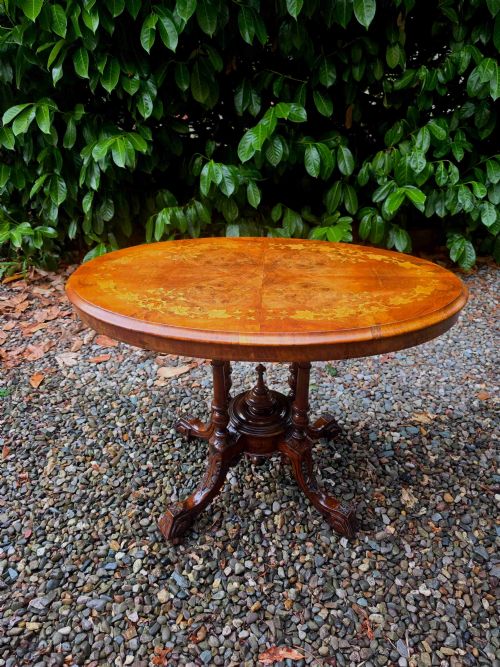
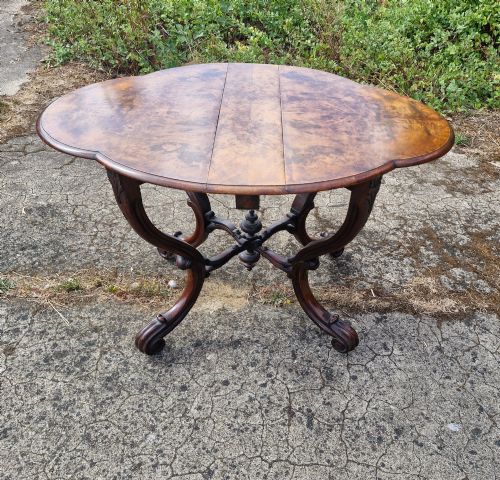
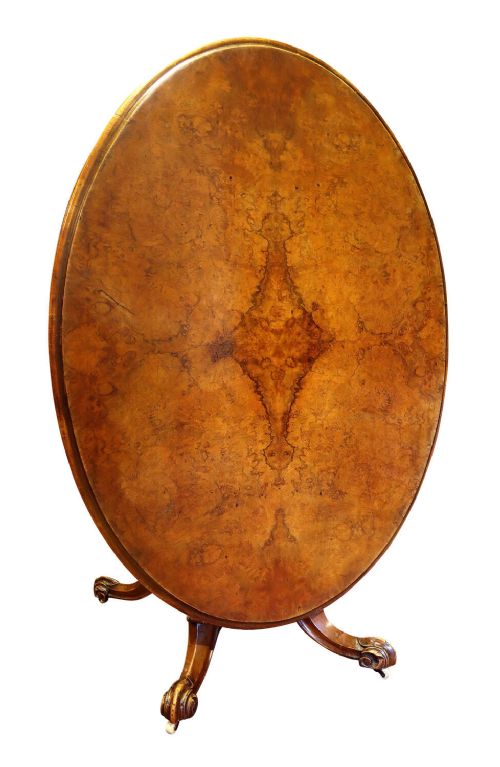
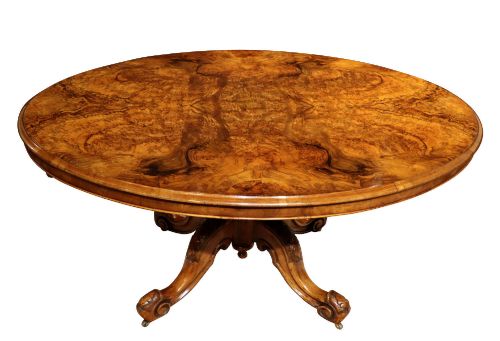
Oval Burr Walnut Loo Table
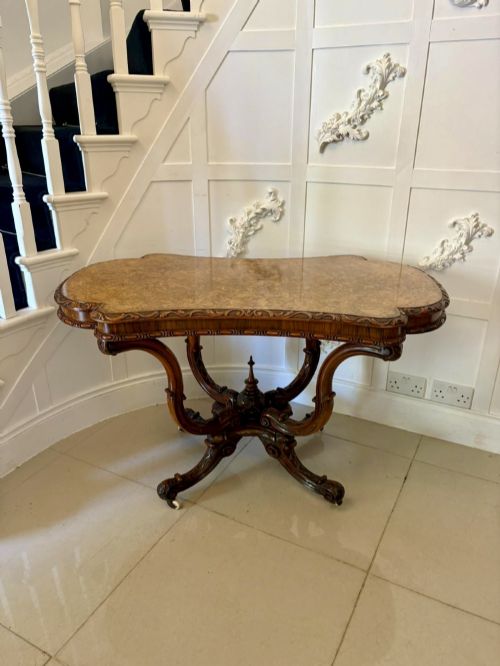
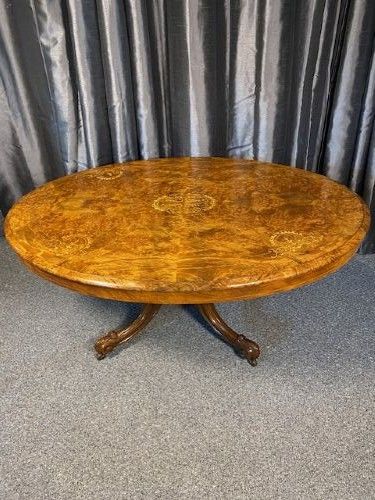
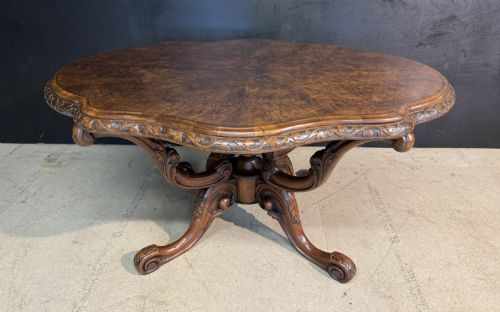
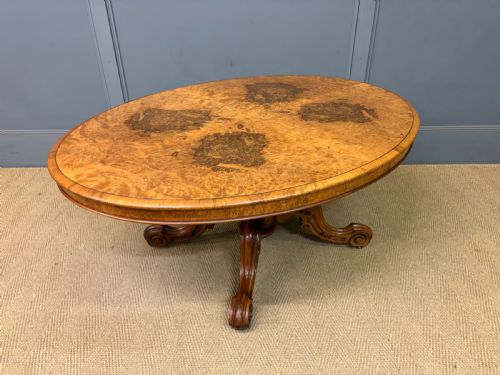
An oval burr walnut loo table brings Victorian warmth and striking grain patterns to the centre of a room.
Oval Burr Walnut Loo Table
When searching for an oval burr walnut loo table, a buyer examines nineteenth-century dining and centre tables designed for Victorian drawing rooms. These pieces typically date from the 1850s to the 1880s, reflecting the height of Victorian cabinet-making.
How They Were Made
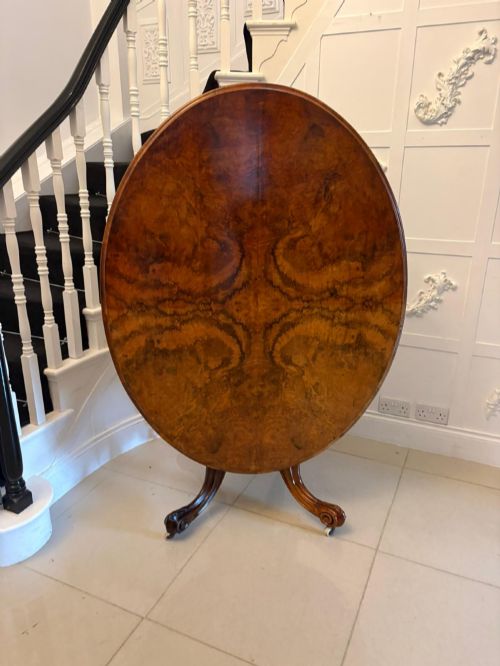
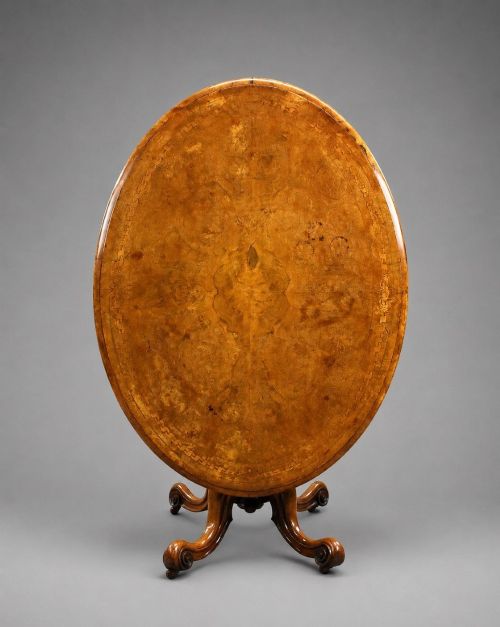
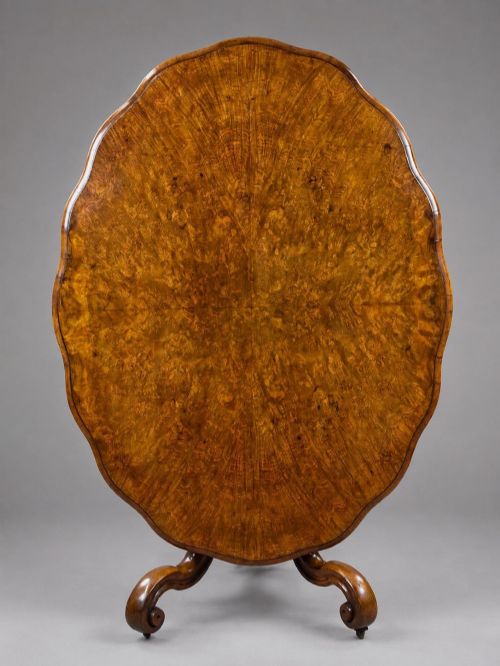
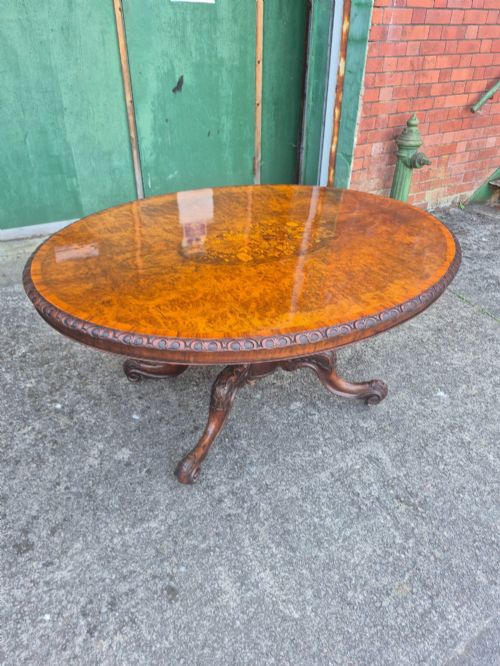
Cabinet-makers utilised burr walnut veneer applied over solid secondary timbers to achieve rich, swirling grain patterns across the expansive oval top. Artisans frequently integrated boxwood inlay, marquetry, and occasional amboyna mounts to enhance the decorative surface.
The structural framework typically relies on solid walnut for bases and pedestals, ranging from carved quadrapod legs to pillar and claw supports. Mechanisms such as scissor actions and tilt-top pivots demonstrate precise nineteenth-century mechanical joinery.
Listings feature Victorian pieces predominantly dated between 1850 and 1880, constructed from burr walnut, solid walnut, and brass.
What Varies in Quality
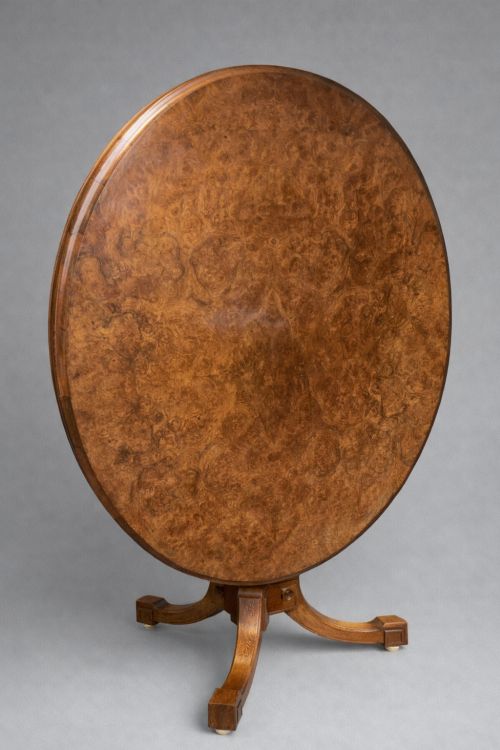
The visual impact of an oval burr walnut loo table depends heavily on the selection and symmetry of the burr grain veneer across the top. Superior examples display complex, highly figured patterns that have been meticulously matched and balanced.
Carving definition and the execution of inlaid marquetry separate standard production pieces from finer workshop outputs. The stability and smoothness of the tilt-top mechanism and the robustness of the supporting pedestal further distinguish the grade of the piece.
Gillows·Edwards & Roberts
The Oval Burr Walnut Loo Table Glossary
- Burr walnut
- A thin slice of wood taken from the knotty growth of a walnut tree, yielding an intricate, swirling pattern used for decorative veneer. This material defined high-end Victorian cabinet-making.
- Loo table
- A large nineteenth-century occasional table originally used for the card game loo. These tables feature tilt-top mechanisms to save space.
- Tilt-top
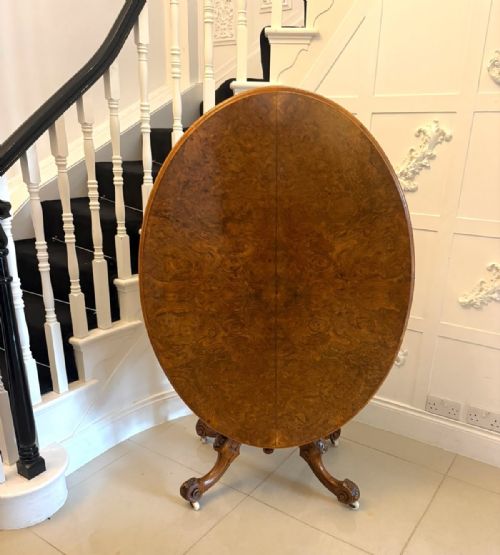
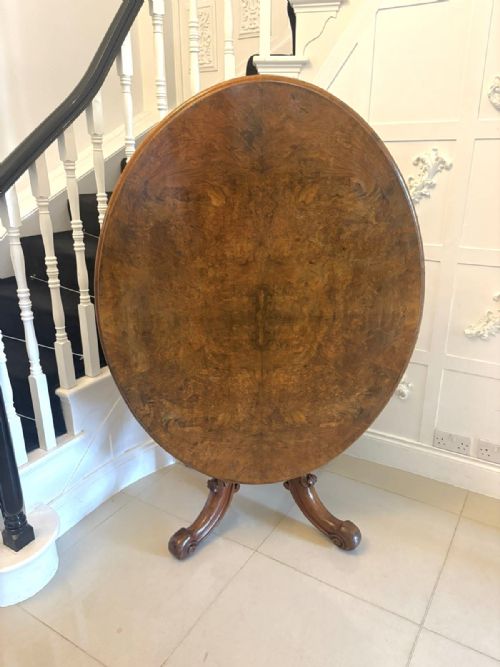
- A hinged table top that pivots to a vertical position. This allows the furniture to stand flat against a wall when not in active use.
- Marquetry
- Decorative patterns formed by fitting together small pieces of contrasting veneer. It frequently decorates the borders of Victorian table tops.
- Quadrapod base
- A pedestal support resting upon four carved feet or legs. This design provides stability for large oval table tops.
Oval Burr Walnut Loo Table: Frequently Asked Questions
What is a loo table?
A loo table is a nineteenth-century centre table designed primarily for entertaining and card games. The large top provided ample space for gatherings in the drawing room.
Many examples include a tilting mechanism so the table could be stored upright against a wall when the room was needed for other purposes.
How do I date these tables?
Most pieces date from the Victorian era, specifically between the 1850s and 1880s. Stylistic cues such as carved quadrapod bases and boxwood inlay help narrow the production period.
Evidence of hand-cut joinery and traditional construction methods also point towards these mid-nineteenth-century decades.
How do I use one today?
These tables function well as central display pieces, occasional dining tables, or large lamp tables in spacious rooms. Their striking grain patterns make them a natural focal point.
Using coasters and avoiding direct sunlight protects the delicate burr walnut veneer during daily use.
What does tilt-top mean?
A tilt-top mechanism uses a hinged block beneath the table surface connected to the central pedestal. This allows the top to release, pivot, and lock into a vertical position.
This clever design originated to save floor space in crowded Victorian interiors.