


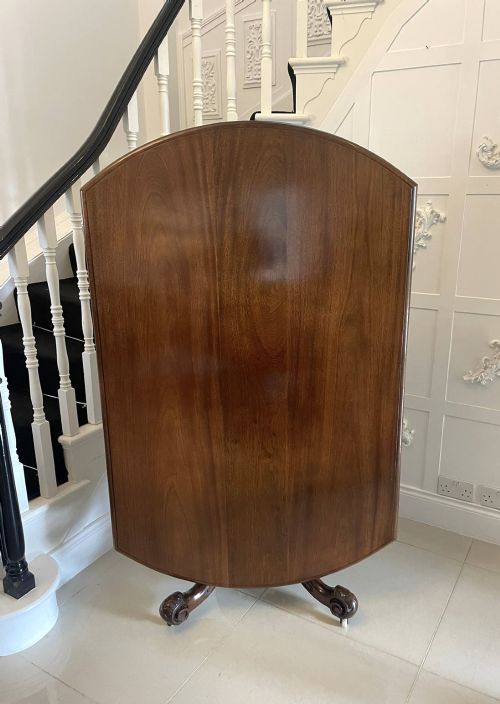
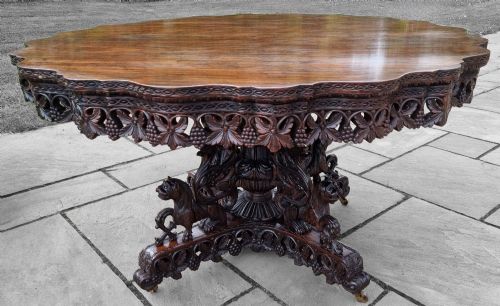
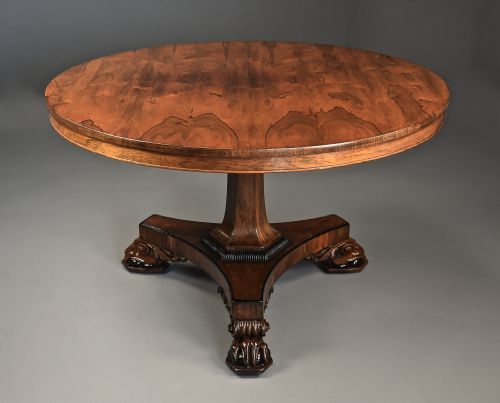
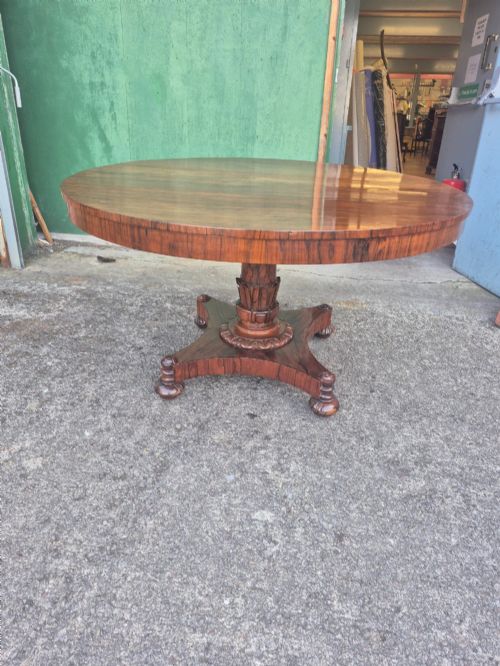
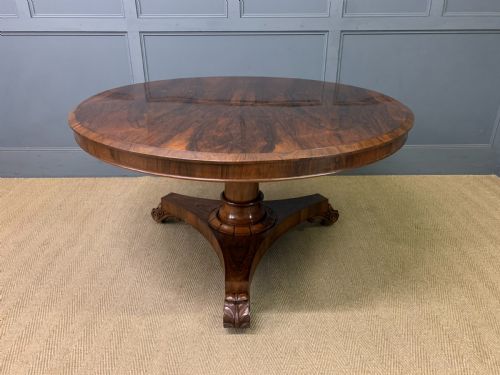
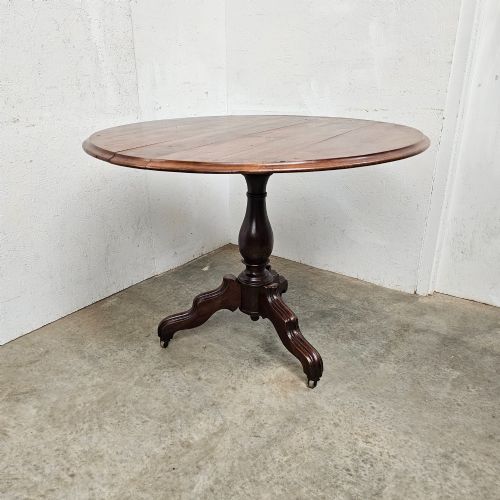
Carved Base Tilt Table
A carved base tilt table offers the practical convenience of a folding top combined with substantial architectural form.
Carved Base Tilt Table
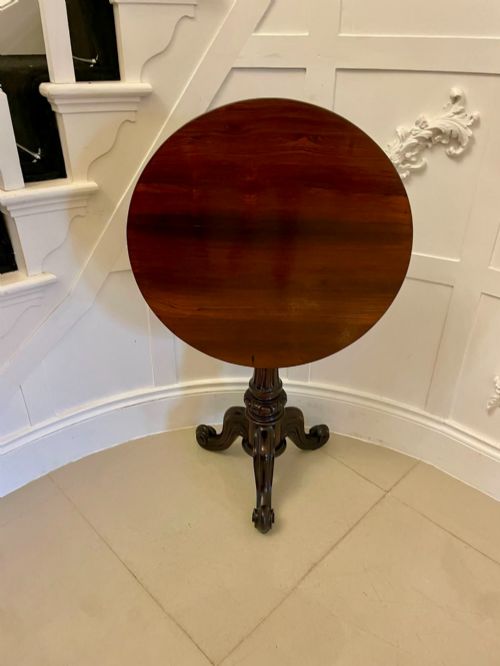
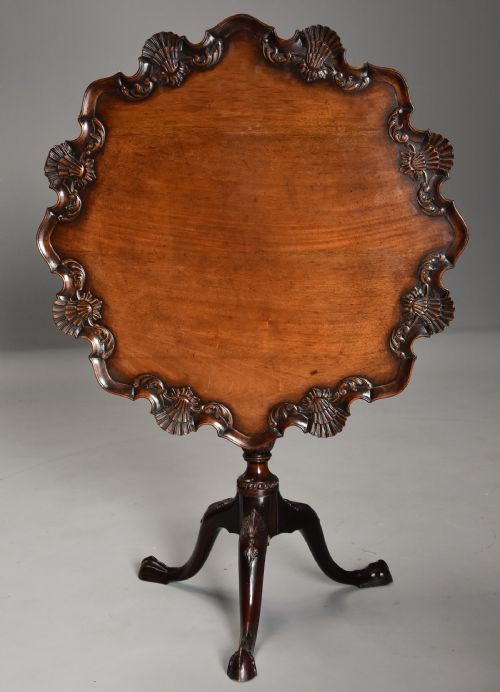
A carved base tilt table is a versatile form designed to save space when not in use by allowing the top to pivot upright. These pieces appear primarily across the nineteenth century, encompassing Georgian, Regency, William IV, and Victorian periods.
How they were made
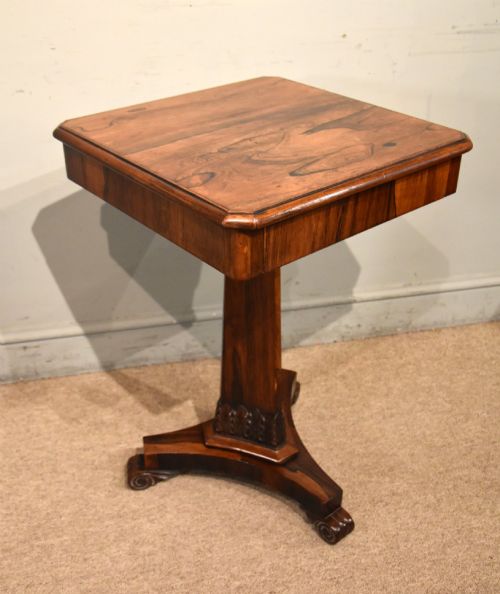
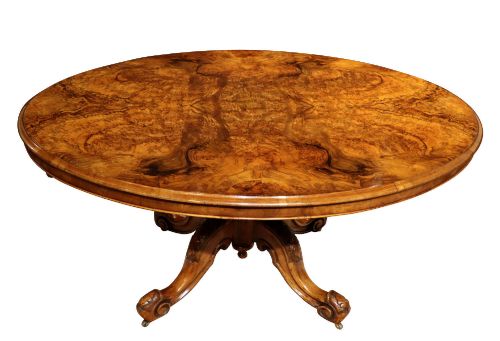
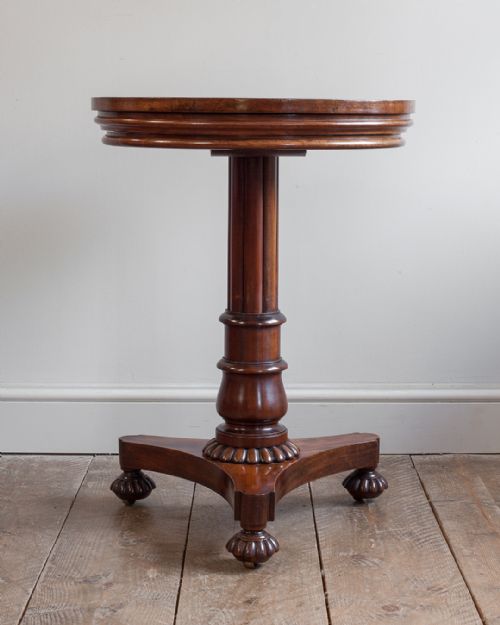
Cabinet makers utilised dense timber stocks, notably solid rosewood and mahogany, alongside flame mahogany and burr walnut veneers applied to stable secondary woods. Structural integrity relied on robust central pedestals fixed to heavy carved bases, frequently fitted with brass castors for mobility.
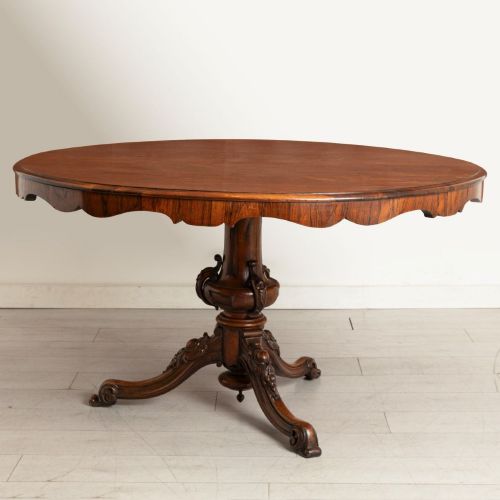
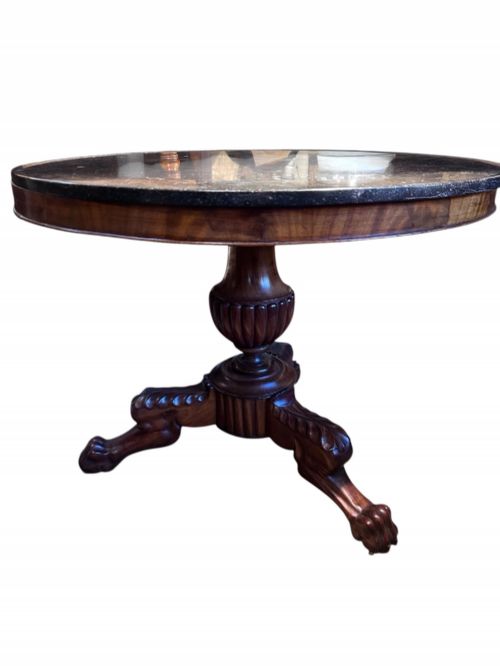
Carving was executed by hand on solid sections of the pillars and bases, displaying acanthus foliage, scrolls, and animal forms. The tilt or snap-top mechanism employed secure wooden or brass catches to lock the heavy tops firmly in the horizontal position.
Some nineteenth century tables feature carved mythical creatures staring out from beneath the dining surface.
What varies in quality
Quality rests upon the crispness and depth of the hand carving on the pillar and base, alongside the choice of figured timber veneers on the top. Pieces with rich grain patterns and substantial proportions demonstrate superior workshop execution.
The engineering of the tilting mechanism dictates daily usability, where tight joints and smooth locking actions separate standard production from exceptional examples.
The Carved Base Tilt Table Glossary
- Tilt-top table
- A table with a hinged top that pivots vertically to stand flat against the wall when not in use. This mechanism allowed large tables to occupy minimal floor space in period drawing rooms.
- Breakfast table
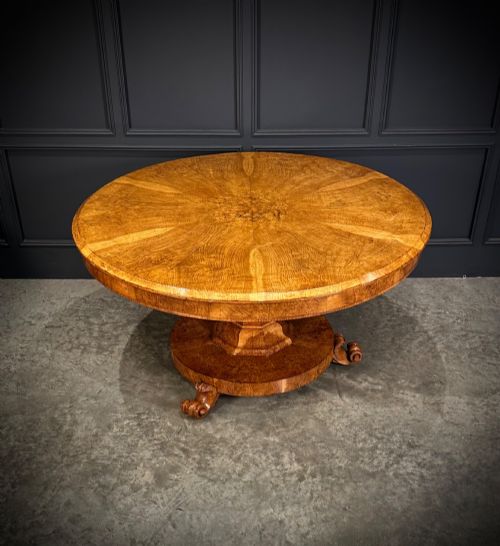
- A pedestal table originating in the Georgian and Regency periods designed for morning dining or general use. These typically feature circular or oval tops supported by a central carved column.
- Triform base
- A three-sided pedestal support resting on three feet or castors. This configuration provides steady weight distribution for heavy timber tables.
- Veneer
- A thin slice of figured wood applied over a secondary timber foundation to create decorative patterned surfaces. Cabinet makers utilised flame mahogany and burr walnut to achieve striking visual depth.
- Snap-top
- A spring-loaded or latch-operated mechanism that secures a tilt-top table firmly in its horizontal position. It prevents the top from slipping during use.
Carved Base Tilt Table: Frequently Asked Questions
How do I operate the tilt mechanism?
Most tables utilise a brass catch or wooden button beneath the top that releases the locking mechanism.
Lifting this catch allows the heavy top to pivot smoothly into the vertical position.
Where did these tables sit in a home?
These pieces functioned primarily as centre tables in large halls and drawing rooms, or as breakfast tables in private parlours.
When tilted, they moved easily against perimeter walls to clear floor space.
How do I distinguish William IV from Victorian pieces?
William IV examples generally display heavy architectural scrollwork, bold reeded columns, and rich rosewood timbers dating from the 1830s.
Later Victorian pieces often incorporate darker walnut, elaborate floral carvings, and marquetry inlay.
Can I use a tilt table for daily dining?
These sturdy pedestal tables handle regular dining and serving tasks quite well.
Care should be taken with hot dishes and moisture to protect the polished timber surfaces.