



Vintage Walnut Tilt Table
A vintage walnut tilt table brings warm timber tones and ingenious tipping mechanisms straight to a corner of the drawing room.
Vintage Walnut Tilt Table
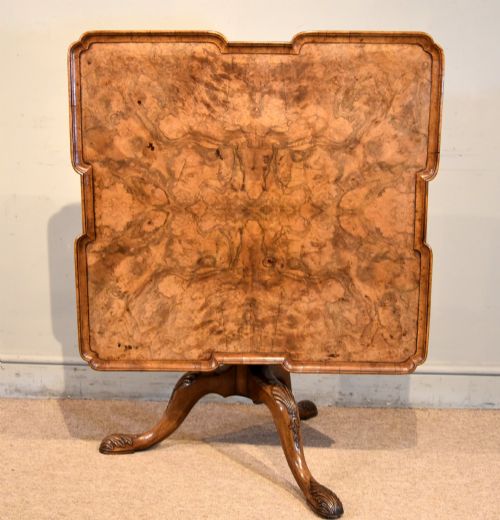
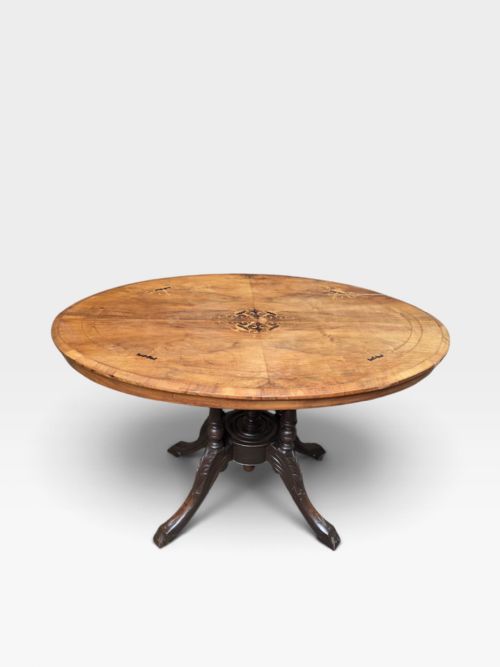
A vintage walnut tilt table combines rich timber figures with a top that pivots vertically to save floor space when not in service. These pieces span centuries of cabinet making, appearing in forms from occasional tables to grand pedestal dining tables.
The versions most commonly met on this page belong to the Victorian and Edwardian eras, alongside pieces reaching back to the eighteenth century. Makers utilised walnut, burr walnut, and mixed hardwood veneers to create surfaces that catch the light.
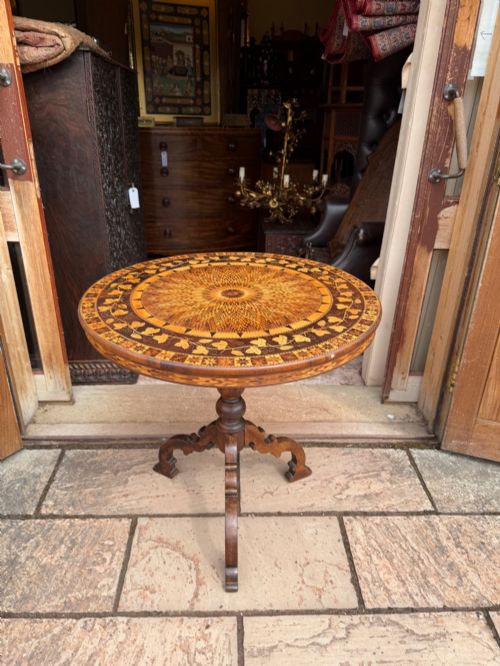
Beyond standard tables, the selection includes related tilt top designs and occasional tables with hand carved details. Certain examples feature intricate Italian Sorrento inlay work or olive wood and fruitwood additions.
How they were made
Cabinet makers selected walnut and burr walnut for their striking grain patterns, often applying veneers over mixed hardwood carcases. Tops were secured to pedestals with clever pivoting mechanisms that allowed the surface to snap flat or tilt upright.
Surface ornamentation involved precise inlay work, as seen in Italian Sorrento pieces, alongside hand carved borders on oval side tables. French polishing or traditional oil finishes protected the timber while deepening the natural colour of the walnut.
Vintage Walnut Tilt Table Retail Price Guide 2026
Typical asking prices for vintage walnut tilt table among the pieces listed under this phrase on Sellingantiques today, from the lower quarter to the upper quarter. They describe what is for sale here now, not the wider market.
Current listings span from the eighteenth century through the Victorian and Edwardian eras into the Art Deco period of nineteen thirty.
What varies in quality
The distinction between standard and exceptional pieces rests in the choice of timber veneer and the crispness of the carving. Burr walnut surfaces displaying rich, swirling figures command attention above plain timber boards.
Mechanical integrity defines the superior tilt table, where the pivoting catch locks firmly without wobble. The subtlety of the inlay work and the balance of the pedestal base further separate ordinary examples from finer workshops.
Whytock and Reid
The Vintage Walnut Tilt Table Glossary
- Tilt top table
- A table with a hinged top that pivots to a vertical position for storage against a wall. This clever mechanism became standard in nineteenth-century parlours.
- Burr walnut
- Timber taken from a tree growth or burr, yielding highly figured and swirling grain patterns. Cabinet makers prized this material for decorative table tops.
- Sorrento inlay
- Wood mosaic work originating from Sorrento in Italy, featuring intricate geometric or pictorial motifs. Artisans used contrasting timbers to create these detailed patterns.
- Pedestal table
- A table supported by a central pillar and footing rather than four corner legs. This design allows maximum legroom around the top.
Vintage Walnut Tilt Table: Frequently Asked Questions
How do I tilt the table top?
Most tables use a brass catch or wooden peg beneath the top to release the pivoting mechanism. Pulling this release allows the surface to fold back against the central pillar.
Ensure you support the weight of the top with one hand while operating the catch to prevent sudden movement. Once upright, the top usually locks securely into place.
What is the best way to clean walnut?
Dust the timber regularly with a soft, dry cloth to prevent grit accumulation on the polished surface. Avoid modern silicone sprays that can damage traditional finishes.
Apply a quality beeswax occasionally to nourish the walnut and maintain its warm lustre. Buff the wax thoroughly after application to protect the grain from moisture.
Can I use a tilt table for dining?
Larger pedestal examples function effectively for dining, provided the tipping mechanism remains stable and secure. Smaller occasional variants suit drinks or display rather than heavy meal service.
Check the height and leg clearance of the specific piece before pairing it with dining chairs. The central pillar design offers flexibility for seating arrangements.
How do I date an antique walnut table?
Examine the construction methods, timber selection, and hardware style to establish the period of manufacture. Victorian and Edwardian pieces often display machine-tooled elements, whereas eighteenth-century examples show hand-cut joints.
Look for clues in the veneer thickness and the style of any inlay work. Comparing the piece to documented regional designs helps narrow down the decade.