


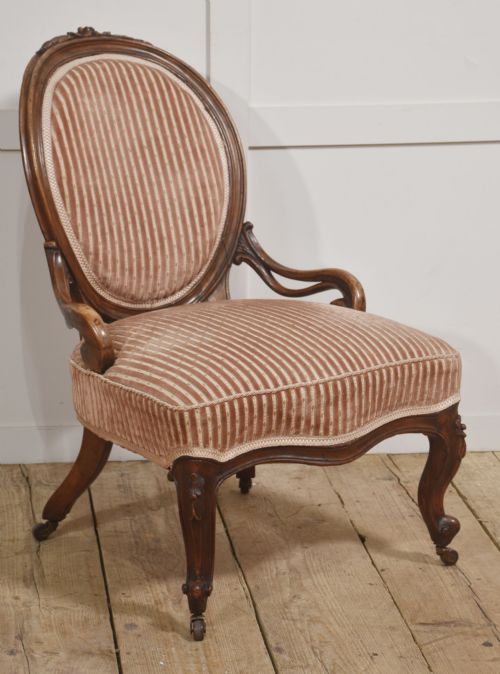

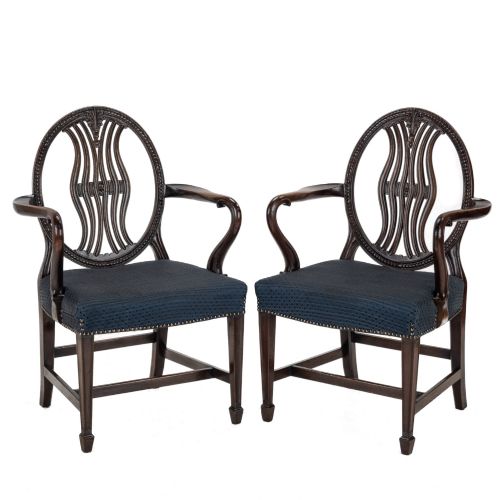


Oval Back Accent Chairs
Oval back accent chairs span centuries of European and English design, offering graceful seating in mahogany, walnut, and giltwood.
Oval Back Accent Chairs
When buyers search for oval back accent chairs, they encounter a variety of seating forms originating from the eighteenth, nineteenth, and early twentieth centuries. These pieces encompass armchairs, nursing chairs, side chairs, salon chairs, and carvers spanning diverse regional traditions.
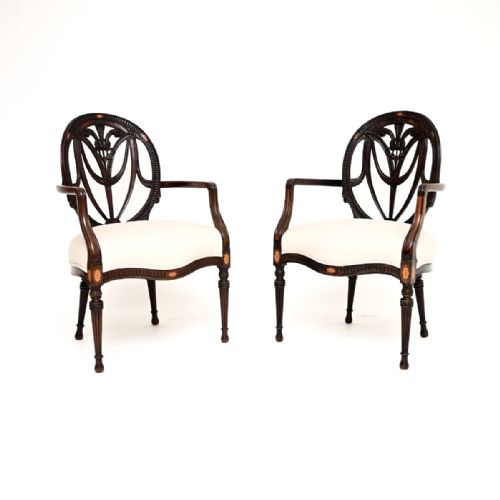
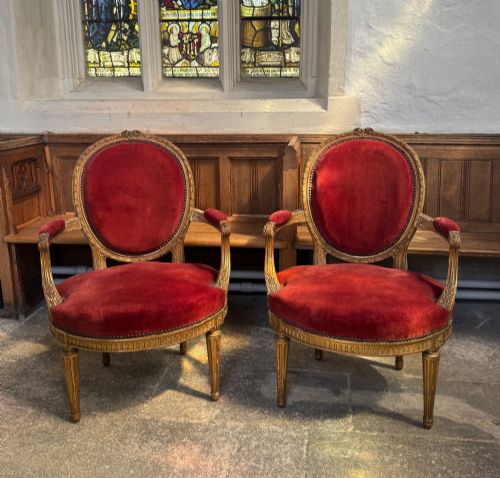
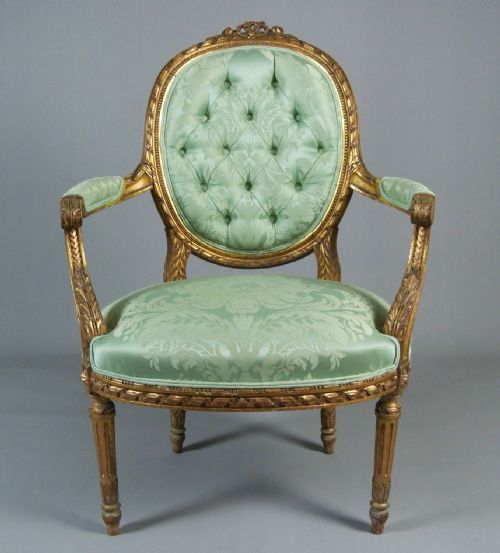
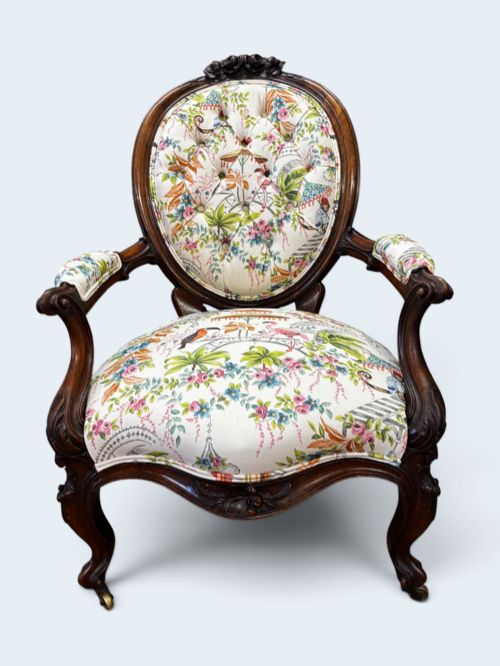
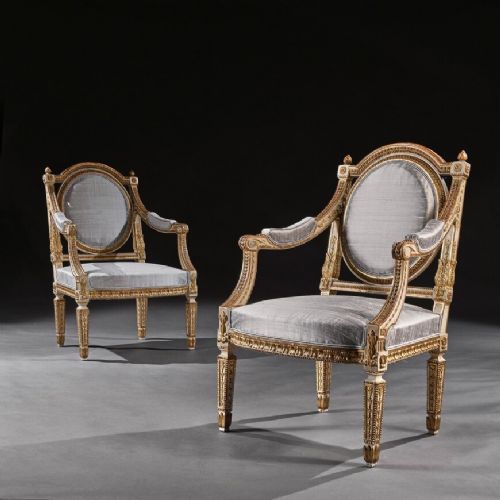
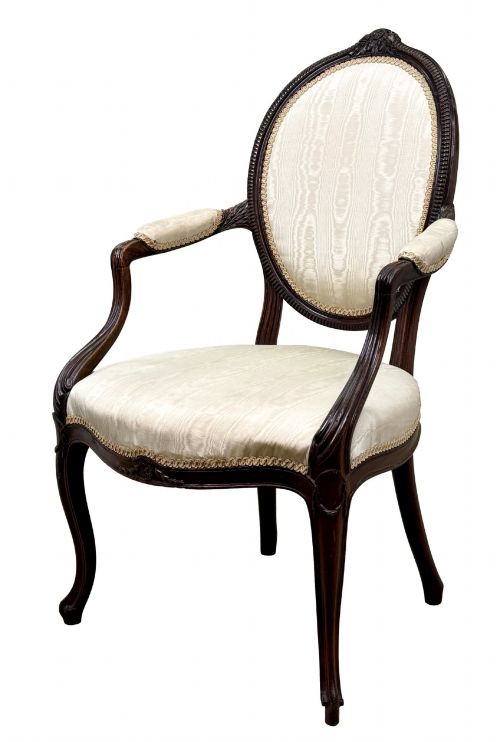
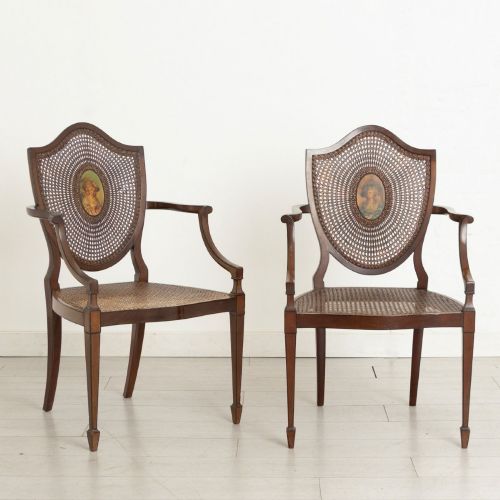
The most common examples on this page include nineteenth-century French giltwood frames executed in Louis XVI styles, alongside Victorian walnut and mahogany iterations. English Georgian and Regency pieces also appear, ranging from simple hall chairs to intricately carved salon seating.
Makers and designers from past centuries utilised specific regional aesthetics, from neoclassical French painted frames to English mahogany frameworks. Buyers select these items for domestic display, utilising their distinctive curved silhouettes to anchor period or eclectic interiors.
How they were made
Cabinetmakers and joiners constructed the structural frames of these seats using hardwoods such as mahogany, walnut, beech, and giltwood. Workshops often applied intricate hand-carved details or parcel-gilt finishes directly onto the wooden components.
Upholstery techniques varied by period, incorporating traditional stuffing, silk fabric, velvet, needlepoint tapestry panels, and red damask. Brass elements occasionally appeared in structural reinforcement or decorative mounts on neoclassical pieces.
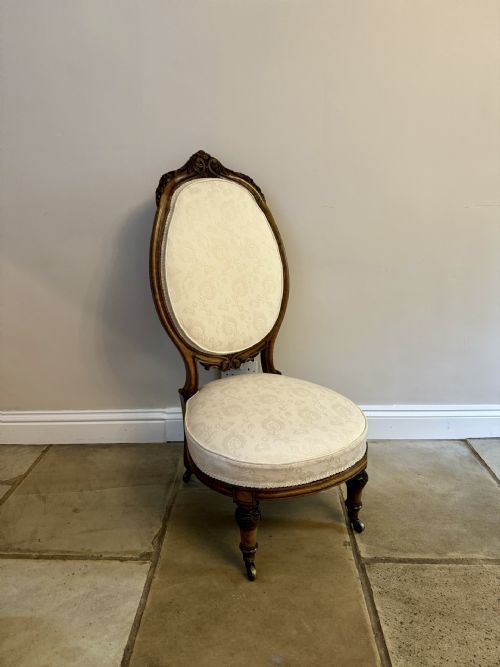
Victorian nursing chairs were specifically designed low to the floor so ladies could tend to infants while wearing voluminous crinoline skirts.
What varies in quality
The refinement of the wood carving separates standard commercial seating from exceptional salon pieces. Crisp execution in the curved wooden frames and delicate floral or classical motifs indicate superior artisan skill.
The integrity of the original show frame, combined with the authenticity of period upholstery materials like silk or needlepoint, determines the overall caliber of the seating. Proportions and balanced symmetry in the curved backrests further distinguish finer examples.
Thomas Chippendale·John Linnell
The Oval Back Accent Chairs Glossary
- Fauteuil
- An open-framed armchair with upholstered back and armrests, originating in France. These chairs display carved wooden show frames.
- Giltwood
- Wood coated with gold leaf or gold paint to simulate solid gold. Artisans applied this finish extensively to decorative salon and neoclassical frames.
- Carver
- An armchair designed for the head of a dining table or as a companion to side chairs. These pieces incorporate supportive armrests.
- Medallion chair
- A seat featuring a circular or oval upholstered backrest framed in carved wood. This style gained popularity during the neoclassical revival.
Oval Back Accent Chairs: Frequently Asked Questions
Where should I place an accent chair in my home?
These chairs function effectively as standalone decorative pieces in sitting rooms, bedrooms, or entrance halls. Their distinct silhouettes provide visual interest when paired with complementary tables or arranged in conversation areas.
Consider the scale of the room and the height of the oval backrest relative to surrounding furniture. Placing a pair of armchairs opposite a sofa creates a balanced layout.
What is the difference between a salon chair and a side chair?
Salon chairs generally feature upholstered seats and backs designed for drawing rooms and formal entertaining spaces. They often include open or closed armrests for added comfort.
Side chairs are smaller, armless seats originally utilised around dining tables or placed against hallway walls. Both types share the characteristic curved framework seen in these listings.
How do I care for antique wood and upholstery?
Maintain wooden frames by dusting regularly with a soft cloth and avoiding direct sunlight or excessive moisture. Giltwood and painted surfaces require particular care to prevent flaking or damage to the historic finish.
Protect delicate fabrics such as silk, velvet, or needlepoint by vacuuming gently with a brush attachment through a protective mesh. Professional conservation methods help preserve fragile historic textiles over time.