
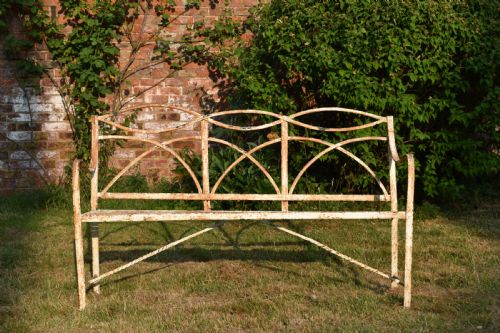
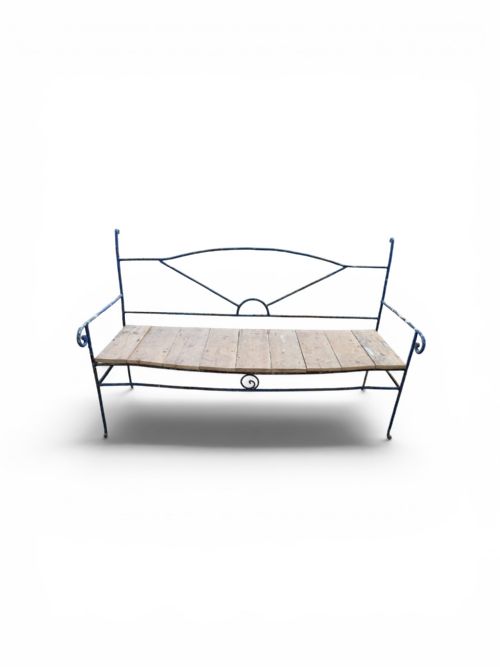
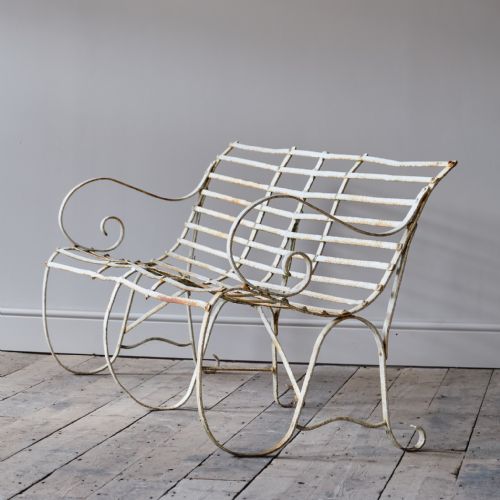
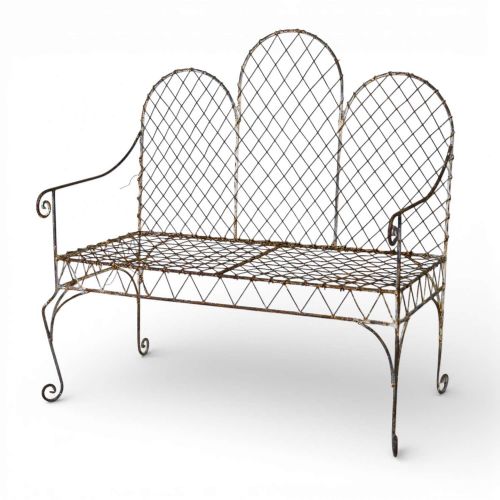
Outdoor Iron Bench
An outdoor iron bench brings enduring metalwork to the garden, combining heavy structure with botanical or geometric open patterns.
Outdoor Iron Bench
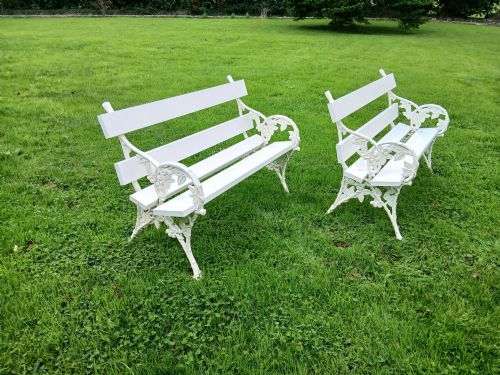
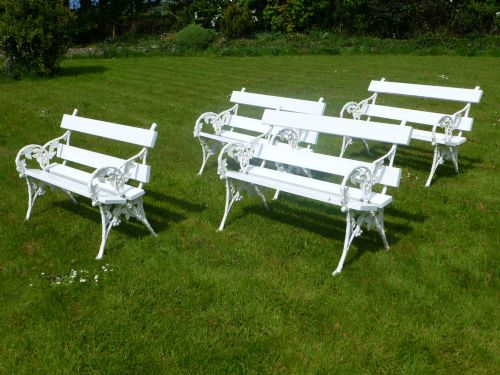
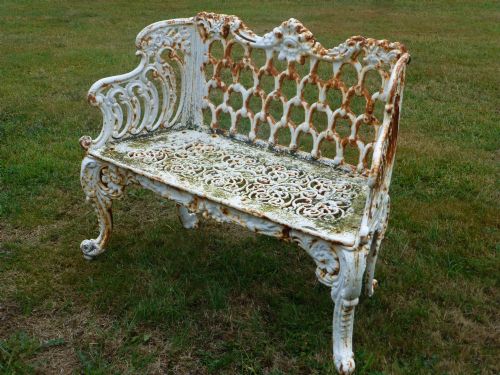
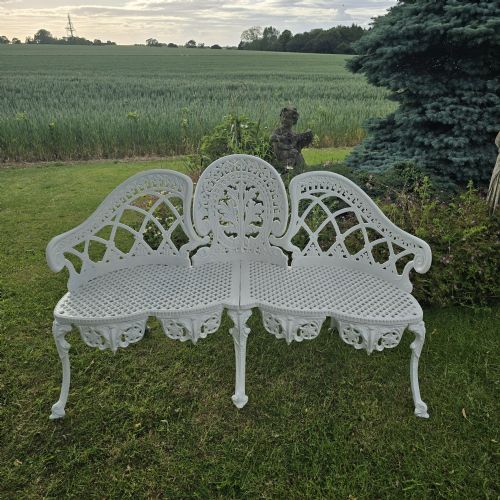
An outdoor iron bench provides a solid garden seat constructed from durable metal frames, often paired with wooden slats or formed entirely as an openwork metal casting. When you search for an outdoor iron bench, you encounter forms ranging from simple strapwork seats to elaborate Gothic and botanical designs.
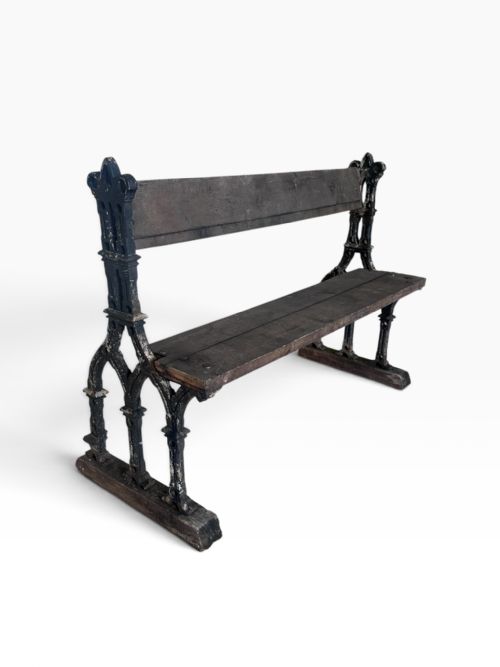
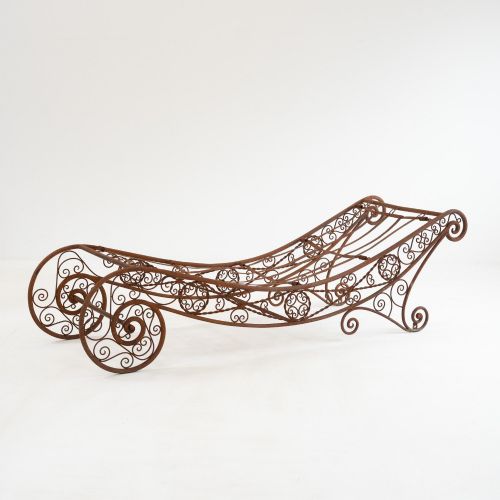
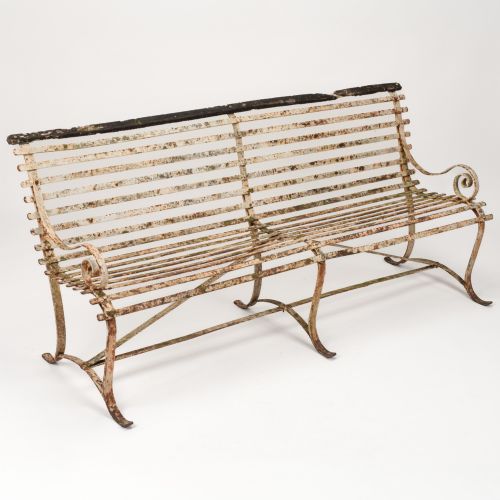
The pieces listed on this page span the nineteenth century through the early twentieth century, including Victorian, Edwardian, and Regency examples. You will frequently meet heavy cast iron ends combined with timber slats, alongside fully forged wrought iron and wirework constructions.
Regional variations appear across French, English, and Scottish foundries, featuring patterns such as blackberry leaves, lion masks, and geometric strapwork. These seats function as both functional garden furniture and sculptural focal points for lawns, patios, and conservatories.
How they were made
Foundries utilised cast iron for intricate, mould-pressed details like foliage and heraldic masks, pouring molten metal into sand moulds. Wrought iron was heated and manually hammered into strapwork and curved braces, offering greater tensile strength for simpler linear frames.
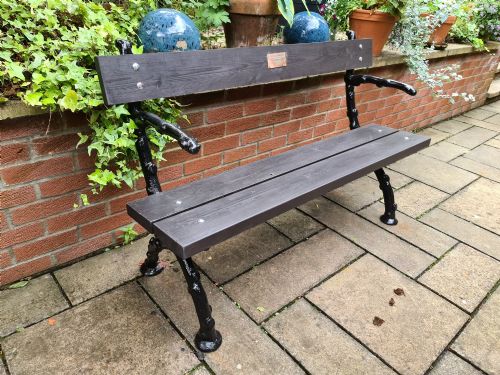
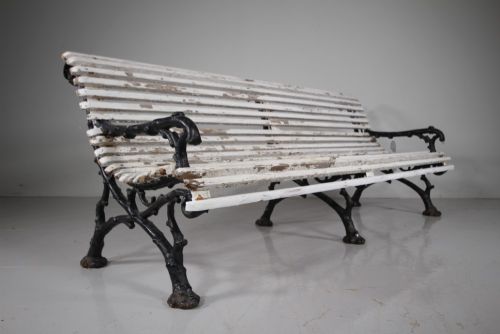
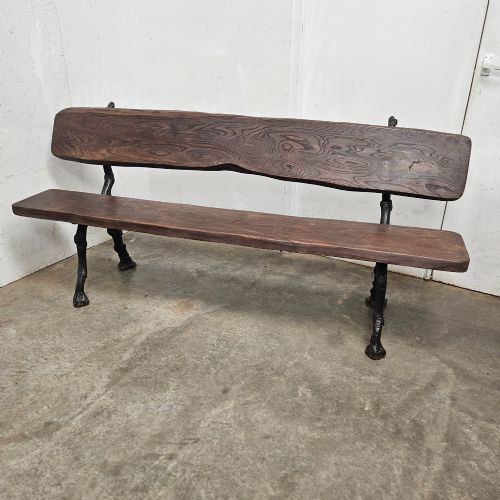
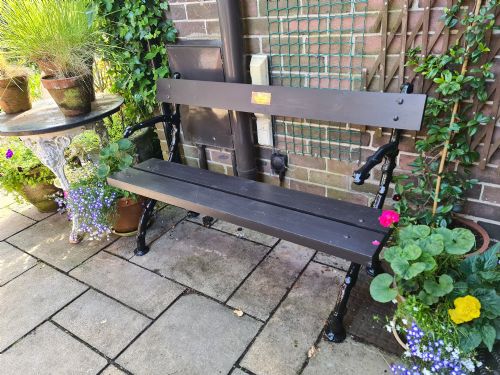
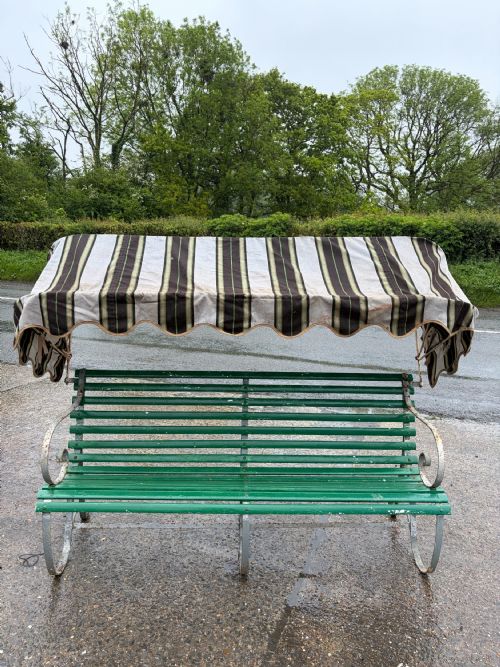
Many examples combine cast iron framework with painted timber or elm planks for the seat and backrest, balancing rigid metal durability with a comfortable wooden sitting surface. Protective layers of paint were applied to shield the iron from outdoor weather, a maintenance tradition continued through modern restoration.
Materials across these listings include cast iron, wrought iron, painted timber, and wirework.
What varies in quality
The crispness of the foundry casting determines the visual success of the piece, where deeply detailed foliage and clean edges indicate superior pattern-making. Heavier metal gauge and robust structural joints separate substantial park seats from lighter domestic garden chairs.
The integrity of surviving original components, such as matching wooden slats and uncompromised metal supports, dictates the authenticity and balance of the bench. Pieces bearing documented foundry markings or distinct regional foundry designs hold a higher degree of historical interest.
Falkirk Carron Foundry·Coalbrookdale
The Outdoor Iron Bench Glossary
- Cast iron
- A hard, brittle iron-carbon alloy poured into moulds to create complex decorative patterns and structural bench ends.
- Wrought iron
- A tough, malleable iron worked by hand while hot to form straps, scrolls, and structural braces for garden seating.
- Strapwork
- A decorative motif composed of flat, interlaced metal bands forming geometric or repeating strap patterns on bench backs.
- Faux bois
- A decorative technique where metal or timber is shaped and painted to imitate the natural texture and grain of wood.
- Arras
- A distinctive style of French wirework and sheet metal garden furniture produced during the nineteenth century.
Outdoor Iron Bench: Frequently Asked Questions
How do I care for an outdoor iron bench?
Keep the metal protected with appropriate exterior paint systems to prevent oxidation and flaking. Inspect the joints regularly where metal meets timber slats to ensure moisture does not accumulate.
Store vulnerable pieces under cover during harsh winter months or use breathable protective covers. Clean surfaces gently with mild soap and water to avoid damaging historic painted finishes.
Are these benches comfortable to sit on?
Many iron benches feature ergonomically curved cast backs and supportive armrests designed for garden relaxation. Those paired with wooden timber slats offer a softer sitting surface than all-metal designs.
Adding a tailored outdoor cushion provides extra comfort for prolonged sitting during warmer months. The solid weight of the metal also ensures the seat remains stable on uneven lawn surfaces.
How do I distinguish Victorian from Regency iron benches?
Regency iron benches typically display restrained geometric strapwork, neoclassical lines, and lighter wrought iron frameworks. Victorian examples often showcase heavier cast iron construction with ornate botanical motifs, Gothic arches, or animal masks.
Victorian pieces frequently incorporate rustic elements like overlapping branches and detailed leaf castings. Examining the weight, ornamentation style, and manufacturing technique helps clarify the period of production.
Can I leave an antique iron bench outside all year?
Traditional cast and wrought iron withstands outdoor conditions well due to its robust density and protective paint layers. However, prolonged exposure to standing water and frost can accelerate corrosion on vulnerable joints.
Raised paving stones or gravel standings help keep the feet of the bench dry during wet weather. Regular inspection ensures any minor paint damage is addressed before rust develops.