



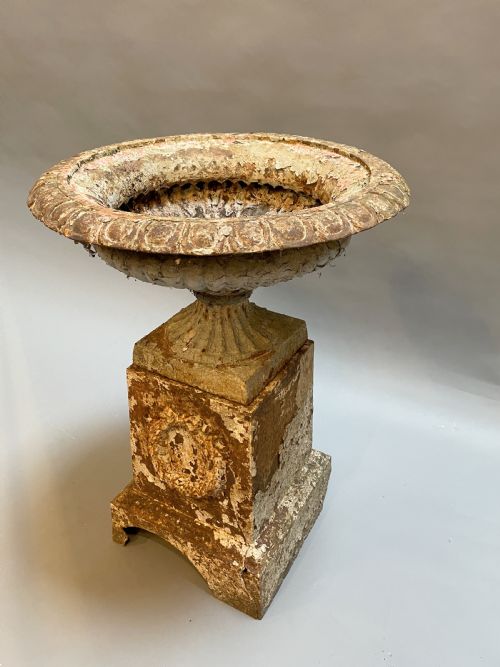
Outdoor Cast Iron Planter
An outdoor cast iron planter brings weight and classical proportion to a garden terrace, holding deep earth for mature planting through every season.
Outdoor Cast Iron Planter
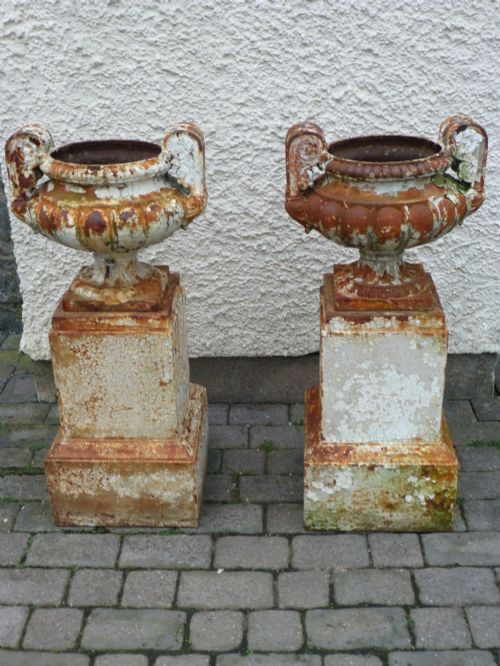
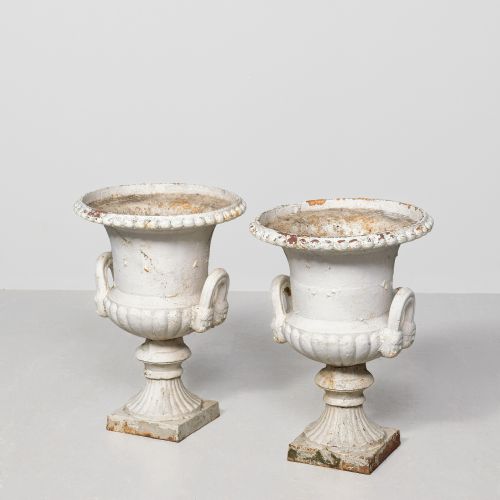
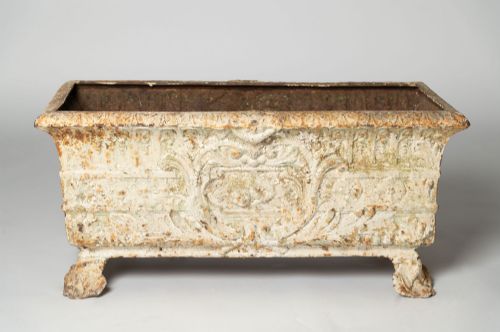
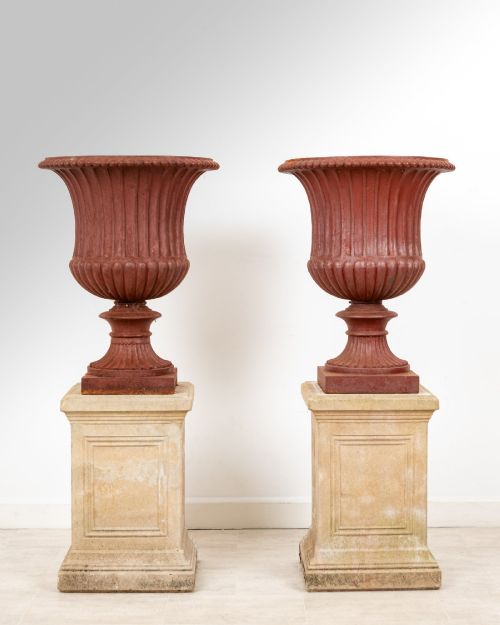
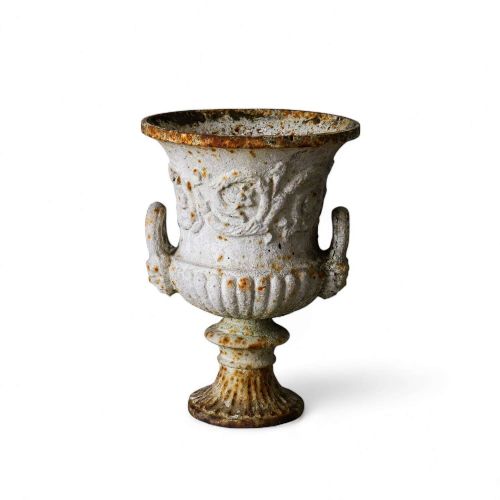
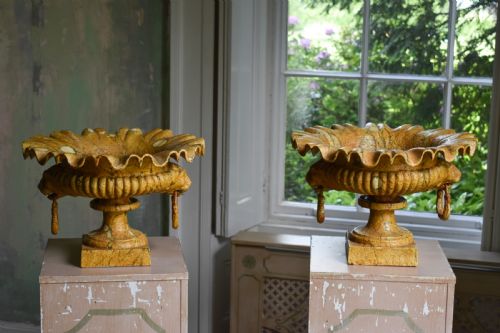
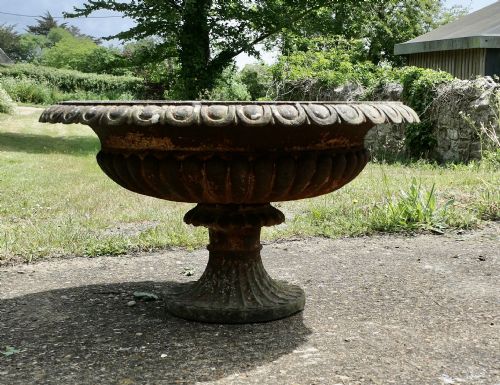
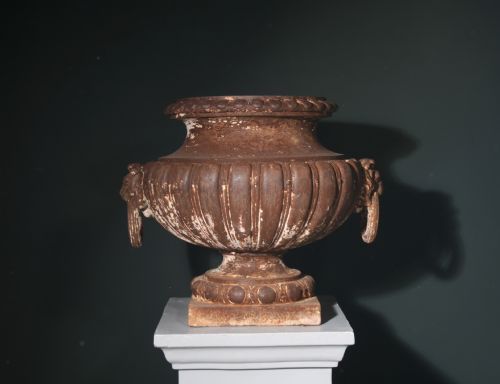
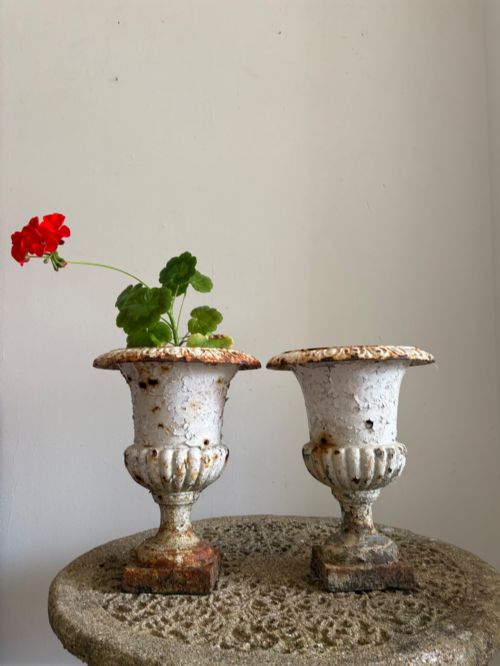
An outdoor cast iron planter most frequently takes the shape of a campana urn, a tazza, or a column pedestal stand designed for heavy garden display.
The selections span the nineteenth century and the Edwardian era, incorporating French chateau examples alongside British foundry pieces from Regency to Victorian periods.
Buyers encounter single vessels and matched pairs, often mounted upon original stone pedestals or matching iron plinths to elevate the planting above the ground.
Materials and Technique
Molten iron is poured into sand moulds to create thick-walled vessels capable of withstanding decades of outdoor exposure and frost.
Many examples retain traces of early paint or weathered surface patination built up through generations of garden use.
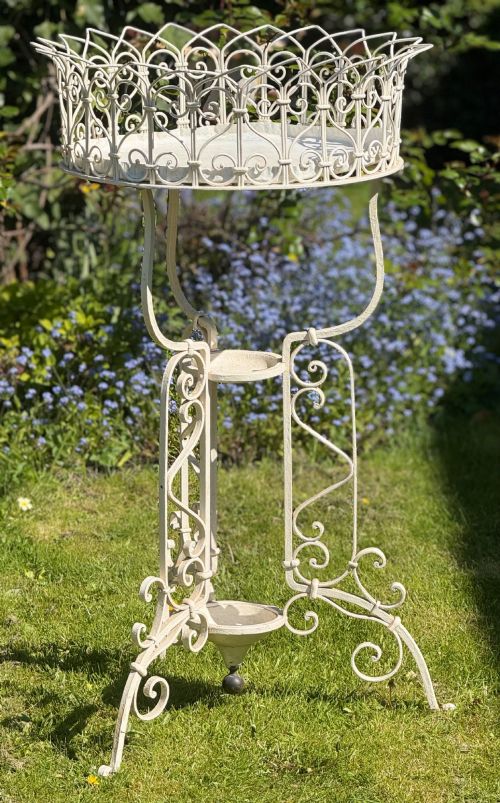
Makers occasionally combined heavy cast bowls with wrought iron stands or mounted them upon separate stone plinths.
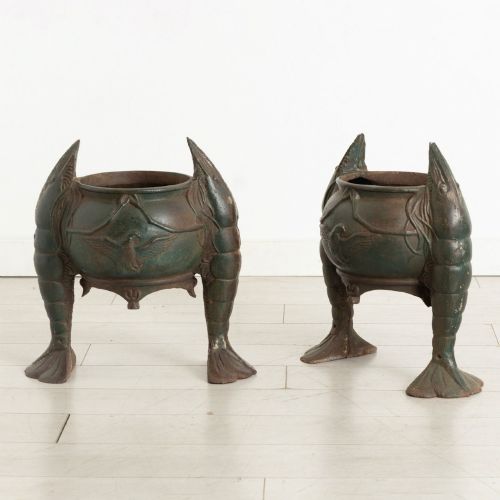
Garden history includes an unusual pair of nineteenth century cast iron planters shaped entirely in the form of shrimp.
Design and Foundry Distinction
Quality rests upon the crispness of the classical ornamentation, such as acanthus leaf moulding and deep relief fluting, rather than mere size.
Pieces bearing identifiable foundry stamps from renowned makers carry greater distinction than unmarked commercial production.
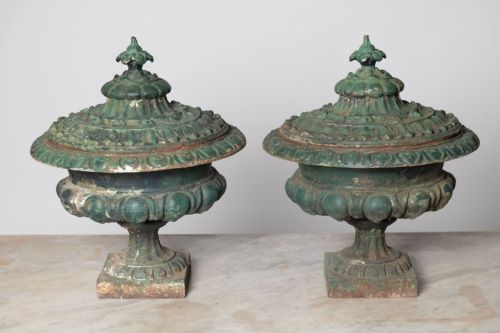
The survival of original lids, matching plinths, and untouched weathered surfaces elevates the character of a vessel.
Falkirk Carron foundry·Coalbrookdale·Andrew Handyside·Val D Osne Foundry
The Outdoor Cast Iron Planter Glossary
- Campana urn
- A bell-shaped garden vessel with a flared rim, widely used for classical planting throughout the nineteenth century.
- Tazza
- A shallow bowl-shaped planter raised upon a central stem and foot, often associated with Victorian garden displays.
- Jardiniere
- An ornamental pot or stand designed specifically to hold growing plants or flowers.
- Plinth
- A heavy base block of stone or iron upon which an urn or planter is elevated.
Outdoor Cast Iron Planter: Frequently Asked Questions
How do I protect my iron planter in winter?
Cast iron is extremely durable against frost, but water trapped inside soil can expand and crack older vessels during hard freezes.
Elevating the planter slightly on pot feet ensures proper drainage through the base hole, protecting both the roots and the metal.
Can these heavy planters stay outside year round?
These vessels are designed specifically for outdoor display and weather naturally in the open elements over decades.
Their substantial weight prevents tipping in high winds, making them ideal permanent fixtures for garden terraces and pathways.
How do I identify a nineteenth century piece?
Nineteenth century examples typically display deep sand-cast texture, heavier wall thickness, and traditional classical motifs like acanthus leaves.
Many also feature foundry marks, registry numbers, or original weathered paint layers beneath modern accumulation.
Are original pedestals important?
Original matching pedestals and plinths preserve the intended proportions and architectural height of the classical garden design.
Finds complete with their original bases or lids are considerably scarcer than standalone bowls.