


French Garden Trough
These french garden trough examples bring timeless planting space to patios and terraces, offering robust metal and ceramic vessels built for outdoor greenery.
French Garden Trough
A french garden trough provides practical planting vessels designed for gardens, conservatories, and patios, taking the form of long rectangular containers or elevated stands. When you search for a french garden trough, you encounter sturdy industrial forms alongside decorative domestic pieces spanning the nineteenth and early twentieth centuries.
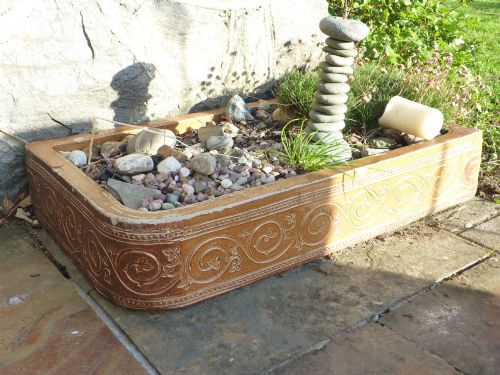
The selections here range from heavy cast iron planters and zinc containers to salt-glazed stoneware and oak jardinieres. Pieces draw upon French Country, Victorian, and Arts and Crafts styles, reflecting both utilitarian garden use and decorative domestic display.
Buyers frequently find nineteenth-century examples alongside Edwardian and 1930s variations, offering different scales from small window planters to large patio troughs. Each item serves as an authentic vessel for modern planting while retaining its historical character.
Materials and construction methods
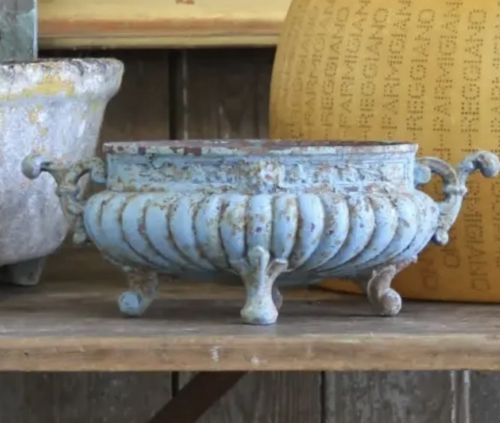
Cast iron and wrought iron form the structural core of many pieces, shaped through casting and forging to create robust troughs and urns designed to withstand outdoor weathering. Metal vessels often feature surface treatments including original paint or natural oxidation developed over decades of exposure.
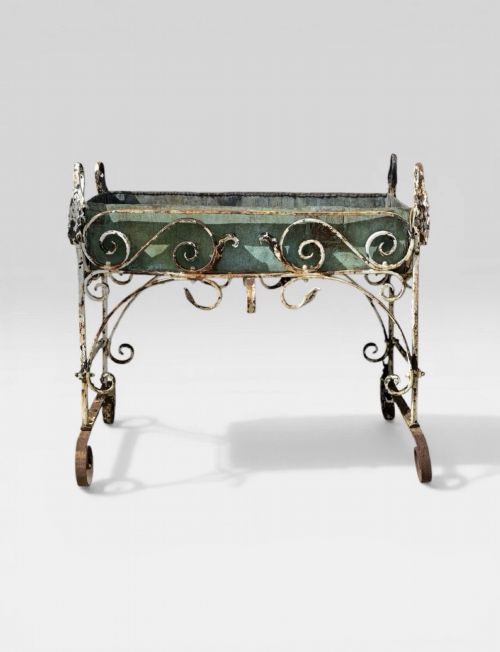
Zinc and wirework represent lighter manufacturing approaches, utilising soldered joints and shaped wire frames suited for conservatory plant stands and zinc planter boxes. Ceramic and salt-glazed stoneware examples demonstrate traditional throwing and glazing techniques, occasionally incorporating specialised maker methods such as those by Guichard Carriès.
Timber construction appears in golden oak examples, featuring dedicated interior linings designed to contain soil and moisture safely within wooden frames. These varied material choices dictate the weight, durability, and specific garden placement of each trough.
Listings span the nineteenth century, 1880, Edwardian era, and 1930, utilising cast iron, zinc, wrought iron, ceramic, wirework, and oak.
Evaluating quality and proportion
Quality rests in the crispness of metal casting, the integrity of structural joins, and the preservation of original surface finishes like paint or patination. Superior examples display balanced proportions and refined decorative detailing without compromising structural strength.
The choice of materials also influences the standard of a piece, where weighty cast iron pairs or signed ceramic troughs represent higher tiers of craftsmanship compared to standard utility items. Assessing a piece involves examining how well the material has aged and whether structural elements remain intact.
Guichard Carriès
The French Garden Trough Glossary
- Jardiniere
- An ornamental pot or stand for plants, typically designed for interior or sheltered outdoor display.
- Salt-Glazed Stoneware
- Pottery fired at high temperatures where salt is thrown into the kiln to produce a vitreous, glossy coating.
- Wirework
- Metal construction made from interwoven or welded wire, commonly utilised for light conservatory plant stands.
- Wrought Iron
- Iron that has been heated and shaped with tools by a blacksmith, recognised by its fibrous texture and strength.
French Garden Trough: Frequently Asked Questions
What plants suit a french garden trough?
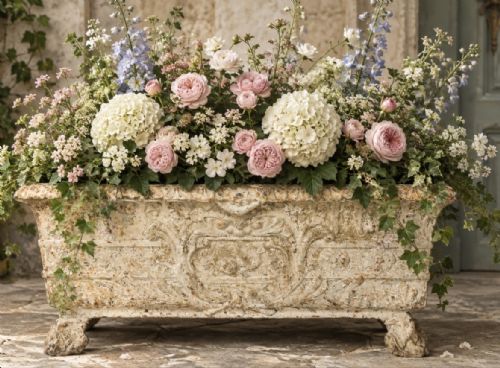
These troughs suit a variety of plantings, from trailing ivy and seasonal bedding flowers to small shrubs and herbs.
Their generous rectangular proportions allow for attractive mixed arrangements on patios or inside conservatories.
Can these troughs stay outside year round?
Cast iron, zinc, and wrought iron pieces withstand outdoor weather well, though ceramic and stoneware items require protection during freezing conditions to prevent cracking.
Checking the specific material ensures appropriate placement through changing seasons.
How do I date a metal garden planter?
Dating relies on manufacturing techniques, surface patination, and stylistic markers associated with nineteenth-century or early twentieth-century design.
Cast iron and wrought iron pieces often reveal their era through weight, assembly methods, and decorative motifs.
Where should I place a wirework plant stand?
Wirework stands suit sheltered conservatories, greenhouses, or covered patios where delicate structures avoid harsh winter gales.
Their open construction highlights potted plants at varying heights.