






Orthodox Religious Panel
An orthodox religious panel offers a window into sacred devotion, bringing centuries of painted iconography and metalwork directly into your interior.
Orthodox Religious Panel
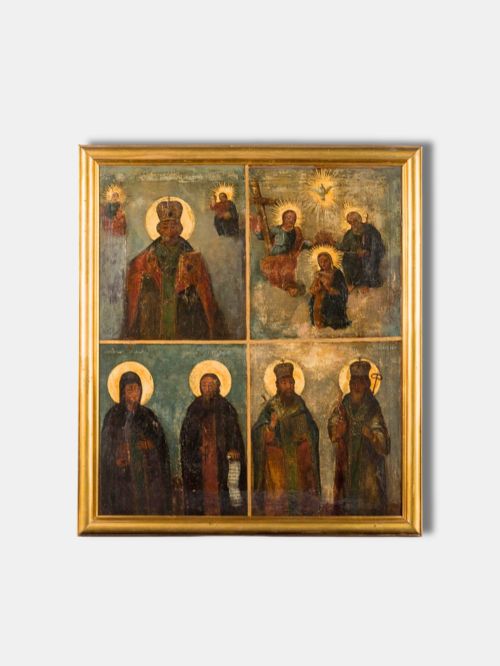
An orthodox religious panel represents sacred imagery created within the Russian Orthodox tradition, predominantly taking the form of panel paintings and religious icons. When exploring these works, you are most likely to encounter pieces originating from the nineteenth century alongside earlier examples from the eighteenth and seventeenth centuries.
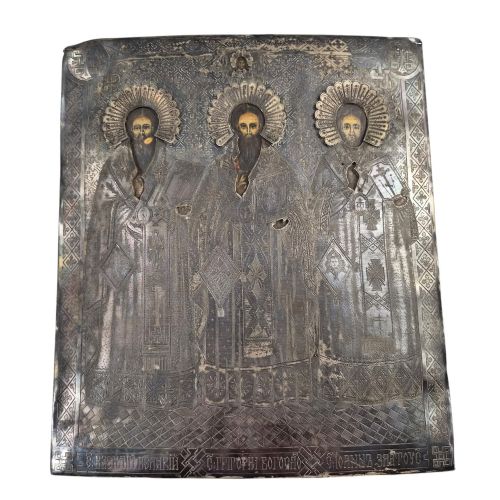
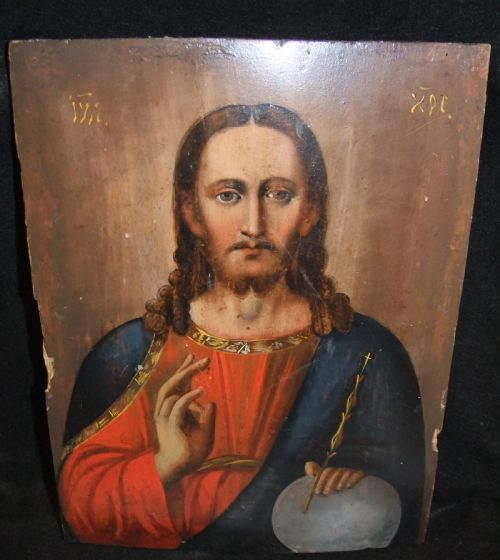
The subjects depicted upon these wooden supports range from representations of Christ Pantocrator and the Three Holy Hierarchs to scenes of St. George and the Passion of Christ. Many of these artworks were designed for private devotion or mounting upon larger screens within domestic and ecclesiastical settings.
Works on this page span several distinct eras of Russian craftsmanship, featuring both traditional tempera methods and later oil paintings on wood panels. Each piece carries the distinct stylistic hallmarks of workshops ranging from regional masters to imperial centres.
How they were made
The foundation of these works typically relies on a prepared wooden panel, upon which artisans applied layers of gesso before painting in tempera, egg tempera, or oil. Gold leaf and silver were frequently utilised to illuminate backgrounds, halos, and inscriptions, adding a radiant quality to the sacred scenes.
Orthodox Religious Panel Retail Price Guide 2026
Typical asking prices for orthodox religious panel among the pieces listed under this phrase on Sellingantiques today, from the lower quarter to the upper quarter. They describe what is for sale here now, not the wider market.
Listings feature wood panels spanning the seventeenth, eighteenth, nineteenth, and early twentieth centuries.
What varies in quality
The distinction between standard works and exceptional examples lies in the finesse of the brushwork and the complexity of the theological composition. Master iconographers achieved remarkable detail in facial expressions and drapery, whereas lesser panels show simpler, more routine execution.
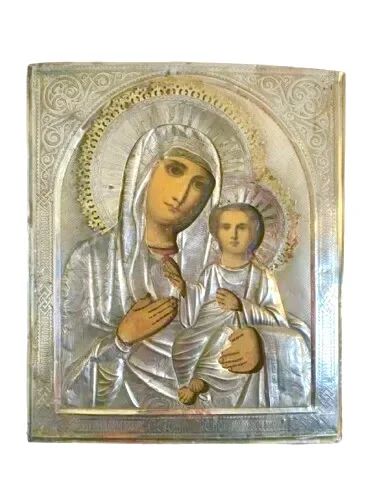
The presence and quality of precious metal elements also define the tier of a piece, with finely worked silver rizas and dense gold leaf embellishment marking out superior workshops and significant commissions.
Heinrich Grünbaum·Volga Masters
The Orthodox Religious Panel Glossary
- Riza
- A metal cover placed over an icon, protecting the paint surface while leaving the faces and hands visible. It is often fashioned from silver or brass and heavily embossed.
- Oklad
- An alternative term for the metal revetment that encases an icon. This protective sheath frequently includes elaborate repoussé work and openings for key figures.
- Tempera
- A permanent, fast-drying painting medium consisting of coloured pigments mixed with a water-soluble binder such as egg yolk. It was the traditional choice for early panel paintings.
- Christ Pantocrator
- A specific depiction of Christ portrayed as ruler of all, shown holding a gospel book and raising his right hand in blessing. This is a recurring subject in Russian iconography.
- Volga Masters
- A designation referring to regional icon painters working along the Volga River basin. Their output is noted for distinct local interpretations of traditional subjects.
Orthodox Religious Panel: Frequently Asked Questions
How do I clean an old icon panel?
Cleaning historic painted wood and metal requires extreme caution, as active cleaning agents can strip away original tempera and gilding. Dust gently with a soft, dry brush and avoid all moisture.
Professional conservation is recommended for any deeper cleaning or stabilization of flaking paint and tarnished silver rizas.
Were these panels meant for churches or homes?
Icon panels served both ecclesiastical environments and domestic spaces. Smaller examples were created for personal prayer corners in homes, while larger panels formed parts of iconostases or screens.
The scale and presence of metal oklads often indicate whether a piece was commissioned for public worship or private devotion.
Why do some icons have metal covers?
Metal covers were added to protect the vulnerable tempera paint from candle soot, incense smoke, and the oils from the fingers of worshippers. They also added considerable visual splendour to the devotional object.
Only the most sacred or important parts of the painted composition, such as faces and hands, were left uncovered by the metal.
How can I tell the century of a panel?
Dating relies on stylistic analysis of the painting technique, the preparation of the wood grain, and the hallmarks found on any accompanying silver or brass metalwork. Eighteenth-century panels often display distinct pigment mixes and board construction compared to nineteenth-century examples.
Expert examination of the gesso preparation and pigment type provides further clarity on the period of creation.