


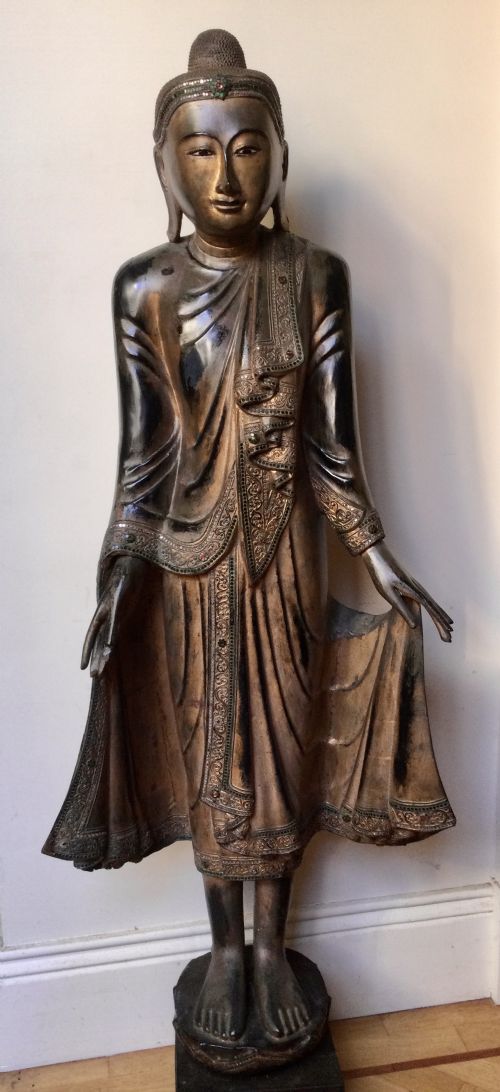


Carved Timber Icon
These carved timber icon pieces bring centuries of devotion into the room, offering tangible history and quiet presence for your walls and surfaces.
Carved Timber Icon
The selection spans several periods, including sixteenth, seventeenth, eighteenth, and nineteenth century works, alongside Edwardian examples. Forms vary from individual statues and sculptures to crucifixes and paired saint figures.
Materials and construction methods
Carved timber icon pieces rely on woods such as oak, applewood, and general hardwoods, shaped through traditional carving techniques. Artisans often enhanced these wooden sculptures using gold leaf, tempera paint, lacquer, and occasional iron elements.
The physical structure reflects regional workshops and stylistic traditions, encompassing Anglo-Indian, Gothic Revival, Renaissance, Baroque, and Southeast Asian influences.
Carved Timber Icon Retail Price Guide 2026
Typical asking prices for carved timber icon among the pieces listed under this phrase on Sellingantiques today, from the lower quarter to the upper quarter. They describe what is for sale here now, not the wider market.
Some saints come with exceptionally detailed garments that prove seventeenth-century wood carvers possessed serious patience.
Distinguishing quality in carved timber icon pieces
Condition matters regarding the integrity of the wood and the survival of early polychrome or gilt finishes, distinguishing exceptional devotional art from simpler later interpretations.
The Carved Timber Icon Glossary
- Polychrome
- Decoration consisting of several colours applied to the surface of wood or stone sculpture. This technique was frequently utilised on religious figures to enhance realism.
- Tempera paint
- A permanent, fast-drying painting medium consisting of pigmented powder mixed with a water-soluble binder. It appears on historical icons and wooden carvings.
- Gold leaf
- Gold beaten into extremely thin sheets used for gilding surfaces. It highlights sacred details on religious carvings and icons.
- Gothic Revival
- An architectural and artistic style drawing inspiration from medieval design. Pieces in this aesthetic often echo earlier ecclesiastical forms.
Carved Timber Icon: Frequently Asked Questions
How do I date a carved timber icon?
Dating relies on tool marks, wood species, stylistic traits associated with specific centuries, and the wear patterns on any applied paint or gold leaf.
Comparing the sculptural style to documented regional works helps narrow down the period of origin.
Where should I place a carved timber icon at home?
These pieces suit quiet spaces away from direct sunlight, central heating vents, and moisture to protect the timber and delicate surface finishes.
Displaying them securely on stable surfaces or mounting them thoughtfully honours their historical and devotional character.
What woods were commonly used for these icons?
Maker workshops utilised accessible regional timbers, including oak, applewood, and various dense hardwoods suitable for detailed chiselling.
The choice of wood often corresponds to the geographic origin and period of the sculpture.
How do I care for historical wood carvings?
Maintain a stable indoor climate with consistent humidity to prevent the timber from splitting or warping over time.
Dust gently with a soft, dry brush and avoid liquid cleaners that might damage ancient paint or gilt layers.