



Ornate Victorian Oil Lamp
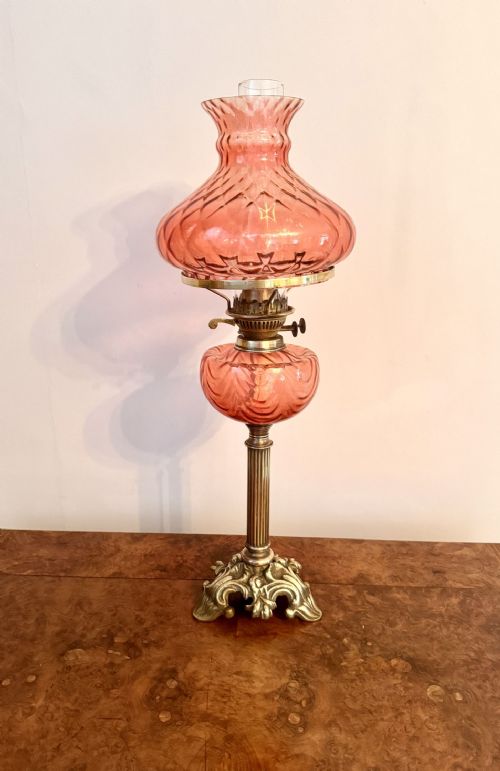
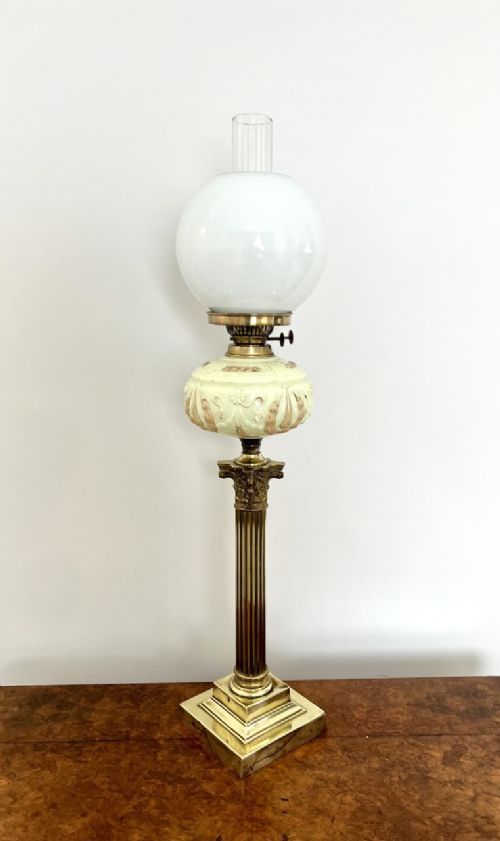
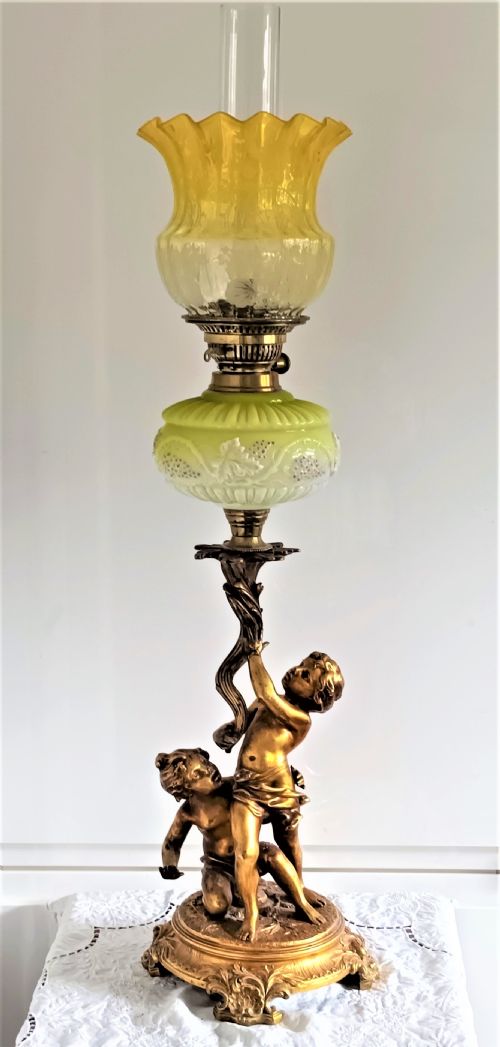
An ornate Victorian oil lamp brings heavy brass, patterned glass and sculptural form together to light a room with period weight.
Ornate Victorian Oil Lamp
When you search for an ornate Victorian oil lamp, you are looking at domestic lighting produced primarily during the second half of the nineteenth century. These pieces combine utilitarian fuel reservoirs with decorative metalwork and glass, spanning table lamps, desk lamps and tall floor standards.
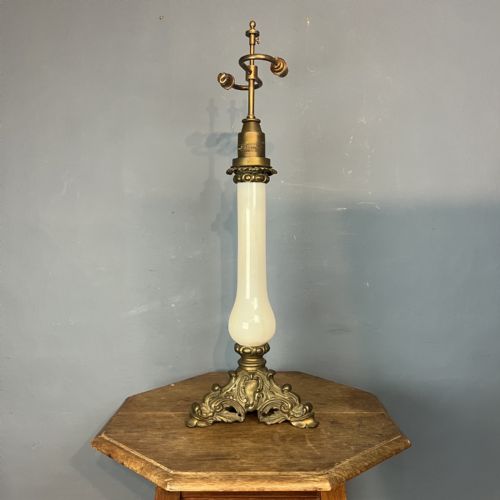
The versions you are most likely to meet on this page date from the eighteen-seventies to the eighteen-nineties. They frequently combine cast brass or gilt metal structures with coloured glass fonts and bodies, occasionally incorporating fabric shades or porcelain components.
Makers and designers of the period utilised distinct aesthetic movements, ranging from heavy Victorian Gothic Revival to flowing Art Nouveau lines and Napoleon III ornamentation. Their primary function was illumination, but their surviving appeal lies in their decorative presence.
How they were made
The construction of these lamps relies heavily on cast and spun brass, often gilded or paired with ormolu mounts to create a dense, reflective surface. Metal components provide the structural backbone for extending standards and heavy table bases.
Specialised burner mechanisms, such as those by Wild and Wessel or Messenger, sit atop the reservoirs to regulate the flame. Stamped patents and maker names on the metalwork record the commercial production methods of the era.
Ornate Victorian Oil Lamp Retail Price Guide 2026
Typical asking prices for ornate victorian oil lamp among the pieces listed under this phrase on Sellingantiques today, from the lower quarter to the upper quarter. They describe what is for sale here now, not the wider market.
The object types on this page span table lamps, desk lamps, and tall floor standards with adjustable mechanisms.
What varies in quality
Quality in these lamps rests in the crispness of the metal casting and the weight of the brass or gilt components. Finer examples display deeply chased ornamentation and substantial metal thickness rather than thin, pressed sheet construction.
The integration of materials also defines the grade of the piece, particularly where porcelain or opaline glass meets the metal mounts. Superior lamps maintain tight tolerances and balanced proportions between the font, stem and base.
The presence of functioning adjustment mechanisms and original burner components elevates an example. Maker marks and patent stamps further distinguish standard commercial production from superior workshop output.
Mc Gary·Wild and Wessel·Messenger
The Ornate Victorian Oil Lamp Glossary
- Opaline glass
- A semi-translucent, milky glass often tinted in soft colours. It provides a smooth surface that diffuses light effectively.
- Ormolu
- Gilded bronze or brass applied to decorative mounts. This finish adds a rich, golden tone to the metal components.
- Standard lamp
- A tall floor-standing lighting fixture designed to illuminate a wider area. These often feature adjustable heights and heavy weighted bases.
- Font
- The oil reservoir of the lamp. It sits below the burner and is frequently fashioned from coloured glass or decorated porcelain.
- Gilt brass
- Brass treated with a thin layer of gold or gold-coloured finish. This enhances the brightness and decorative appeal of the metal.
Ornate Victorian Oil Lamp: Frequently Asked Questions
How do I clean an ornate Victorian oil lamp?
Dust metal parts gently with a soft cloth to avoid disturbing any original gilt or patination. Take care around glass and porcelain sections to prevent chipping.
Avoid abrasive chemical polishes that strip historical surfaces. Use mild, soapy water only on unattached glass components if cleaning is necessary.
Can these lamps still burn oil?
Most surviving pieces have been converted to electricity for modern convenience and safety. Using them as functional oil lamps is generally discouraged.
Retaining the original burners without fuel preserves the fragile internal components and mechanism threads. Many collectors prefer the converted wiring for safe daily display.
How do I date an ornate Victorian oil lamp?
Examine the style of the metalwork, noting shifts from mid-century ornamentation to later Art Nouveau curves. Patent stamps and manufacturer names provide precise production eras.
Materials also offer clues, as opaline glass and specific brass alloys align with particular decades of the nineteenth century.
What is the difference between a table and standard lamp?
Table lamps are proportioned for placement on sideboards, desks or tables. They feature compact reservoirs and shorter overall heights.
Standard lamps stand directly on the floor, often incorporating extending shafts or heavy weighted bases to support their greater height and reach.