

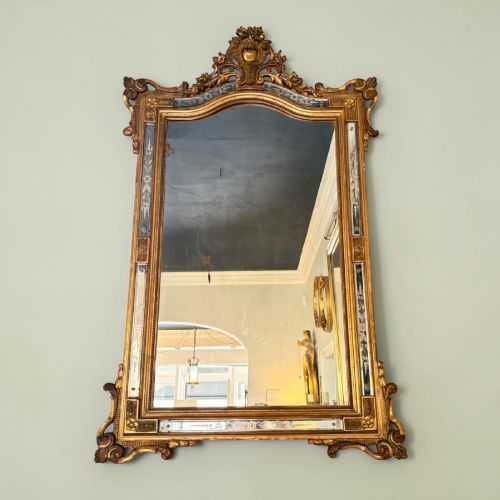

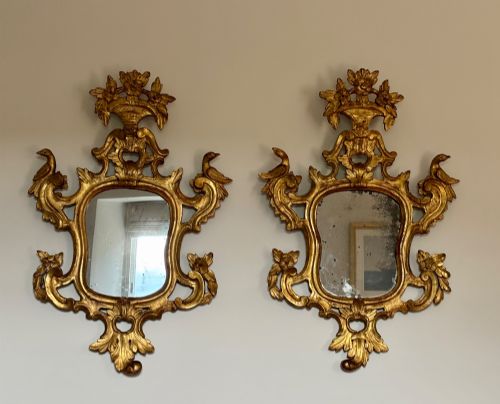
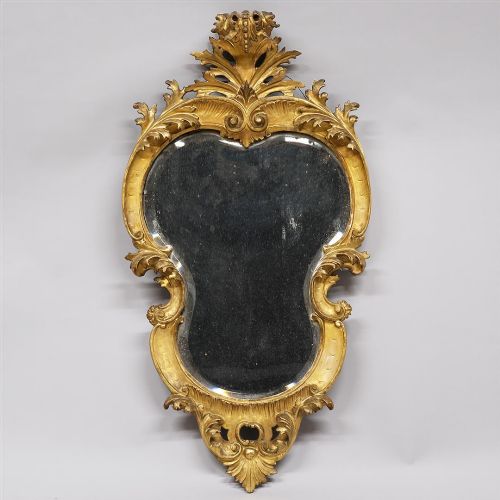
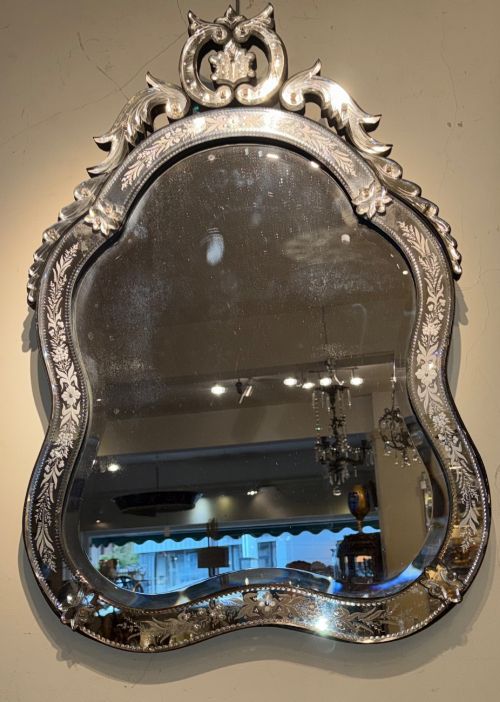


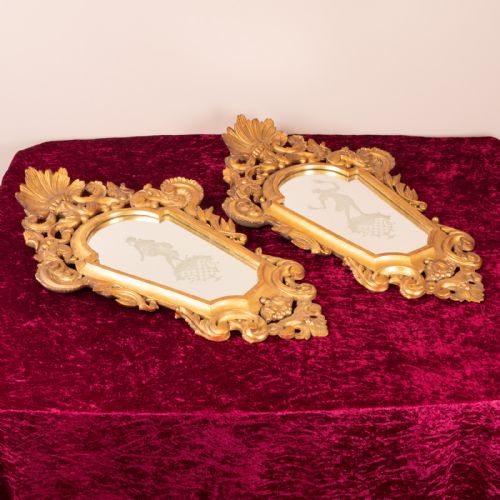
Ornate Venetian Mirror
An ornate venetian mirror brings dramatic Italian reflection into a room through engraved glass and carved giltwood.
Ornate Venetian Mirror
An ornate venetian mirror is a wall-hanging reflector that combines Italian design with decorative glasswork. When searching for an ornate venetian mirror, buyers encounter wall mirrors, console tables, and pairs of girandole pier mirrors spanning from the eighteenth century to the twentieth century.
The selections on this page showcase distinct historical periods, including eighteenth-century examples alongside Edwardian and nineteenth-century pieces. Styles range from Venetian Rococo and Italian Rococo to Rococo Revival.
Most items originate from Italy, with specific examples attributed directly to Venetian workshops. Forms vary from simple wall mirrors to large pieces featuring engraved plates and ruby red borders.
How they were made
These pieces rely on wood as a structural base, frequently shaped into giltwood, gesso, or silver-leaf frames. Artisans carved intricate details into the timber before applying gold or silver leaf finishes.
The reflective surfaces utilise glass, mirrored glass, and mirror glass. Many plates feature specialised cut and etched glass techniques, sometimes accompanied by a foxed bevelled plate.
Ornate Venetian Mirror Retail Price Guide 2026
Typical asking prices for ornate venetian mirror among the pieces listed under this phrase on Sellingantiques today, from the lower quarter to the upper quarter. They describe what is for sale here now, not the wider market.
Listings span from the 18th century through the Edwardian era, utilising giltwood, gesso, and cut glass.
What varies in quality
Quality depends upon the depth and precision of the carved wood and gesso ornamentation on the frame. Superior examples demonstrate crisp handling of Rococo scrolls and foliage.
The execution of the glass plate itself dictates the grade of the piece, particularly where engraving, cutting, and etching appear. Plates showing deliberate hand-cut details and coloured borders sit above plain modern replacements.
The Ornate Venetian Mirror Glossary
- Giltwood
- Wood that has been coated with thin gold leaf. This finish provides the bright metallic sheen seen on traditional frames.
- Gesso
- A plaster-like mixture applied to wood frames. Artisans carved intricate decorative motifs directly into this surface before gilding.
- Girandole
- A branched wall mirror designed to hold candles. The metal or wooden arms reflect the candlelight across the room.
- Pier mirror
- A tall mirror designed specifically to hang on the wall between two windows. These often match console tables positioned below them.
- Foxed
- The natural ageing of a mirror plate where the silver backing deteriorates. This creates dark spots and a characteristic mottled appearance.
Ornate Venetian Mirror: Frequently Asked Questions
Where do you hang an ornate venetian mirror?
These mirrors suit principal reception rooms, hallways, and above mantelpieces where they reflect natural light.
Pairing a wall mirror with a matching console table creates a balanced focal point in a dining room or entrance hall.
How do I date an ornate venetian mirror?
Dating relies on examining the construction of the wooden frame, the composition of the gesso, and the manufacturing characteristics of the glass plate. Eighteenth-century examples often feature hand-bevelled plates and distinct frame carving.
Twentieth-century pieces display different glass consistency and machine-cut engraving patterns compared to older items.
What is a foxed plate?
A foxed plate refers to mirror glass that has developed spots, discoloration, or oxidation behind the glass over time.
This ageing process occurs naturally and appeals to collectors who value authentic historical character.
Are these mirrors fragile?
The combination of carved wooden frames and delicate glass requires careful handling during placement and maintenance. Wall mounting must use appropriate fixings to support the weight of giltwood and glass.
Cleaning should involve soft cloths and gentle solutions to protect the engraved surface and silver leaf.