


Ornate Scrollwork Wall Mirror
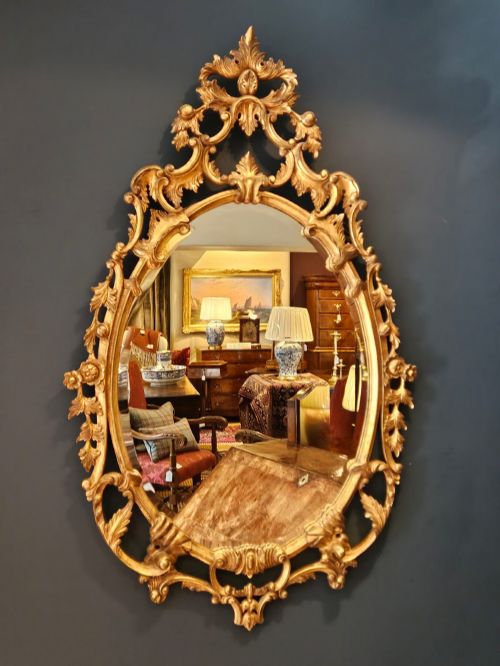
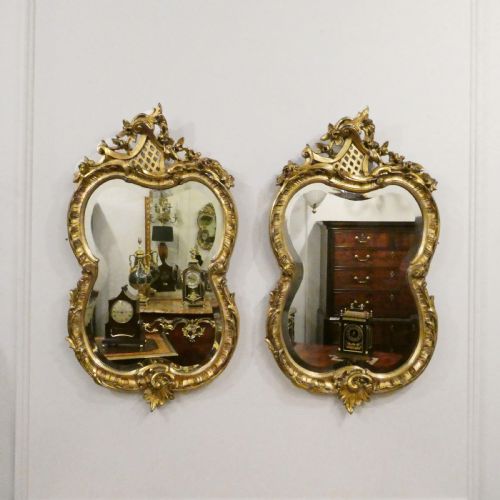
An ornate scrollwork wall mirror brings dramatic flourish and reflected light to a room, drawing the eye with lavish carved detail.
Ornate Scrollwork Wall Mirror
An ornate scrollwork wall mirror delivers sculptural presence to a room through exuberant framing and reflective depth. When searching for an ornate scrollwork wall mirror, buyers encounter pieces spanning the nineteenth century up to the Edwardian period.
The selection on this page leans heavily toward nineteenth century and Victorian examples alongside twentieth century interpretations. Common forms include large overmantles, oval wall mirrors, and matched pairs framed in giltwood or cast brass.
Stylistic influences draw deeply from Rococo Revival, Italian Baroque, and French design traditions. These mirrors serve as commanding focal points above mantelpieces or in grand entrance halls.
How they were made
Craftsmen built the foundations of these frames using carved wood, padauk, and mahogany, often applying layers of gesso to build up intricate relief ornament. Artisans then finished the surfaces with gold leaf or gilding to achieve a luminous metallic sheen.
Alternative pieces utilise cast brass and carved giltwood, combining heavy metalwork or timber with bevelled glass plates. The construction techniques reflect regional workshops across Italy, France, Spain, and Britain.
One unexpected mirror frame shares its company on this site with a set of fairground boards from the early twentieth century.
What varies in quality
The distinction between tiers rests upon the depth of the carving and the crispness of the scrollwork relief. Hand-carved giltwood frames with layered gesso show superior artistic execution compared to simpler moulded designs.
The quality of the original glass plate and the integrity of the gilding further divide standard examples from exceptional pieces. Superior items retain their original bevelled mirror glass and undisturbed surface patination.
The Ornate Scrollwork Wall Mirror Glossary
- Giltwood
- Timber coated with gold leaf or a gold-coloured finish. This material defines the opulent appearance characteristic of many nineteenth century decorative frames.
- Gesso
- A plaster-like mixture applied to wood surfaces and carved before gilding. It allows artisans to shape intricate relief scrolls and motifs.
- Rococo Revival
- A nineteenth century design movement reviving the asymmetrical scrolls and shell motifs of the French Rococo period. It dominates the ornamentation seen on these mirror frames.
- Overmantle
- A large mirror specifically designed to hang above a fireplace mantel. These pieces often feature wide proportions to match the scale of the hearth.
- Padauk
- A dense tropical hardwood utilised in specific carved wall mirrors. Its stability makes it suitable for detailed cabinetwork.
Ornate Scrollwork Wall Mirror: Frequently Asked Questions
How do I hang a heavy giltwood mirror safely?
These substantial frames require secure wall anchors fixed directly into masonry or heavy timber studs. Professional mirror hangers utilise weight-rated brackets that match the specific load of the timber and glass.
Position the mirror at a height that reflects eye level or catches light from a nearby window to best illuminate the room.
How do I clean an antique mirror frame?
Dust the carved scrollwork gently with a soft, dry brush to prevent dirt accumulation in the crevices. Avoid chemical cleaners or excessive moisture which can damage historic gilding and gesso.
Use a mild glass cleaner applied to a cloth rather than the mirror directly to protect the surrounding frame from drips.
What rooms suit an ornate scrollwork mirror?
Living rooms and dining spaces benefit from the reflective light and grand scale of these decorative pieces. They also add architectural interest when hung above console tables in hallways.
Pairing a gilt mirror with contrasting plain walls allows the intricate scrollwork to stand out as a primary focal point.
How can I tell the period of a mirror?
Examine the construction of the wooden backing, the composition of the gesso, and the manufacturing characteristics of the glass plate. Nineteenth century pieces often display hand-bevelled edges and tool marks specific to period workshop practices.
Stylistic cues such as Victorian brass casting techniques or Rococo Revival symmetry help narrow down the date of manufacture.