
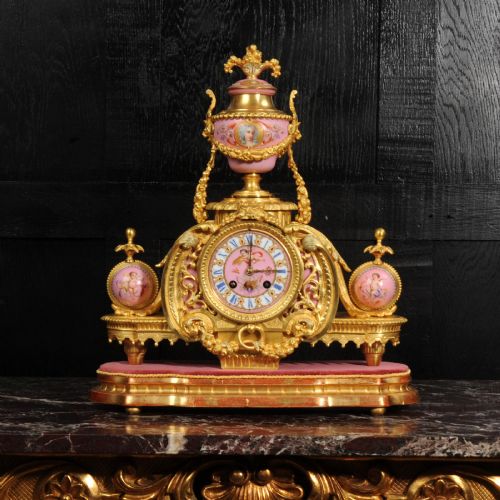
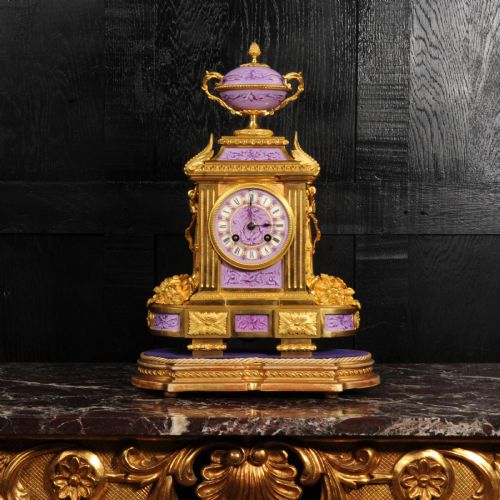
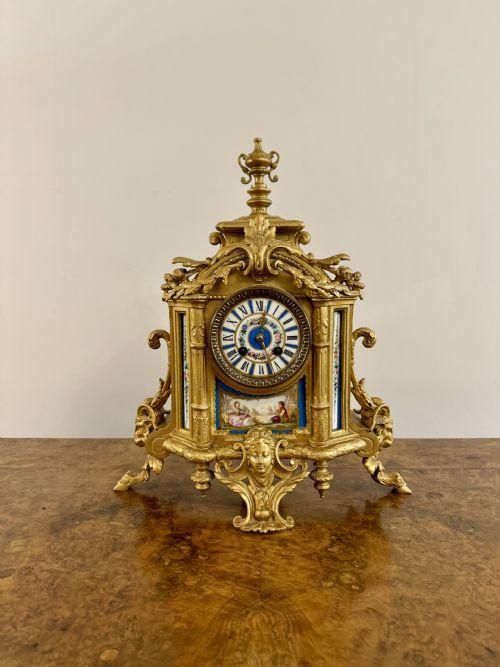


Ornate Porcelain Mantel Clock
An ornate porcelain mantel clock brings substantial nineteenth-century French presence to a room through gilded mounts and painted ceramic panels.
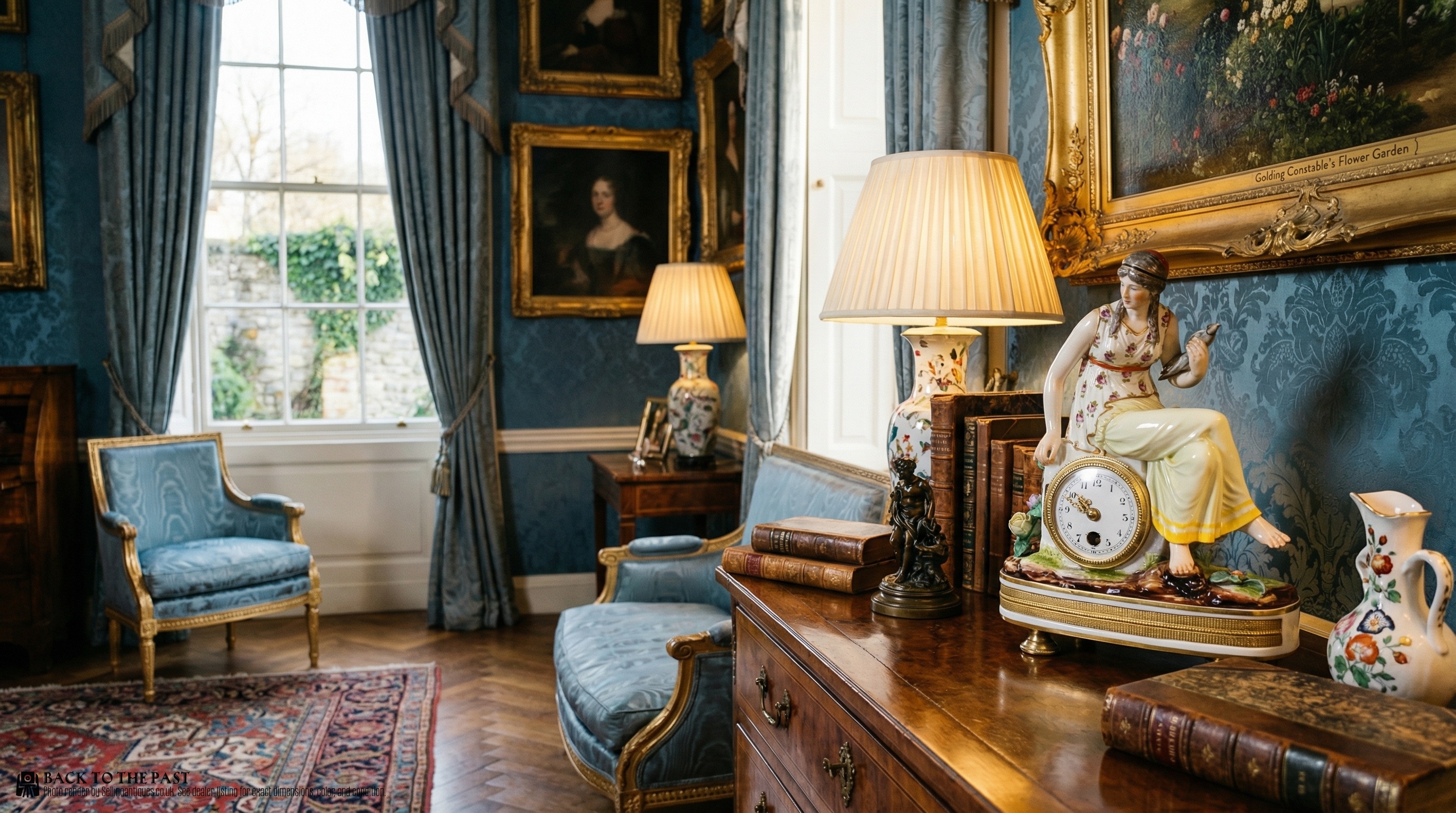
Ornate Porcelain Mantel Clock
An ornate porcelain mantel clock combines ceramic bodies with metal mounts, appearing frequently in French nineteenth-century styles such as Rococo Revival and Louis XVI Revival. These pieces originate predominantly from the mid-to-late Victorian era, spanning decades from 1850 to 1900. Buyers encounter works featuring hand-painted panels, ceramic urns, and figural or architectural cases designed for display on a fireplace shelf.
Makers such as Achille Brocot and Japy Freres produced movements housed within these elaborate housings, often accompanied by matching garniture sets or glass domes. The forms range from classical lyre clocks to boudoir pieces and larger bell-striking designs. Porcelain components frequently display Sevres style decoration alongside gilt bronze or ormolu frames.
Materials and construction methods
These clocks combine porcelain bodies with cast ormolu, gilt bronze, and brass mounts, utilising enamel for dial faces and glass for protective covers. Artisans mounted hand-painted ceramic panels into heavy metallic frames, integrating wooden bases or velvet linings where appropriate. The construction relies on traditional foundry casting for the gilt metal components and specialised kiln firing for the decorated ceramic sections.
Movements required precise mechanical engineering by established workshops, paired with decorative hand-finishing on the exterior metalwork. Enamel dials received delicate numeric painting, while crystal regulator models incorporated transparent glass panes to expose the internal gear train.
A Delft clock with its own lid keeps time while maintaining an air of kitchen mystery.
Distinctions in craftsmanship
Quality separates through the crispness of the gilt metal chasing and the artistry of the hand-painted porcelain panels. Superior examples exhibit finely detailed cast mounts alongside movements signed by recognised makers like Achille Brocot or Japy Freres. Lesser pieces feature simpler ceramic decoration and heavier, unrefined brass castings.
The integration of complete garniture sets and original glass domes elevates the status of a clock within the range. The depth of gilding and the precision of the enamel dial work indicate the tier of original manufacture.
Achille Brocot·Japy Freres
The Ornate Porcelain Mantel Clock Glossary
- Ormolu
- Gilded bronze produced through a mercury amalgamation technique or electroplating on nineteenth-century pieces. This decorative finish provides a bright golden surface to metal mounts.
- Garniture set
- A matching grouping consisting of a mantel clock accompanied by side pieces such as vases or urns. These sets create a balanced decorative display on a mantelpiece.
- Crystal regulator
- A mantel clock featuring glass panels on multiple sides that expose the mechanical movement within. This style gained popularity during the late nineteenth century.
- Lyre clock
- A timepiece shaped in the classical musical instrument form, often mounted in ormolu and porcelain. The design reflects Louis XVI revival aesthetics.
- Sevres style
- Ceramic decoration imitating the characteristic soft-paste porcelain and painted panels associated with the French royal manufactory. Pieces often feature floral motifs against coloured grounds.
Ornate Porcelain Mantel Clock: Frequently Asked Questions
How do I wind an antique mantel clock?
Most mechanical clocks require a key inserted into the dial holes to tension the mainsprings. Care must be taken not to overwind the movement.
Striking mechanisms should be allowed to complete their sequence without manual interference of the hands during adjustment.
What is a clock garniture?
A garniture comprises the central timepiece flanked by two matching decorative objects, such as urns or vases. These items are designed to sit together as a coordinated set on a mantel.
Matching materials like ormolu and porcelain tie the ensemble together visually.
How do I date a porcelain clock?
Dating relies on stylistic clues, maker marks stamped on the movement backplate, and prevailing nineteenth-century revival aesthetics. Periods range from mid-century Rococo designs to late-century crystal regulators.
Materials like gilt bronze and Sevres style panels help narrow the decade of production.
Where should I place a mantel clock?
These clocks require a stable, level surface away from direct heat sources and damp environments. Mantelpieces provide the traditional elevated position for viewing and hearing the strike.
Glass domes and delicate porcelain panels need protection from accidental knocks in busy rooms.