

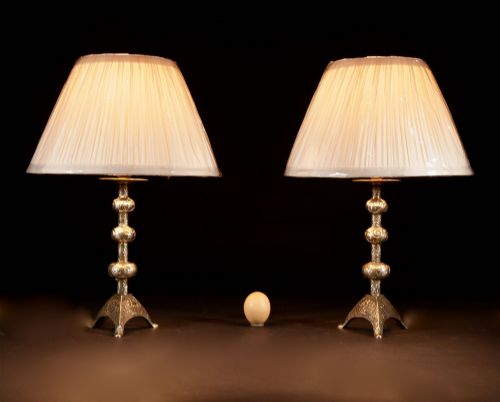


Ornate Metal Side Table
An ornate metal side table brings character and a metallic finish to a room, ranging from cast iron garden pieces to marble-topped console tables.

Ornate Metal Side Table
When you search for an ornate metal side table, you encounter an assortment of occasional furniture, console tables, and lamp stands originating from the nineteenth and early twentieth centuries. These pieces utilise various metal frames, often combined with stone or wood surfaces, to create decorative accents for living spaces.
The selections available on this page lean heavily towards Victorian cast iron garden tables, Edwardian and Victorian lamp bases, and French console tables. Styles span from Victorian and Rococo Revival to Art Deco and Romanesque Revival, reflecting diverse historical revivals.
Buyers frequently select these items for their intricate metalwork, scroll work, and sculptural qualities. Whether utilised as a side table, console, or pedestal, each piece offers a distinct period aesthetic rooted in brass, bronze, cast iron, or gilt metal.
Materials and construction methods
The construction of an ornate metal side table typically relies on casting, pressing, and chiselling techniques applied to brass, cast iron, bronze, and gilt metal. Foundries and workshops utilised these metals to produce durable frames featuring detailed scroll work and figurative motifs.
Many of these tables and stands incorporate contrasting materials such as marble or onyx for tops, alongside wood elements in certain console designs. Fabric and glass components also appear in specific lamp and table configurations from the Edwardian and Art Deco periods.
Ornate Metal Side Table Retail Price Guide 2026
Typical asking prices for ornate metal side table among the pieces listed under this phrase on Sellingantiques today, from the lower quarter to the upper quarter. They describe what is for sale here now, not the wider market.
Listings feature items from the Victorian, Edwardian, and Art Deco eras, utilising brass, cast iron, marble, and onyx.
Assessing quality in period metalwork
The quality of an ornate metal side table rests upon the crispness of the casting and the depth of the chased or pressed detailing. Superior examples exhibit sharply defined motifs, such as maiden heads or scroll work, without the softening of lines often found in lesser reproductions.
Material integration further distinguishes the pieces, particularly where marble or onyx tops meet metal bases with precision. Heavier, more substantial metalwork generally indicates a higher standard of original manufacture from Victorian and early twentieth-century workshops.
The Ornate Metal Side Table Glossary
- Cast iron
- A strong, heavy iron alloy poured into moulds to create rigid forms. It allows for intricate scroll work and structural durability in garden and occasional tables.
- Gilt metal
- Metal coated with a thin layer of gold or gold-coloured finish. This technique imparts a rich, reflective surface popular in nineteenth and twentieth-century decorative pieces.
- Onyx
- A banded variety of chalcedony stone frequently utilised for tabletops and pedestals. Its natural patterning provides a smooth, contrasting surface to metal frames.
- Romanesque Revival
- An architectural and decorative style drawing inspiration from medieval Romanesque forms. Pieces in this style often feature robust masonry or heavy metal detailing reminiscent of twelfth-century aesthetics.
- Spelter
- An alloy of zinc, sometimes combined with other metals, cast into decorative shapes and typically painted or bronzed. It served as a more affordable alternative to bronze during the nineteenth and twentieth centuries.
Ornate Metal Side Table: Frequently Asked Questions
How were cast iron tables used?
Cast iron tables served practical and decorative functions both indoors and in garden settings.
Their robust construction made them suitable for supporting heavy use while displaying intricate cast ornamentation.
How do I identify a Victorian metal table?
Victorian metal tables often exhibit heavy cast iron construction, scroll work, or revivalist motifs such as Rococo or Romanesque details.
Examining the casting quality and surface finish helps determine the period of manufacture.
Can I use a console table as a side table?
Console tables and side tables share similar functions in supporting lamps and decorative objects against walls.
Console tables are typically longer and shallower, designed to anchor a specific wall space within a room.
What materials are common in these tables?
Brass, cast iron, gilt metal, and bronze form the primary metallic structures of these pieces.
Combinations frequently include marble or onyx tops to add texture and colour variation to the design.