
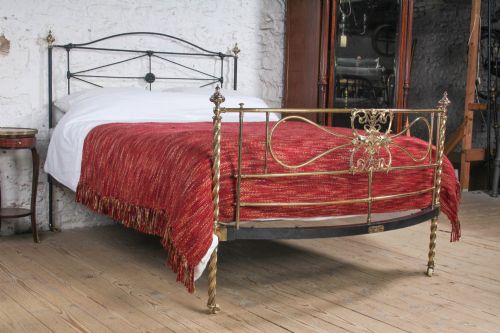
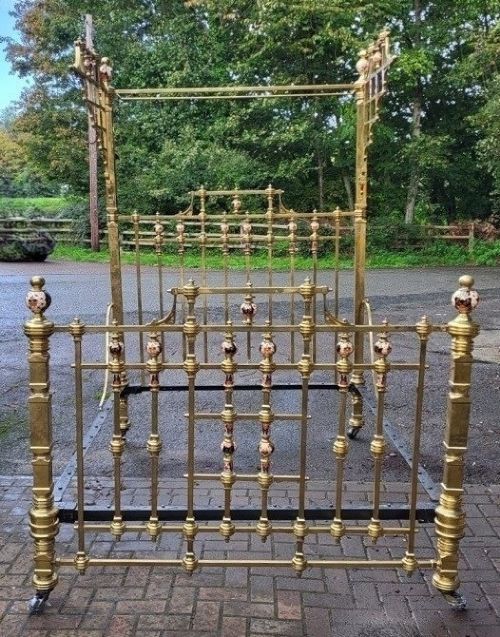
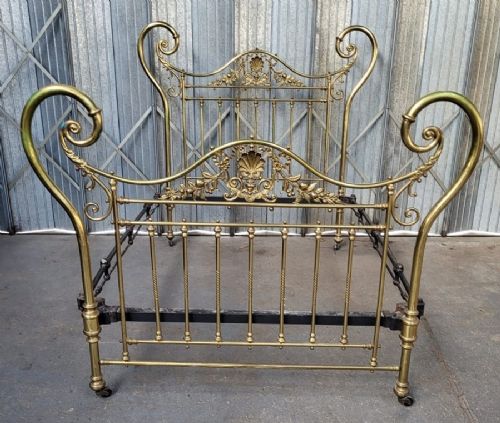

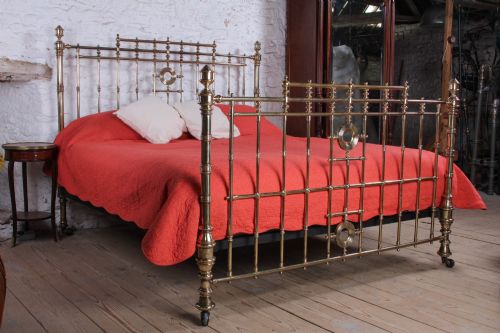
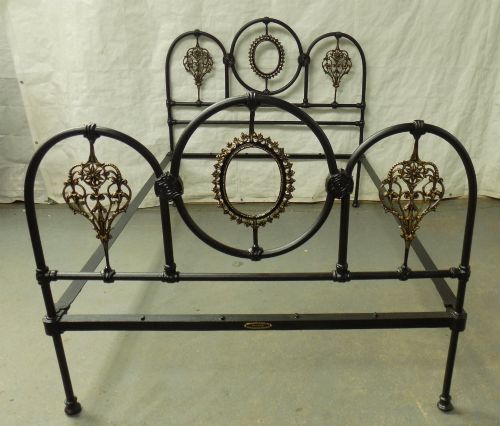
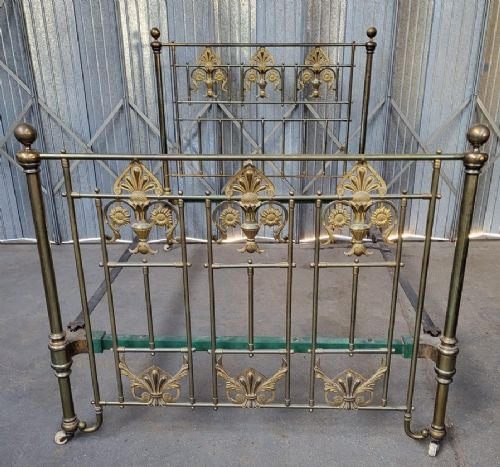


Ornate Metal Headboard
An ornate metal headboard brings substantial Victorian character and heavy cast or tubular framework into a bedroom.
Ornate Metal Headboard
An ornate metal headboard typically forms part of a larger Victorian bedstead, single bed, or half tester bed frame made during the nineteenth century. These pieces combine robust structural iron with decorative brass components to create a commanding focal point in a traditional bedroom scheme.
The selections span distinct regional and stylistic variations, including Portuguese regional designs, French Belle Epoque models, and 19th Century Italian tole ware pieces. Buyers frequently encounter standard double and king size proportions featuring curvaceous lines and intricate metalwork.
How they were made
Maker workshops utilised a combination of cast iron, wrought iron, and sheet metal for the core structural framework of these bed frames. Brass tubing and cast brass mounts were then integrated to provide the primary decorative elements across the design.
Surface decoration frequently involved applied paint, ceramic inserts, and selective gilding to accentuate the detailed scrollwork and joints. Makers such as Winfield and Maple & Co employed specialised metalworking techniques to achieve exhibition quality finishes.
Several beds possess joint mechanisms allowing twin frames to unite into a single grand resting place.
What varies in quality
The distinction between standard commercial production and exhibition quality work lies in the depth of casting detail and the weight of the brass components utilised. Superior examples display crisp chasing on brass mounts and exceptionally complex curly ironwork without structural compromise.
Makers known for retail prominence or specific commissions often delivered heavier gauge tubing and more sophisticated joinery that remains stable over centuries of use. The integration of auxiliary materials like ceramic and original paint finishes also dictates the overall pedigree of the piece.
Winfield·Maple and Co
The Ornate Metal Headboard Glossary
- Half tester bedstead
- A bed frame featuring a partial canopy that extends only partway over the head of the bed. This form typically incorporates an ornate metal headboard and footboard paired with hanging drapery.
- Tole ware
- Lacquered or enamelled metal objects produced in the eighteenth and nineteenth centuries. In bed frames, this finish offers colourful or patterned decorative surfaces on iron components.
- Brass bedstead
- A sleeping platform constructed primarily from brass tubing and cast brass ornaments. These frames became immensely popular during the Victorian period for their bright metallic appearance.
- Cast iron
- Molten iron poured into a mould to create complex shapes and decorative panels. It provides the heavy structural backbone for many Victorian beds.
Ornate Metal Headboard: Frequently Asked Questions
How do I fit an old headboard to a modern bed?
Historic metal headboards were originally integrated into complete bedsteads rather than manufactured as standalone panels for modern divan bases. Adapting them requires bespoke brackets that attach to the existing side rails or wall mountings.
Buyers should measure the exact fixing centres and post widths carefully before attempting installation with contemporary hardware.
How do I clean nineteenth century brass?
Victorian brass components often retain centuries of oxidation and mellow patination that collectors prefer to preserve. Gentle dusting with a soft cloth is usually sufficient for regular maintenance.
Avoid aggressive metal polishes that strip away original surface character and historic layers.
Were these beds made in standard sizes?
Nineteenth century bedframes predate modern standardisation and often vary by a few inches compared to contemporary mattress dimensions. Single, double, and king size proportions existed, but rail lengths frequently require minor adjustment.
Checking exact internal dimensions ensures a proper fit for modern bedding components.
What distinguishes Victorian aesthetic movement beds?
Aesthetic movement pieces incorporate stylized natural motifs and simplified structural lines influenced by the pursuit of art for art's sake. They contrast with heavier, more exuberant mid-Victorian designs through restrained ornamentation.
These variations help collectors date pieces accurately within the broader nineteenth century timeline.