

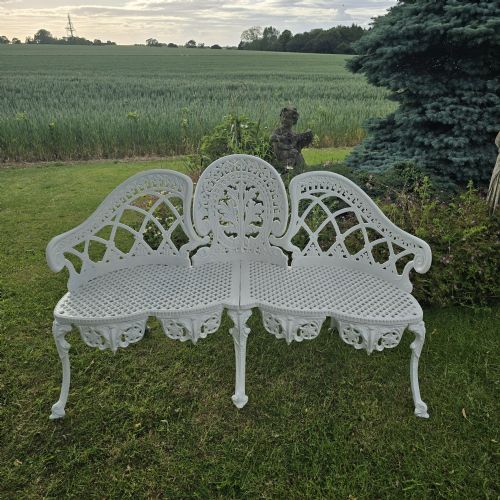
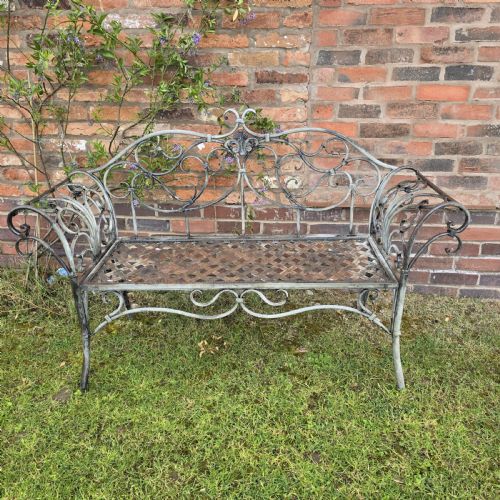


Ornate Metal Garden Seat
An ornate metal garden seat brings solid nineteenth-century weight and intricate Victorian scrolling to the lawn.
Ornate Metal Garden Seat
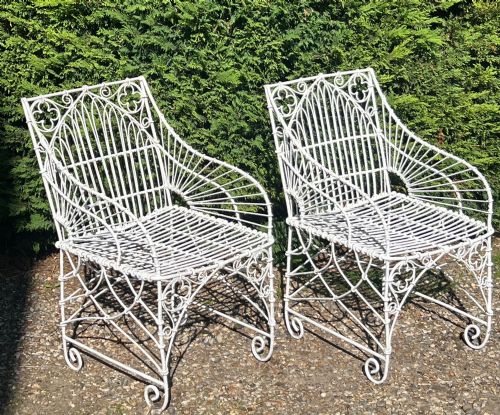
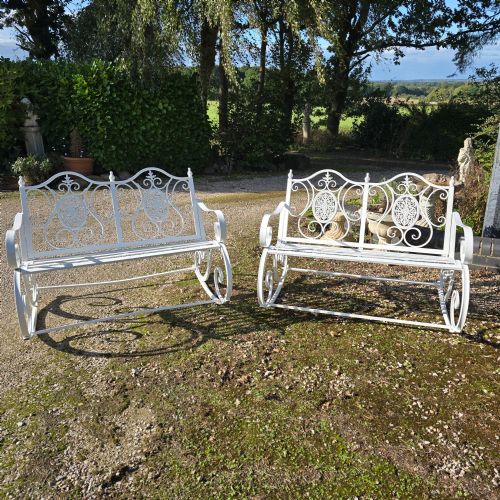
When you search for an ornate metal garden seat, you are looking at substantial outdoor furniture shaped from heavy ferrous materials. These pieces range from compact garden chairs and armchairs to full garden benches, settees, and daybeds designed to endure the weather while adding distinct architectural interest.
The versions you are most likely to meet on this page hail primarily from the Victorian period and the nineteenth century, alongside later twentieth-century iterations from nineteen thirty and nineteen forty. Their styles span Gothic Revival, French Country, and French Riviera influences.
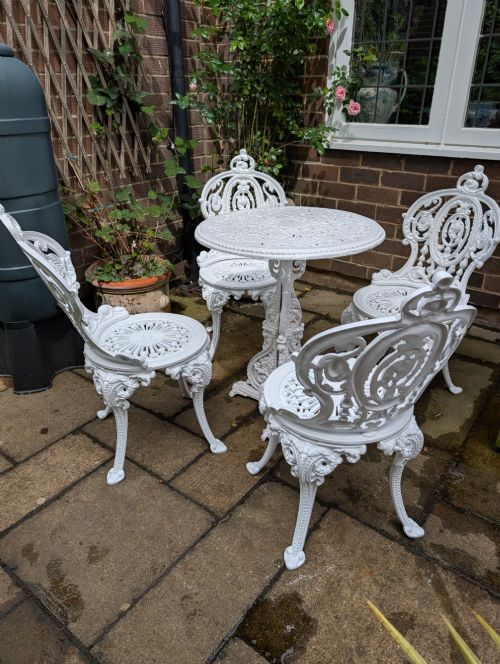
Makers and designers occasionally surface, as seen with the Christopher Dresser table associated with a set of cast-iron garden chairs. Forms vary from simple garden seats to paired conservatory benches and garden dining sets incorporating fabric and leather elements.
How they were made
These items rely heavily on cast iron and wrought iron, formed through traditional foundry work that allowed makers to produce elaborate pierced backs and scrolling armrests. Cast aluminium also appears in later twentieth-century pieces, offering a lighter alternative without sacrificing decorative detail.
Surface finishes are integral to their construction, with original or renewed paint protecting the underlying metal from rust. Some seating incorporates timber slats alongside cast iron frames, or utilises fabric and leather for cushioned elements on daybeds and interior conservatory benches.
Ornate Metal Garden Seat Retail Price Guide 2026
Typical asking prices for ornate metal garden seat among the pieces listed under this phrase on Sellingantiques today, from the lower quarter to the upper quarter. They describe what is for sale here now, not the wider market.
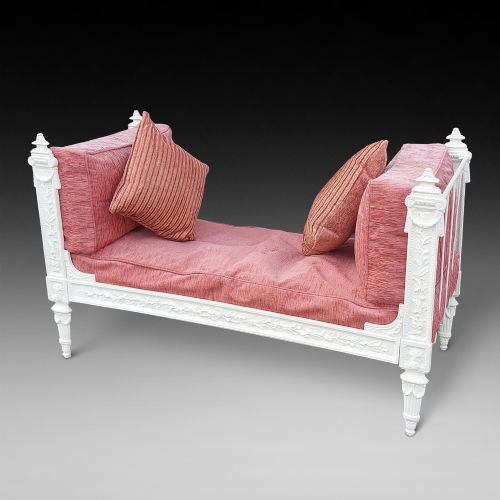
Some nineteenth-century makers evidently expected garden seating to double as indoor daybeds, provided you added enough cushions.
What varies in quality
The distinction between ordinary production and superior work lies in the crispness of the casting and the ambition of the design. Early Victorian examples with deep relief work and refined Gothic or French styling display a sculptural presence that mass-produced later variants lack.
Structural integrity also separates the range, determined by whether the metal retains its original thickness or has suffered from prolonged weathering and aggressive past restoration. Pieces that preserve their balanced proportions and uncompromised scrollwork command greater attention from collectors.
Christopher Dresser
The Ornate Metal Garden Seat Glossary
- Cast Iron
- Molten iron poured into a sand mould to create rigid, highly decorative components with intricate relief patterns. This heavy material forms the primary structure of most Victorian outdoor benches and chairs.
- Wrought Iron
- Iron heated and worked by hand with hammers and anvils to produce durable, scroll-detailed framework. It yields a fibrous grain and resilient strength distinct from brittle cast metal.
- Gothic Revival
- An architectural and decorative style drawing on medieval forms, featuring pointed arches, trefoils, and vertical tracery. This aesthetic translates into striking pierced patterns on metal garden chair backs.
- Conservatory Bench
- A lighter seating form intended for glasshouses and sunrooms rather than exposed lawn use. These pieces often exhibit finer French styling and delicate metalwork.
- Daybed
- A dual-purpose seating and lounging form featuring an elongated seat and raised back or end panels. In nineteenth-century metal furniture, these provide substantial outdoor or conservatory day seating.
Ornate Metal Garden Seat: Frequently Asked Questions
Were these seats left outside all year?
Victorian and nineteenth-century cast iron furniture was built heavy enough to withstand permanent outdoor placement. The durable metal construction allowed them to remain on lawns through every season.
However, softer elements like timber slats, fabric, or leather upholstery meant certain settees and daybeds were better suited to covered verandas or conservatories.
How do I tell Victorian pieces apart from later ones?
Early Victorian and mid nineteenth-century examples generally feature heavier cast iron construction with deep, crisp botanical or Gothic relief work. The weight and density of the metal often decrease in twentieth-century iterations.
Stylistic cues also help separate periods, as French Riviera and nineteen-thirties pieces tend to adopt lighter frames and simpler silhouettes compared to nineteenth-century ornamentation.
Can I leave a metal bench on grass permanently?
Cast iron and wrought iron garden seats handle damp ground well due to their substantial mass. Placing them on stone or paving helps prevent moisture from lingering excessively around the feet.
Regular inspection of the paint layer prevents rust from taking hold where the metal contacts damp soil or turf.
What is the difference between a settee and a bench?
In historical garden furniture, a settee typically denotes a more decorative, upholstered, or refined two-seater incorporating arms and an ornate back. Benches often follow simpler architectural lines intended for utilitarian garden placement.
Both forms utilise the same robust metal casting techniques developed during the nineteenth century.