
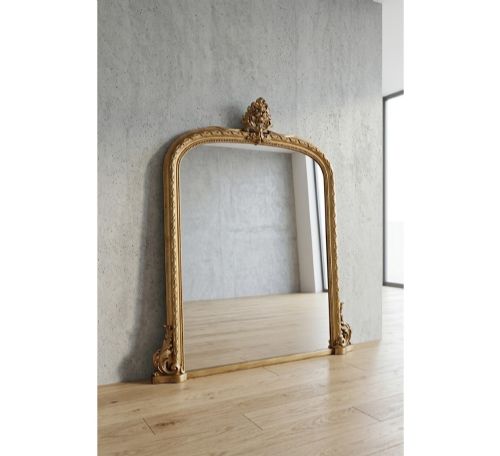
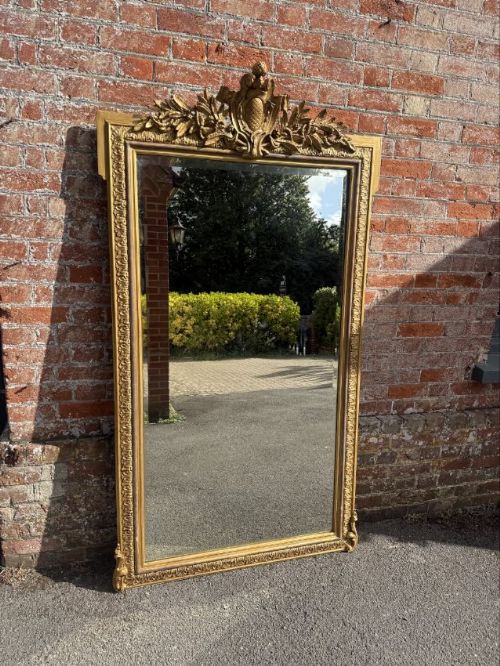
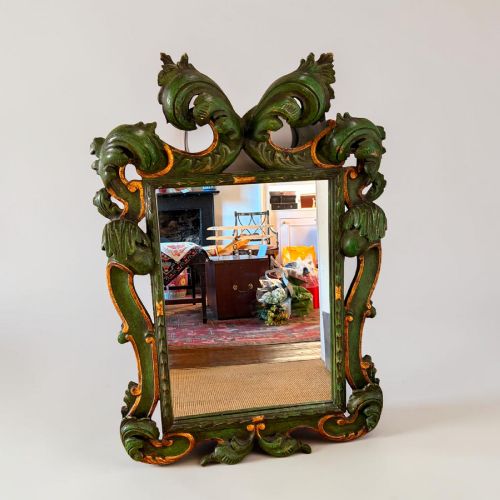
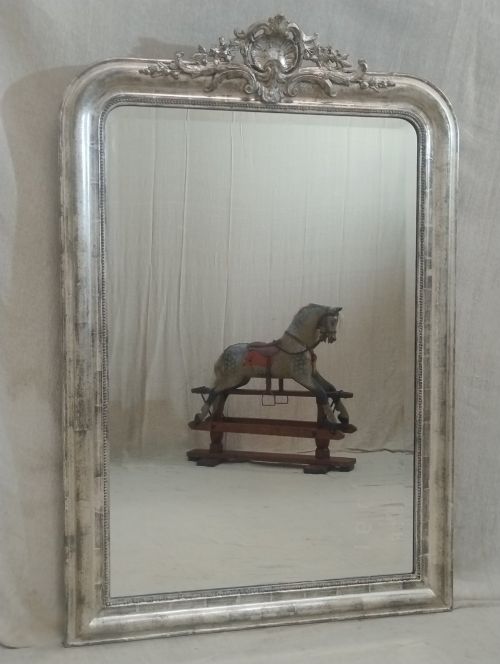
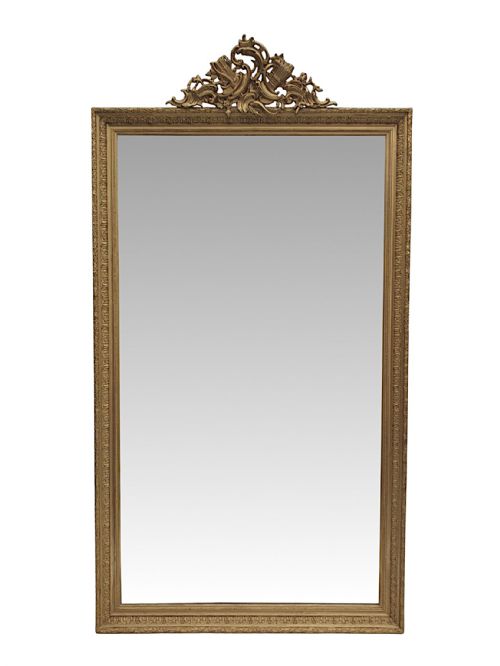
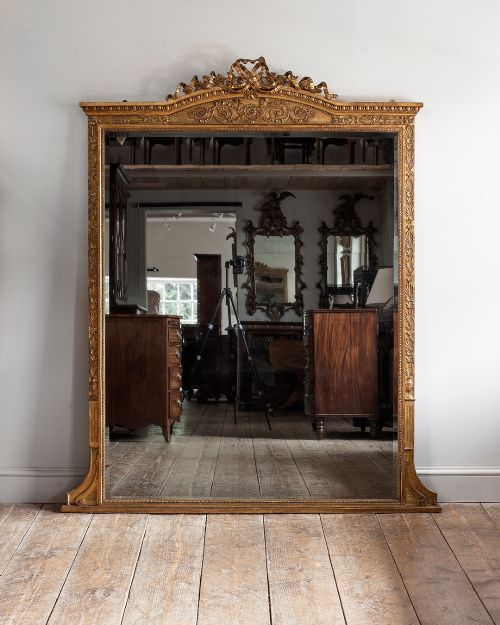
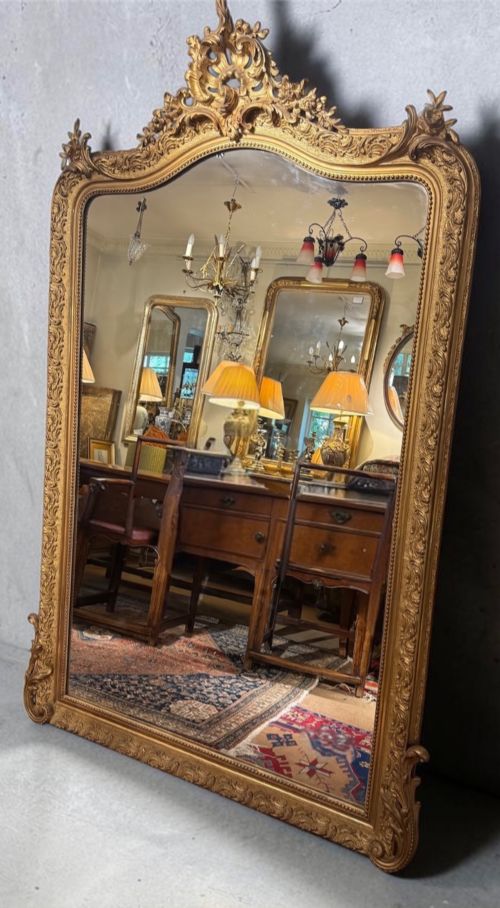
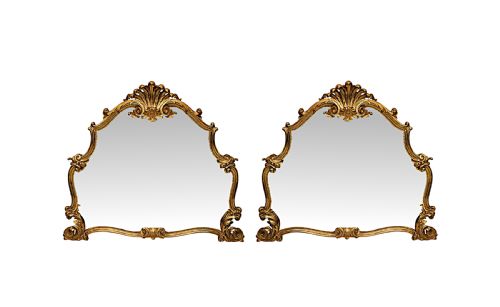

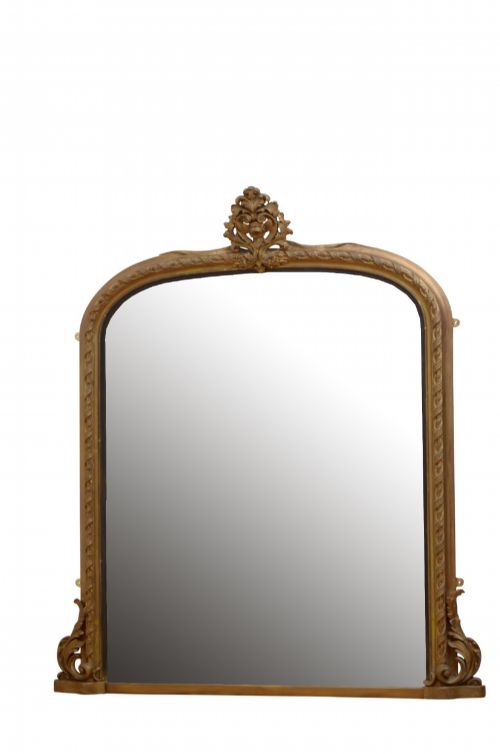
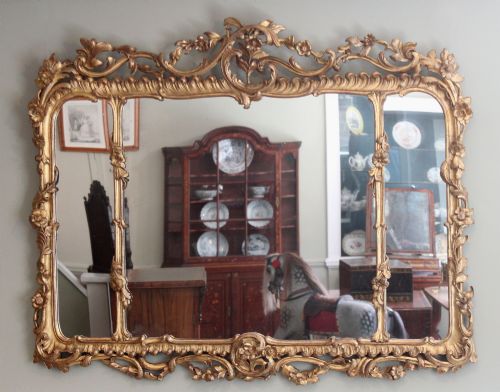

Ornate Mantle Wall Mirror
An ornate mantle wall mirror brings scale and reflection to a room, drawing the eye with gilded scrolling and deep moulded frames.
Ornate Mantle Wall Mirror
An ornate mantle wall mirror sits above a fireplace or serves as a principal statement piece on a reception room wall, reflecting light and adding architectural presence. These large glasses derive largely from nineteenth-century English and French workshops, though eighteenth-century examples and later revivals appear regularly.
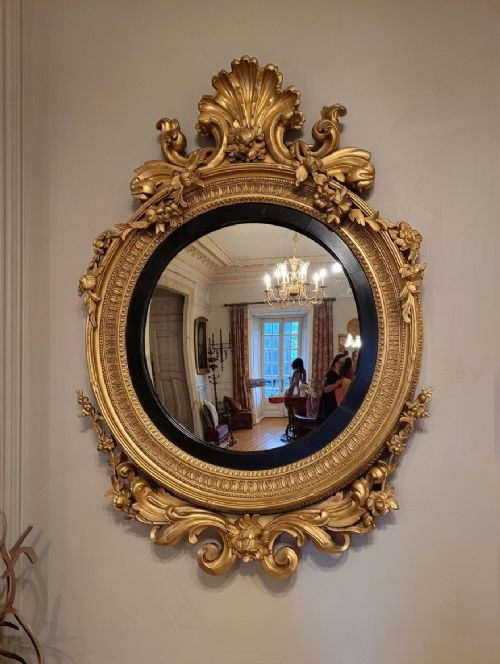
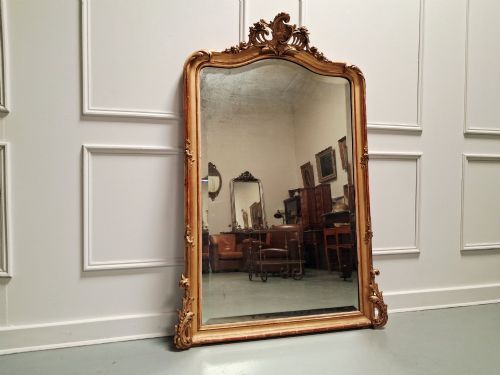
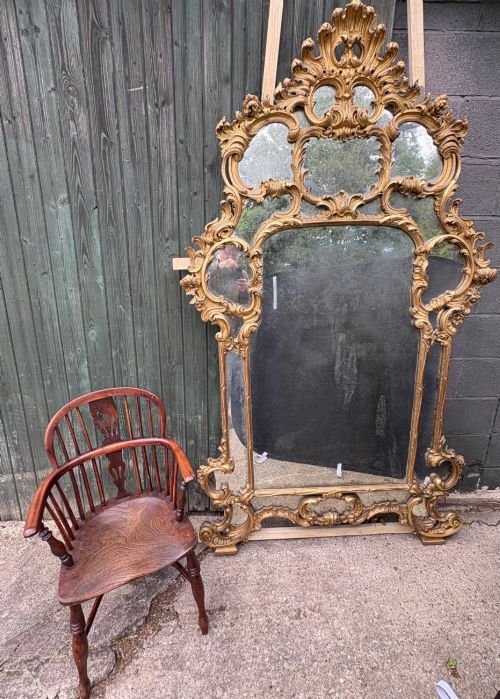
The dominant forms on this page are grand overmantel and leaner mirrors designed to anchor high ceilings. Buyers encounter arched tops, rectangular landscape formats, and oval frames executed in styles ranging from Regency restraint to exuberant Rococo Revival.
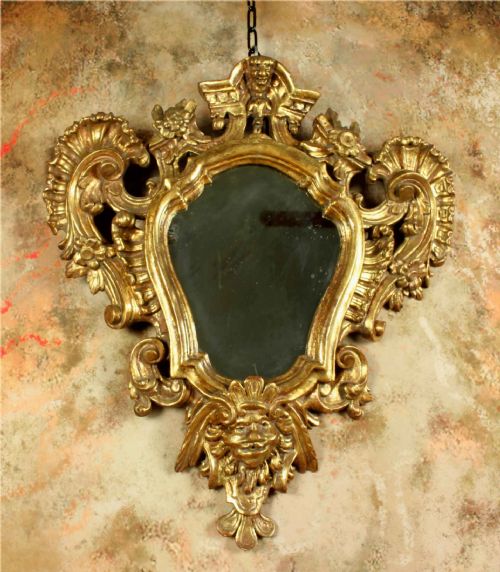
Originating in stately homes and substantial townhouses, these heavy looking glasses combine utility with decorative dominance. Their frames command attention through scrolled crestings, moulded gesso foliage, and expansive proportions.
How They Were Made
Carved wood provides the structural foundation for the finest frames, often combined with composition moulded ornament or layered gesso. Craftsmen applied gold leaf or silver leaf over prepared surfaces, burnishing the metal to achieve a deep metallic lustre.
Moulded gesso on a wooden carcass allowed makers to build up elaborate scrolls, floral swags, and classical motifs with speed and precision. Composition material pressed into metal moulds created crisp relief work that was subsequently secured to the wooden subframe before gilding.
What Varies in Quality
Depth and crispness of hand-carved detail separate masterwork frames from standard commercial output of the period. Sharp undercutting in wooden foliage and finely rendered moulded gesso indicate superior craftsmanship.
The integrity of the original mercury or early silvered glass plate contributes significantly to character and value. Thick glass with authentic foxing and minimal distortion demonstrates the quality of the original optical material.
The Ornate Mantle Wall Mirror Glossary
- Overmantel mirror
- A large horizontal or arched looking glass specifically proportioned to hang on the wall directly above a fireplace mantelpiece. These pieces frequently extend wider than the hearth itself to balance the chimney breast.
- Gesso
- A mixture of chalk, gypsum, and glue applied to a wooden frame as a smooth ground for gilding or painting. Artisans could carve, stamp, or mould this versatile paste while pliable.
- Giltwood
- Timber, typically pine or oak, that has been coated with thin sheets of gold leaf or gold paint. This finish provides a durable metallic sheen that resists tarnishing.
- Composition
- A mixture of whiting, resin, glue, and linseed oil pressed into carved metal moulds to produce repeatable ornamental details. It sets hard and accepts gilding readily.
- Pier glass
- A tall mirror designed to be hung on the solid pier of wall situated between two windows. They often match console tables positioned directly below.
Ornate Mantle Wall Mirror: Frequently Asked Questions
How do I secure a heavy overmantel mirror to the wall?
Large antique mirrors carry substantial weight from their wooden frames and thick glass plates. They require professional wall anchors fixed directly into masonry or heavy timber studs.
Many tall examples also feature security brackets or rely on a combination of wall fixings and the mantel shelf to distribute the load safely.
Can these mirrors stand on the floor as leaner mirrors?
Substantial nineteenth-century overmantel frames often function effectively as leaner mirrors when placed directly on the floorboards against a wall. Their height provides a full-length reflection suitable for dressing rooms or spacious hallways.
When utilised in this manner, securing the top frame to the wall prevents accidental tipping.
What causes dark spots on antique mirror glass?
Oxidation of the backing silver or mercury occurs over decades as moisture seeps behind the glass plate. This natural ageing process creates mottled patches known as foxing.
Collectors often value original foxing as proof of genuine antique age and authentic character.
How do I clean a gilded gesso frame safely?
Dusting with a very soft, dry brush prevents accumulation of dirt without disturbing fragile gesso ornament. Moisture and modern chemical cleaners strip historic gold leaf and soften composition mouldings.
Professional conservation methods should be sought for any frame requiring deep cleaning or repair.