
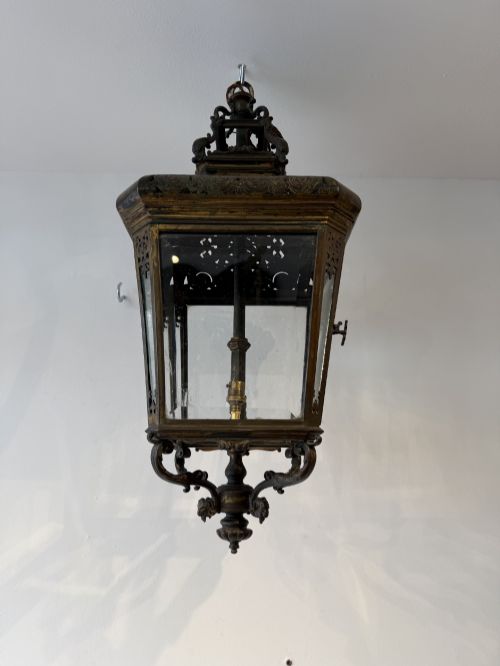
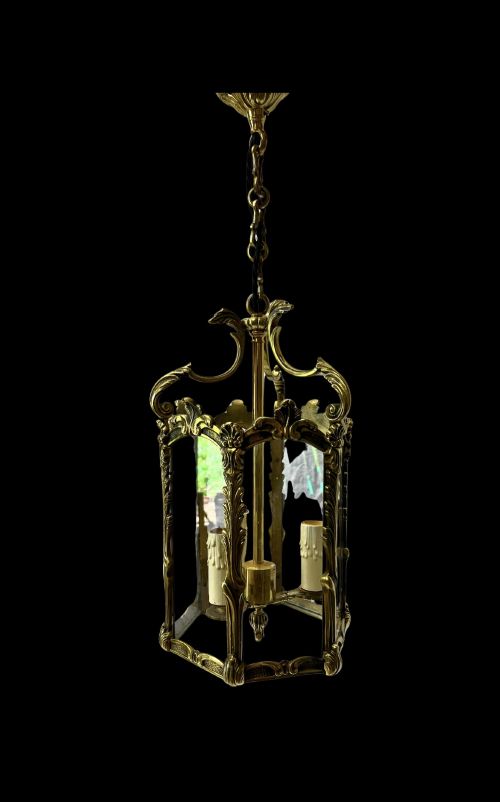


Ornate Hanging Lantern
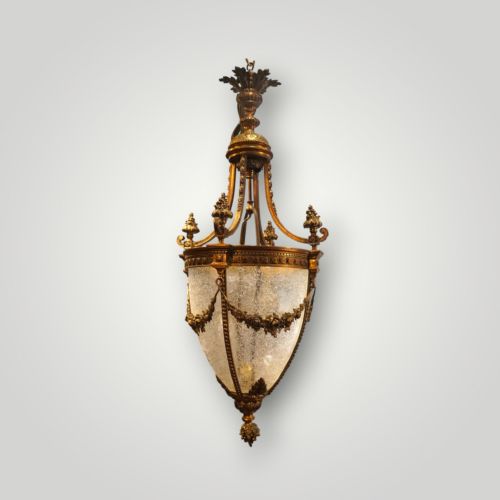
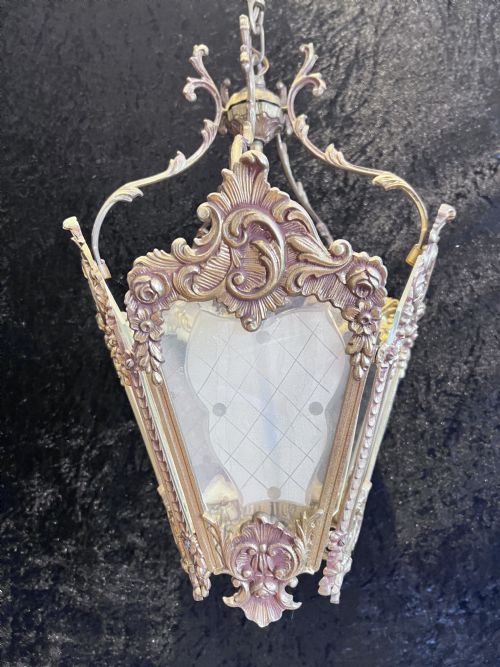
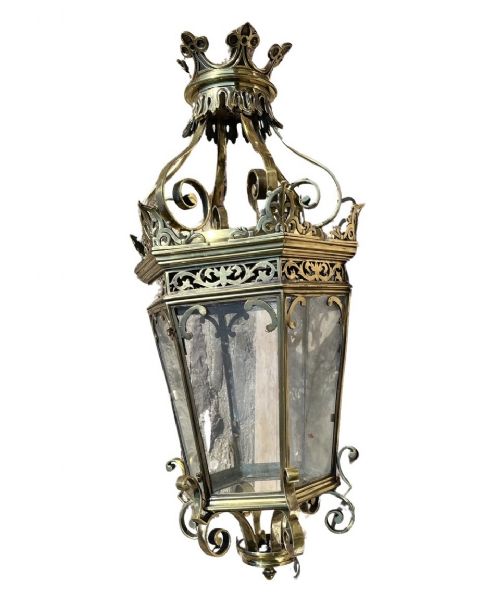
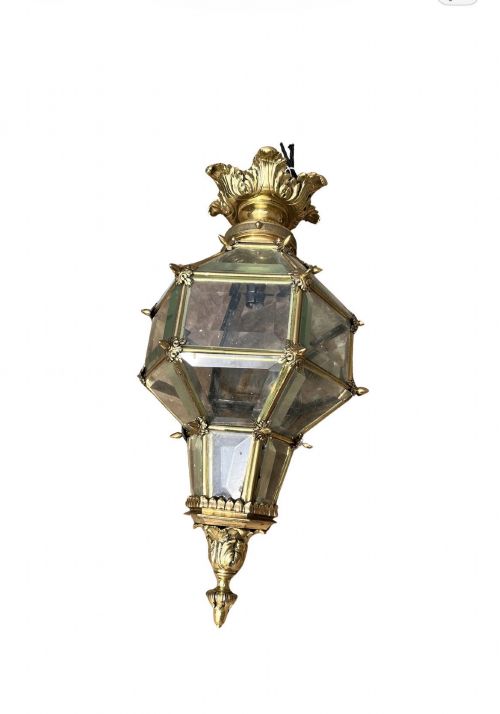
An ornate hanging lantern brings high-ceilinged drama to a hallway, and these brass, bronze, and giltwood examples deliver grand period lighting.
Ornate Hanging Lantern
An ornate hanging lantern serves as a dramatic architectural statement piece for entrance halls, landings, and principal reception rooms. These fixtures project a strong sense of historic grandeur through elaborate metalwork and glass configurations.
The selections available here lean heavily into continental European aesthetics, with French Rococo, Louis XVI, and Venetian Baroque styling dominating the inventory. Buyers encounter everything from substantial brass frames with operable doors to intricate carved giltwood structures.
Origins stretch across the nineteenth and early twentieth centuries, capturing periods when hallway lighting was designed to impress visitors immediately upon entry. Examples range from simple single-light brass housings to monumental multi-material creations incorporating crystal and toleware.
Materials and construction methods
Construction relies primarily on cast and chased metals including brass, bronze, gilded bronze, and giltwood, often enriched with applied gold leaf. Artisans shaped these robust frames to support glazed panels or openwork designs tailored for interior illumination.
Decorative glass and crystal elements, including coloured shades, are integrated directly into the metal frameworks to diffuse light effectively. Carved wooden components finished in giltwood or paired with toleware demonstrate the varied craft traditions employed across different European workshops.
Periods represented reach from the mid-nineteenth century through the nineteen-thirties.
Evaluating quality and craftsmanship
Superior examples display crispness in metal chasing and wood carving, where ornate scrollwork, foliage, and architectural motifs remain sharp and deeply defined. The weight of the metal and the precision with which doors, hinges, and glass panels fit together separate standard production from exceptional work.
The integrity of the original surface finishes, whether fire-gilt bronze, patinated bronze, or layered gold leaf, dictates the visual depth of the piece. Master craftsmanship reveals itself in the harmonious balance of proportion between the primary metal frame and its glass or crystal ornamentation.
The Ornate Hanging Lantern Glossary
- Giltwood
- Timber that has been coated with a thin layer of gold leaf or gold paint. This technique creates a rich, reflective surface widely utilised in ornate historical frames.
- Toleware
- Painted or enamelled sheet metal objects. It appears on decorative accents within lighting fixtures to introduce colourful contrast against bronze or brass.
- Rococo
- An ornate artistic style characterised by asymmetrical scrollwork, C-curves, and naturalistic plant motifs. It heavily influences many nineteenth-century French lighting designs.
- Louis XVI
- A neoclassical design style defined by geometric symmetry, straight lines, and classical architectural details. It provides a more restrained counterbalance to earlier rococo excesses.
Ornate Hanging Lantern: Frequently Asked Questions
Where should an ornate hanging lantern be hung?
These fixtures suit high-ceilinged entrance halls, grand stairwells, and principal reception rooms where their decorative metalwork and scale can be fully appreciated.
Ensure adequate vertical clearance beneath the fixture so movement through the space remains completely unobstructed.
Are these lanterns wired for modern electricity?
Many examples have been electrified during their long histories to accommodate standard domestic bulbs safely.
Buyers should check individual listings to see how internal wiring is configured and consult a qualified electrician for installation.
How do I distinguish French styles from Italian styles?
French pieces often feature fluid Rococo or symmetrical Louis XVI metalwork in brass and gilded bronze. Italian examples frequently showcase carved giltwood and baroque architectural presence.
Examining the primary materials and ornamental motifs clarifies the regional workshop traditions behind each piece.
How should historic metal and glass be cleaned?
Dust gently with a soft, dry brush or cloth to protect delicate patinas, gold leaf, and antique glass shades.
Avoid abrasive metal polishes and chemical cleaners that can strip historic finishes from brass, bronze, or gilt surfaces.