
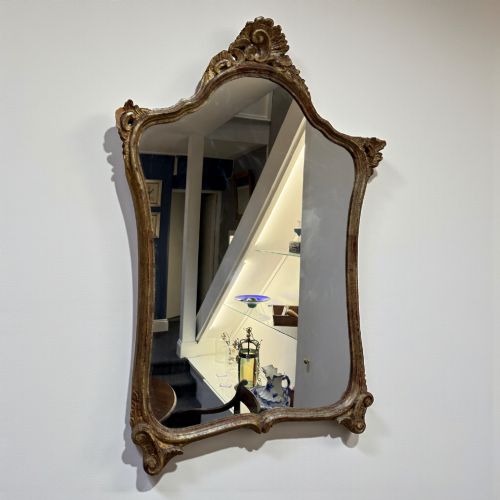
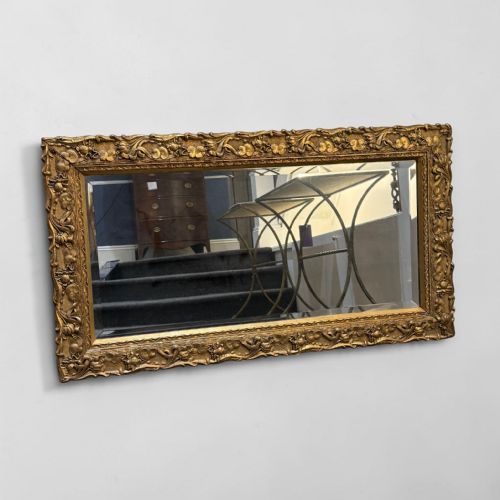
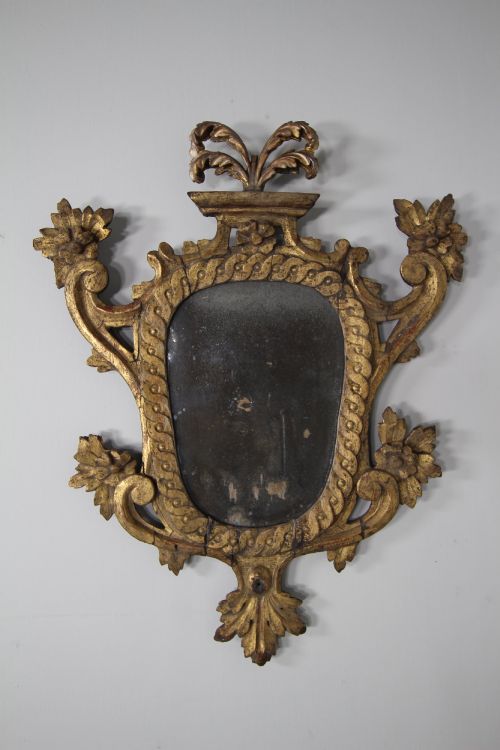
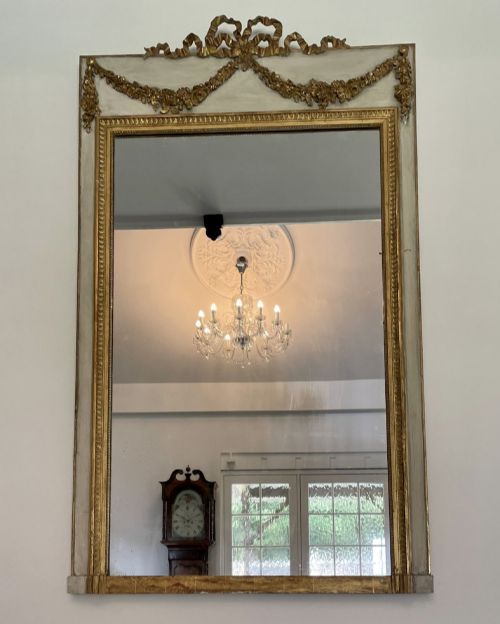
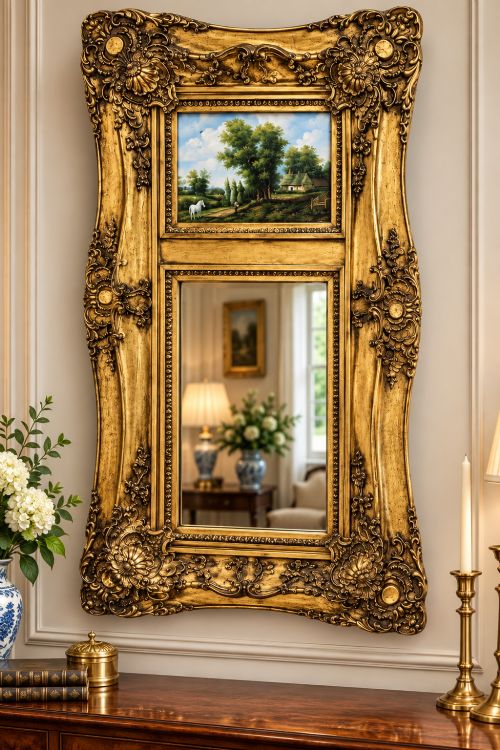
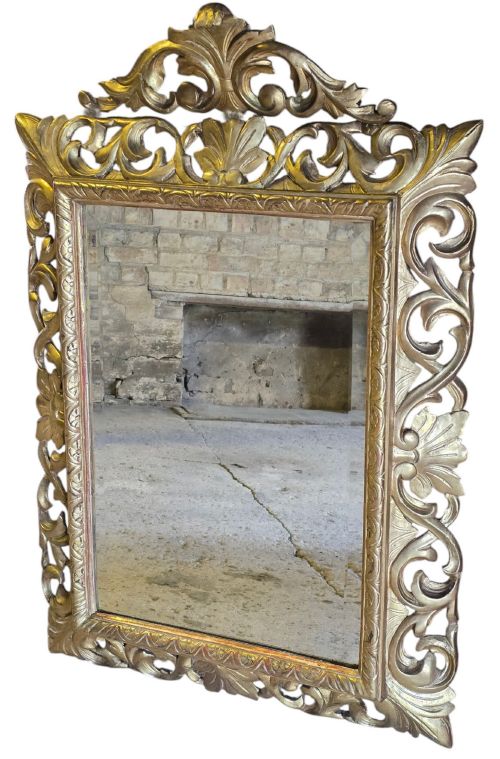
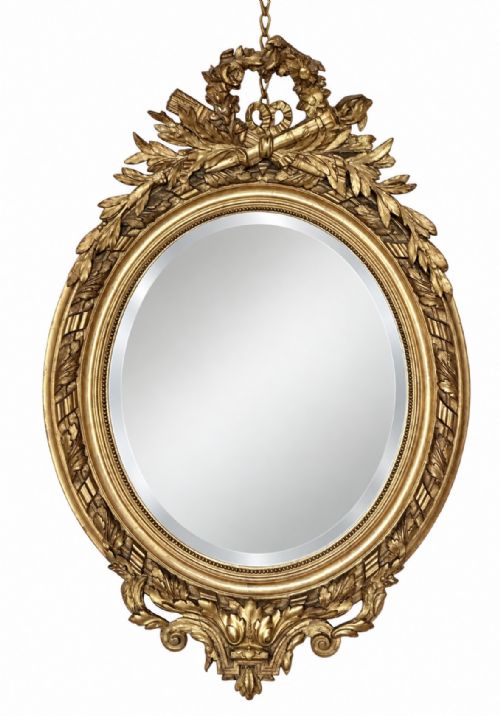
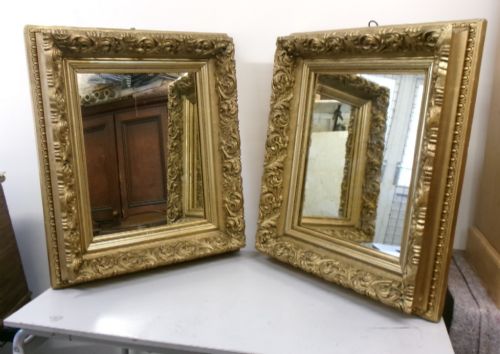
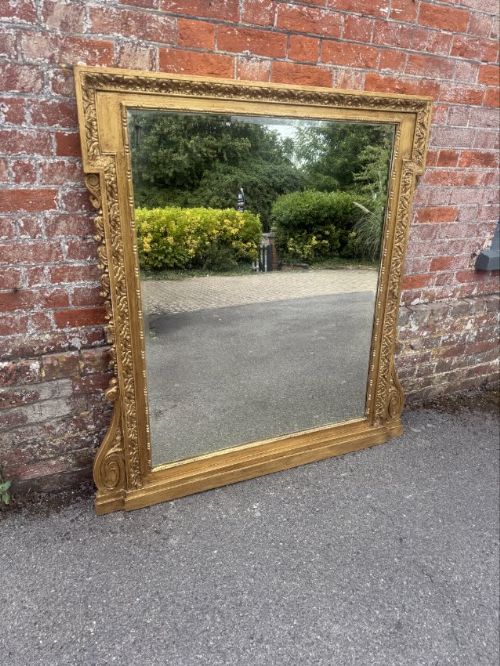
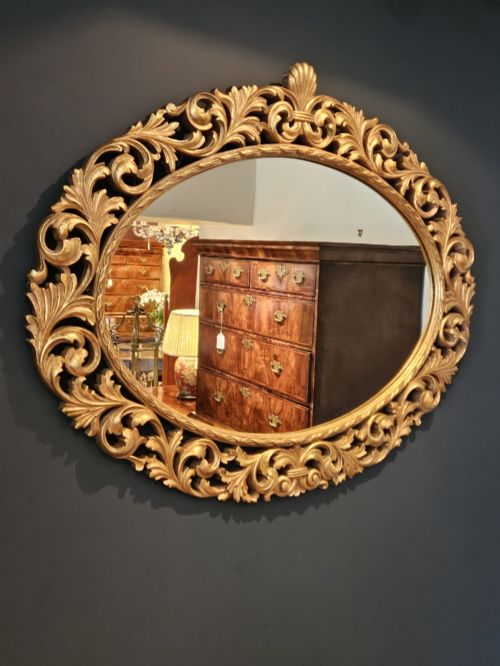
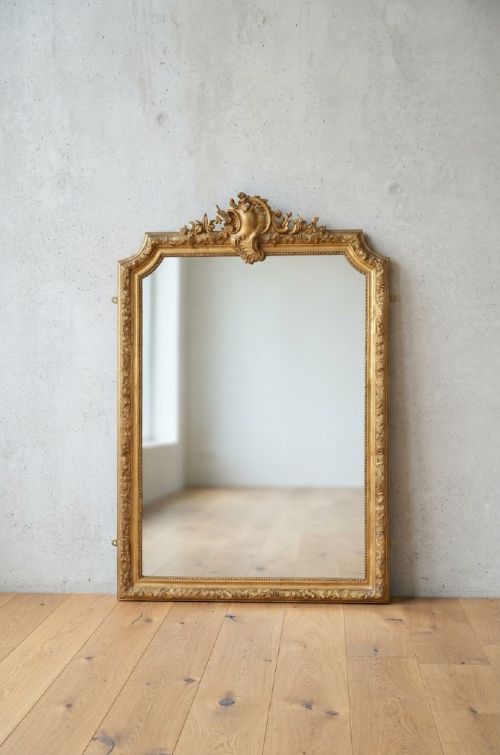
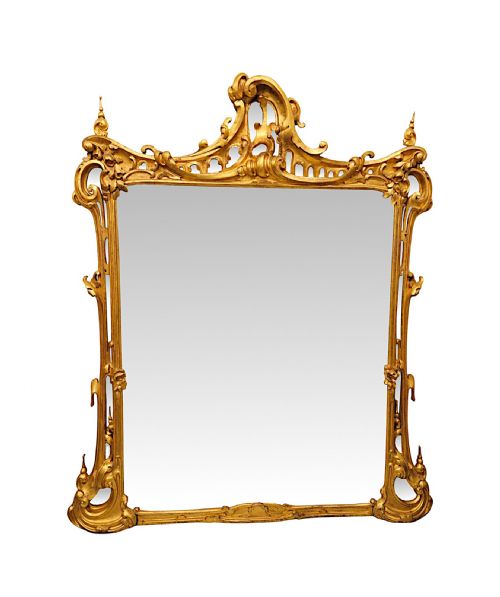
Ornate Giltwood Wall Mirror
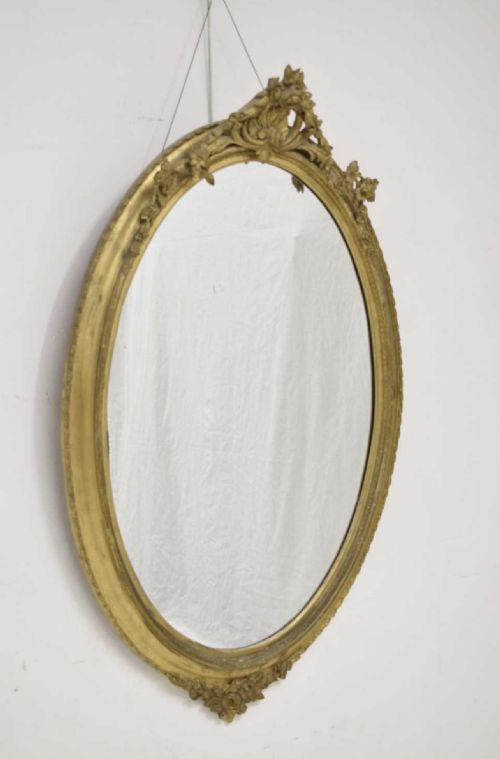
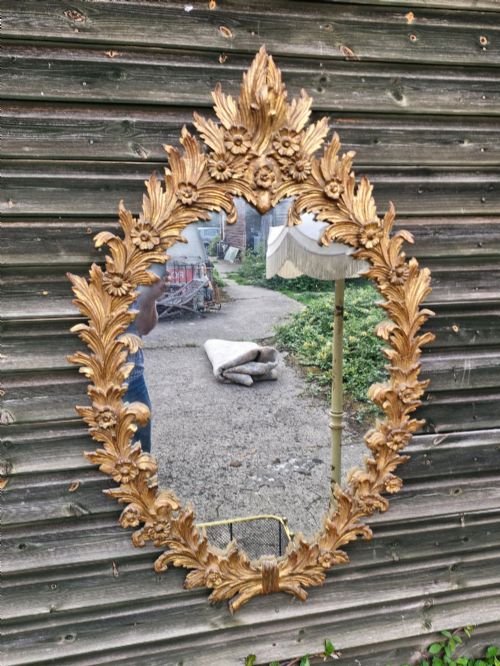
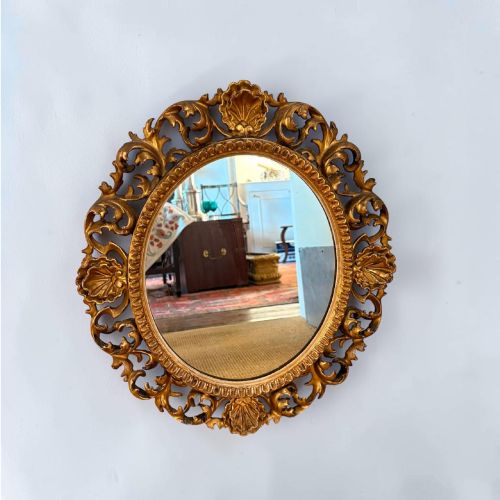
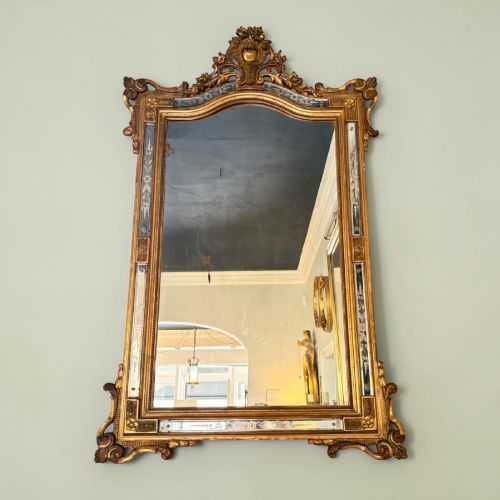
An ornate giltwood wall mirror brings commanding scale and light into a room through carved decoration and a reflective plate.
Ornate Giltwood Wall Mirror
An ornate giltwood wall mirror serves as a decorative focal point, frequently hung above mantelpieces or console tables. These pieces encompass large overmantel formats, pier glasses, and smaller oval or rectangular wall mirrors.
Nineteenth-century examples dominate the selection, spanning Victorian, Rococo Revival, and French styles alongside earlier eighteenth-century Venetian and Georgian pieces. The construction ranges from grand architectural overmantels designed for high ceilings to twin-arm girandoles fitted with candle sconces.
How they were made
Makers shaped wooden frames from timber, applying layers of gesso to build up intricate relief ornaments before gilding the surface with gold leaf. Carved wooden details combine with moulded composition ornaments to achieve the dense scrollwork, floral motifs, and classical moulding seen across these periods.
Reflective surfaces rely on traditional mirror glass, occasionally retaining period mercury plates or showing natural foxing from age. Frames employ a foundation of timber or carved wood, finished with gold leaf or silver-gilt applications.
Several mirrors incorporate tiny candle sconces designed to bounce flickering light off the gilt frame.
What varies in quality
The depth and crispness of the carving dictate visual weight, distinguishing hand-carved wooden frames from repetitive composition mouldings. Superior examples demonstrate fluid symmetry in scrollwork and secure joins in large structural frames.
The integrity of the gilding and the condition of the mirror plate itself determine the longevity and visual richness of the piece. High-grade items retain original gilding layers and heavy bevelled mirror glass without excessive distortion.
The Ornate Giltwood Wall Mirror Glossary
- Giltwood
- Wood that has been coated with gold leaf or gold paint. This technique provides the signature metallic warmth seen on antique frames.
- Gesso
- A plaster-like mixture applied to wood frames to create a smooth base for carving and gilding. Artisans model this substance into relief ornament before applying gold leaf.
- Overmantel mirror
- A large mirror specifically designed to hang above a fireplace mantel. These expansive plates often feature architectural framing to anchor principal reception rooms.
- Girandole
- A decorative wall mirror fitted with attached candle sconces or display brackets. The reflective glass multiplies the candlelight within the room.
- Foxed glass
- Mirror plate showing dark spots and patches caused by the degradation of the silver backing over time. This characteristic indicates considerable age and adds atmospheric depth to the reflection.
Ornate Giltwood Wall Mirror: Frequently Asked Questions
Where should I hang an overmantel mirror?
These large pieces sit naturally above a fireplace mantel to reflect light and anchor the vertical space of a room.
Alternatively, position them on a main salon wall above a console table to create a similar architectural balance.
How do I identify a nineteenth-century frame?
Examine the construction materials behind the gilding, noting the presence of gesso over carved wood or composition ornaments.
Nineteenth-century pieces frequently display Victorian, Rococo Revival, or French Louis XV stylistic influences.
What is foxed glass?
Foxed glass refers to the speckled, mottled ageing spots that develop on older mirror plates as the backing oxidises.
This natural weathering process proves the antiquity of the glass without diminishing the decorative appeal.
Can these mirrors be hung safely on plaster walls?
Due to the substantial weight of carved timber, gesso, and heavy glass, secure fixings into structural wall studs are essential.
Large overmantel formats often require professional installation using heavy-duty brackets.