
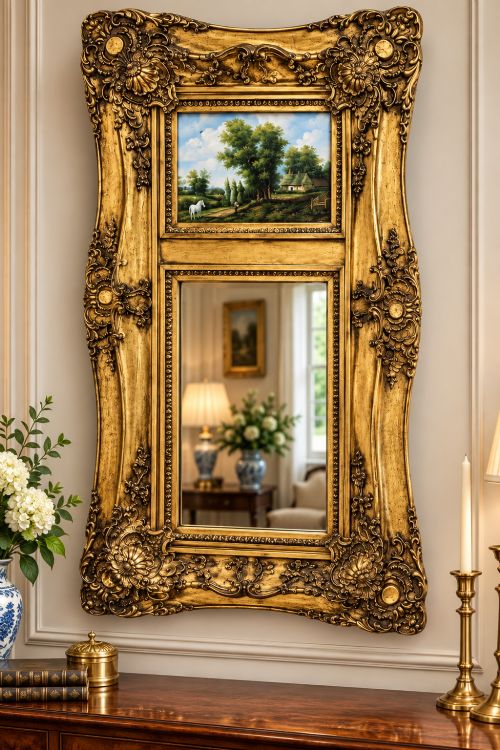


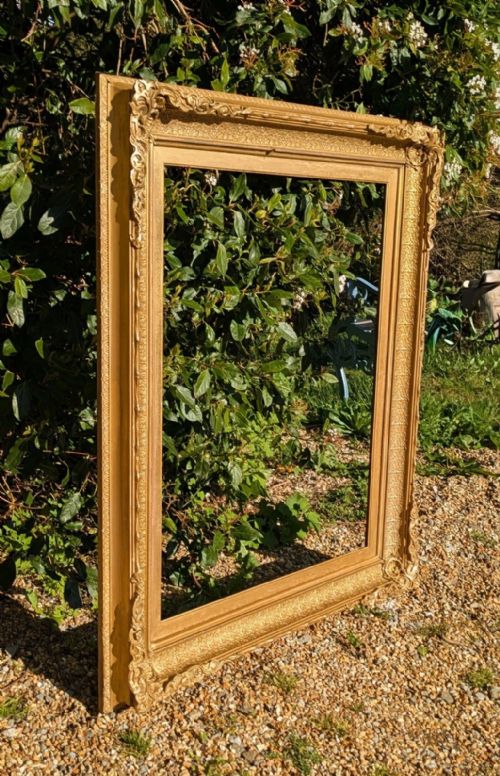


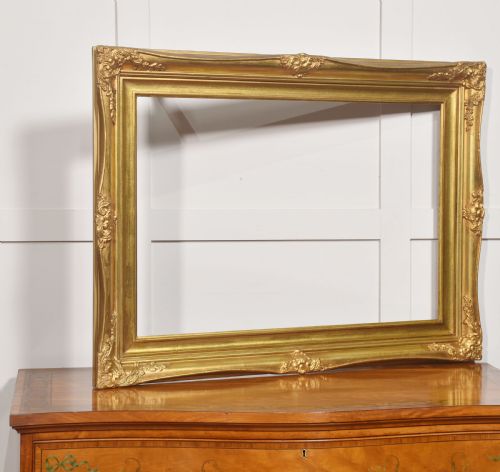

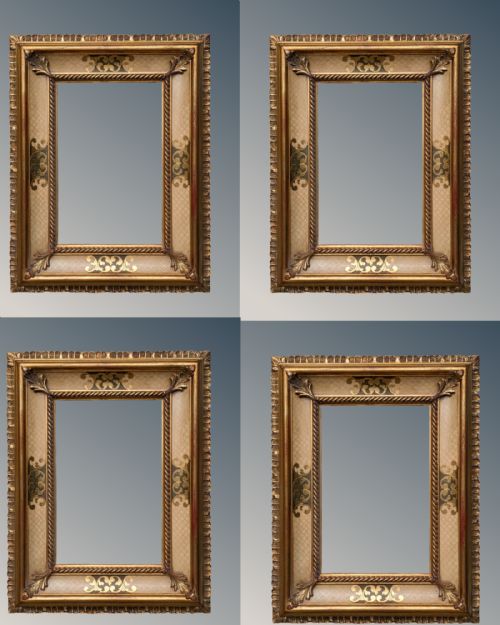

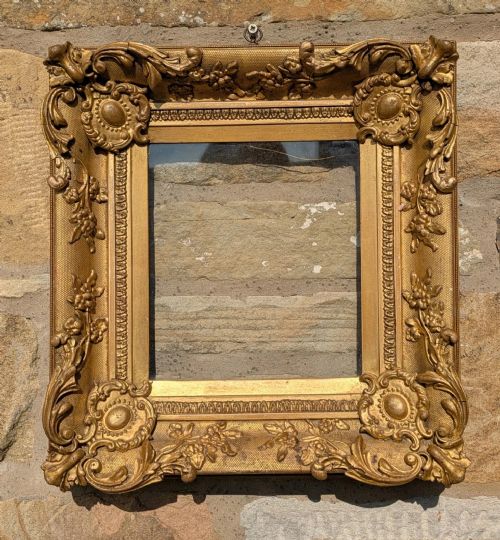


Ornate Giltwood Framed Picture
An ornate giltwood framed picture brings golden warmth and period presence to a wall, combining carved timber and oil paint.
Ornate Giltwood Framed Picture
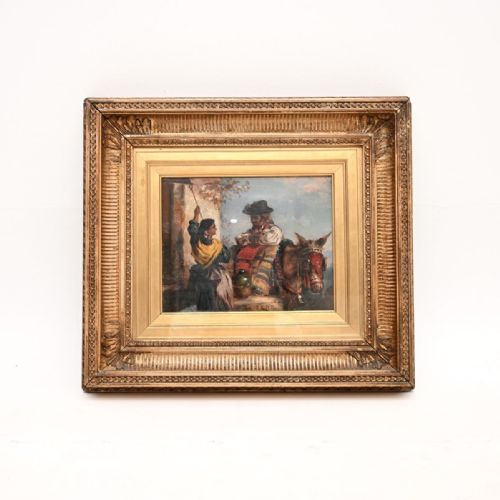
An ornate giltwood framed picture brings together painted canvas and heavily decorated wooden surrounds, uniting art and ornament in a single object. Buyers seeking an ornate giltwood framed picture typically encounter nineteenth century pieces, Victorian examples, and continental imports displaying deep mouldings.
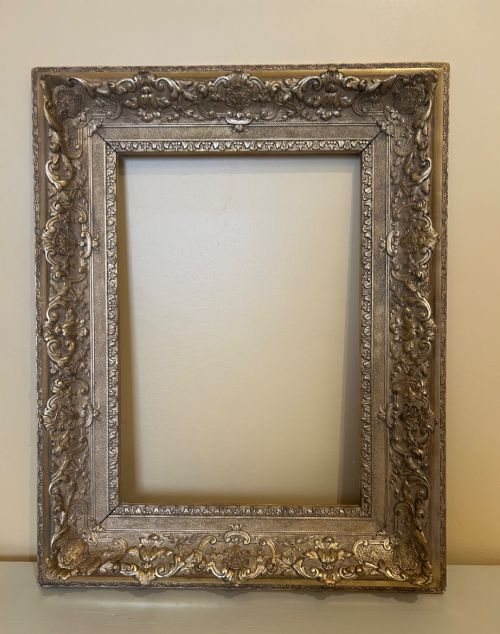
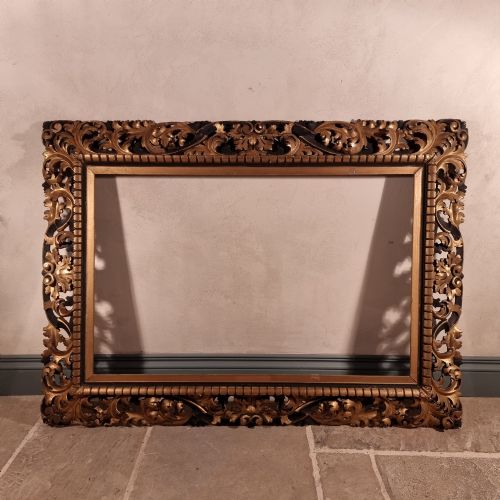
The selection ranges from empty picture frames designed for portraits and landscapes to complete works featuring oil paintings on canvas. Rococo revival flourishes and Florentine carvings dominate the forms, offering substantial decorative impact for domestic interiors.
How they were made
Makers constructed the structural frames from timber, applying layers of gesso to build up the intricate relief decoration before gilding the surface with gold leaf. Artisans carved floral motifs, scrolls, and lions' heads directly into the wood or moulded them in gesso to achieve high, dramatic relief.
Canvases received oil paint applied by academic artists and regional painters, securing the artwork within the rebate of the heavy wooden borders. Guild techniques ensured the gold leaf adhered firmly to the prepared gesso ground, creating a brilliant reflective sheen.
A fierce lions head keeps watch from one gesso moulding, daring viewers to question the calm landscape tucked inside.
What varies in quality
Depth of carving and sharpness of detail separate standard framing from exceptional craftsmanship, particularly where gesso ornaments meet timber grounds. The crispness of rococo scrolls and the integrity of the gold leaf finish indicate the original skill level of the workshop.
Proportion and scale dictate visual success, with deeper frames offering greater architectural presence on a wall. The harmonious relationship between the canvas subject and the surrounding gilt moulding determines the overall aesthetic weight.
Renato Moretti·Thomas Kent Pelham·John Arthur Lomax·Claude Cardon·George Goodwin Kilburne·William Mellor·Thomas E Francis·Francesco Bergamini
The Ornate Giltwood Framed Picture Glossary
- Giltwood
- Timber that has been gilded with gold leaf. This material forms the primary reflective surface of the frame.
- Gesso
- A plaster mixture applied to wood frames to create a smooth base for carving and gilding relief details. It allows for sharp decorative flourishes.
- Cassetta
- A flat-profile frame style with moulded inner and outer edges, typical of Italian Renaissance design. It provides a structured border for classical paintings.
- Rococo
- An ornate artistic style characterised by asymmetrical scrolls, C-curves, and naturalistic plant motifs. It heavily influences nineteenth century revival frames.
Ornate Giltwood Framed Picture: Frequently Asked Questions
How do I date a gilt frame?
Examine the timber construction, gesso application style, and backboards for signs of period joinery and tool marks. Nineteenth century examples often display heavier gesso buildup and machine-sawn backing timbers compared to earlier items.
Compare the stylistic motifs, such as rococo revival scrolls or Florentine carving, against known historical periods. The underlying canvas or mirror glass can also provide corroborating clues regarding age.
Can I hang these heavy frames safely?
Ensure your wall fixings engage directly with masonry or structural studs rather than relying solely on plasterboard. Due to the combined weight of dense timber, gesso, and glass or canvas, robust picture wire and heavy-duty brackets are essential.
Check the stability of the frame joints and hanging rings on the reverse before installation. Professional framing assistance is recommended for very large or exceptionally heavy pieces.
How should I clean giltwood surfaces?
Dust the carved ornament gently with a very soft, dry brush to remove surface particles without disturbing the delicate gold leaf. Avoid liquid cleaners, abrasive cloths, and chemical sprays, which can strip the thin metallic leaf from the gesso ground.
Keep the frame away from direct sunlight, radiators, and damp areas to prevent the timber from warping and the gesso from cracking. Professional conservation is advised for repairs to flaking gilding.
What is the difference between gesso and carved wood?
Carved wood involves shaping the actual timber foundation using gouges and chisels to create the three-dimensional decorative relief. Gesso is a plaster mixture applied over a simpler wooden core and then moulded or carved while semi-soft.
Many antique frames combine both techniques, using carved wooden structural elements supplemented by intricate gesso ornamentation. Close inspection under magnification often reveals the boundary between timber and plaster.