


Ornate Giltwood Armchair
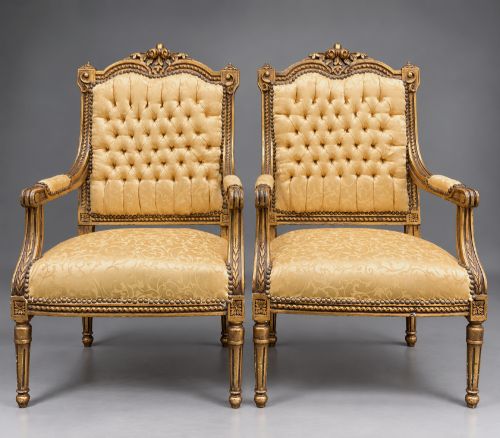
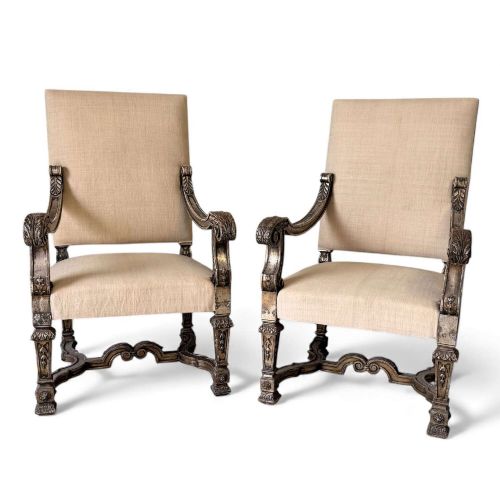
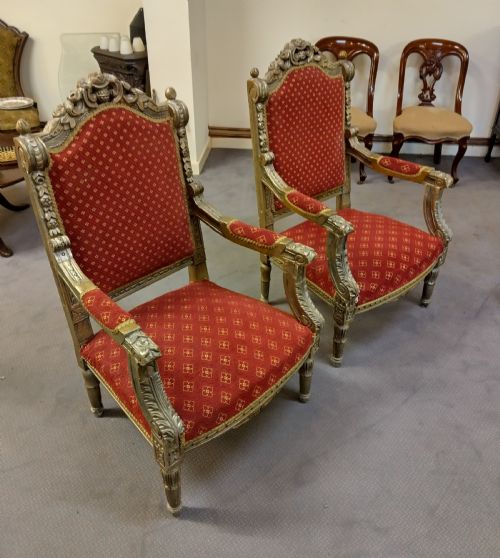
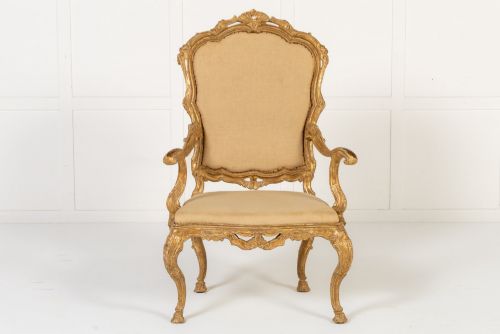
These ornate giltwood armchair examples bring dramatic French and Italian revival presence to a room through carved woodwork and gleaming metallic surfaces.
Ornate Giltwood Armchair
An ornate giltwood armchair combines a substantial wooden frame coated in gold leaf or gilt finish with upholstered seats and backs designed for grand interior settings. The pieces found on this page draw predominantly from the nineteenth century, alongside eighteenth-century Italian examples, featuring styles such as French Rococo Revival, Baroque Revival, and Napoleon III.
Buyers encounter various imposing forms within this category, including large pairs of throne chairs, salon chairs, elbow chairs, and wingback configurations. These seating options incorporate rich textile coverings like damask, linen, silk parrot design fabric, and woven tapestry held by metal tacks.
The aesthetic heritage of these chairs leans heavily into continental European design traditions, particularly French chateau and Italian decorative arts. Makers utilised deep carvings and elaborate silhouettes to create focal points for formal reception rooms and parlours.
How they were made
The construction of these seats relies on timber frameworks shaped by hand carving to produce intricate scrollwork, floral motifs, and structural curves. Artisans applied thin layers of gold leaf or gilt finishes over the prepared wooden base to achieve the signature metallic sheen characteristic of the style.
Upholstery techniques involved securing fabrics such as damask, silk, and woven tapestry directly to the wooden frame using traditional metal tacks. This combination of carved giltwood and layered textiles required skilled joinery to support the weight and ornamental demands of large armchair designs.
What varies in quality
The depth and crispness of the wood carving dictate much of the distinction between standard production and exceptional work. Finer examples display deep, undercut details on the arms, legs, and crest rails rather than shallow or purely surface-level ornamentation.
The integrity of the original gilt surface and the quality of the chosen upholstery materials also separate pieces. Chairs retaining substantial portions of period gilding alongside well-preserved textiles like silk damask or tapestry carry greater visual weight and historical character.
The Ornate Giltwood Armchair Glossary
- Giltwood
- Wood that has been covered with a thin layer of gold leaf or gesso and gold paint. This finish provides a bright metallic appearance designed to catch candlelight and natural daylight in formal rooms.
- Baroque Revival
- A nineteenth-century design movement that reinterpreted seventeenth-century Baroque exuberance. It is characterised by heavy proportions, dramatic curves, and emphatic sculptural decoration.
- Rococo Revival
- A nineteenth-century style drawing inspiration from the eighteenth-century French court aesthetic. It emphasises asymmetry, C-scrolls, floral garlands, and lighter, more fluid lines than the Baroque.
- Damask
- A reversible figured fabric traditionally woven on a jacquard loom with patterns formed by contrasting warps and wefts. It appears frequently as upholstery on formal nineteenth-century seating.
- Wingback Armchair
- A seating form featuring protective side panels attached to the backrest designed to shield the occupant from drafts. In giltwood variants, this practical shape receives ornate carved framing.
Ornate Giltwood Armchair: Frequently Asked Questions
What periods do these armchairs come from?
The listings span the eighteenth and nineteenth centuries, with a strong concentration of pieces originating in the eighteen-eighties, eighteen-seventies, and eighteen-fifties.
Revival styles from this era deliberately recreated earlier French and Italian court aesthetics for Victorian and Edwardian interiors.
How were these chairs used historically?
These grand seats functioned primarily as statement furniture in formal reception rooms, salons, and parlours rather than everyday lounging chairs.
Pairs of throne chairs and elbow chairs were often positioned symmetrically to project status and accommodate guests during formal gatherings.
What fabrics appear on the upholstery?
Original and replacement coverings include damask, linen, silk with pictorial designs like parrots, and woven tapestry fabrics.
These textiles are typically secured to the carved wooden frames using decorative metal tacks.
How do I identify a Baroque Revival chair?
Baroque Revival seating shows heavy proportions, vigorous sculptural carving, and symmetrical architectural lines inspired by seventeenth-century design.
They often incorporate high backs, substantial armrests, and deep giltwood frames.
Are these chairs sold in pairs?
Many of the listings consist of matched pairs designed for balanced placement in large drawing rooms or antechambers.
Single salon chairs and wingback variants also appear alongside these paired sets.