

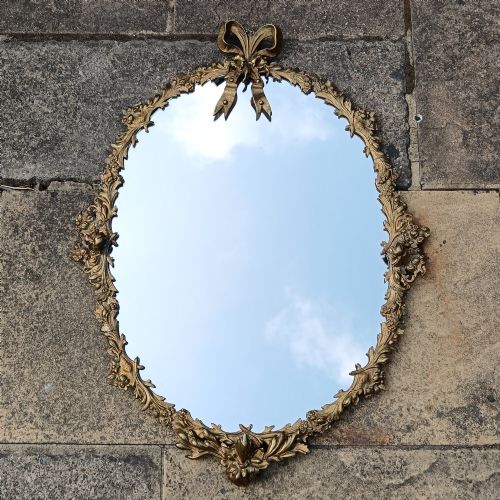

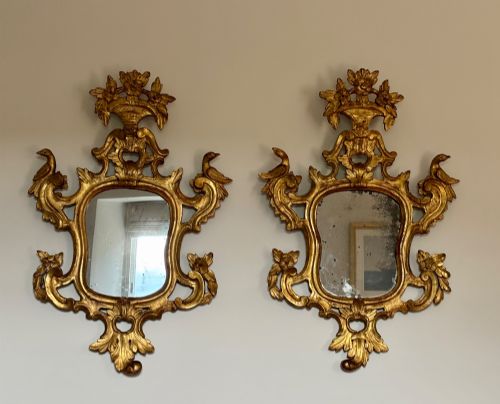
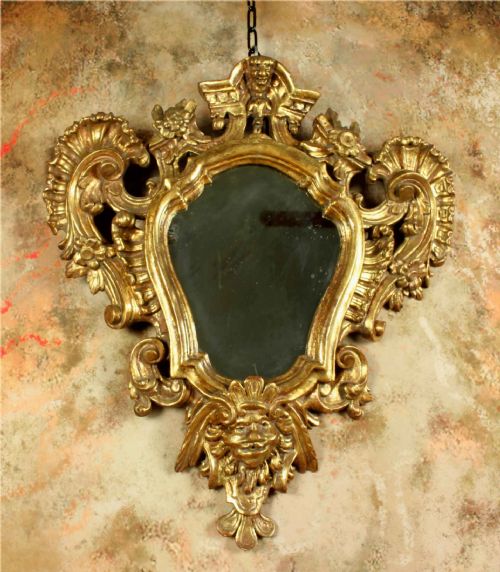
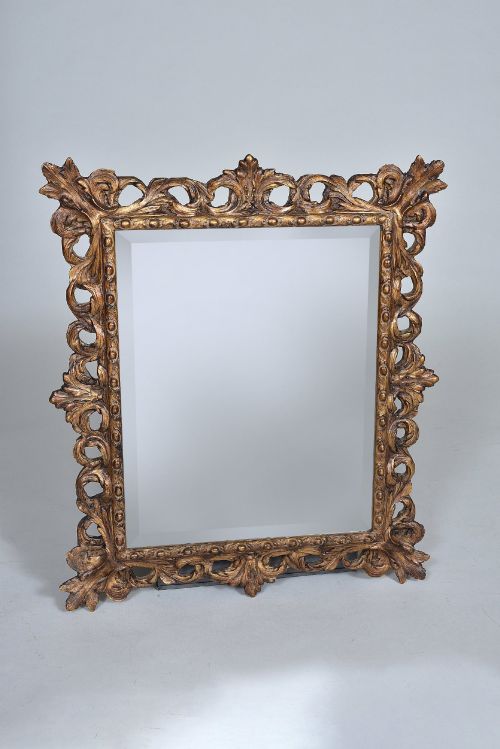
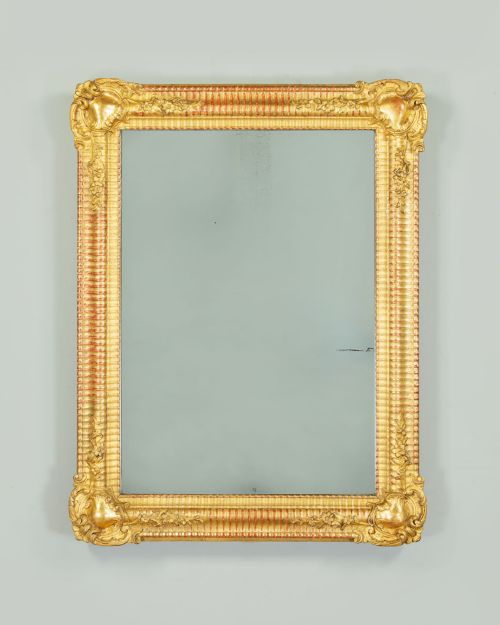

Ornate Gilt Hanging Mirror
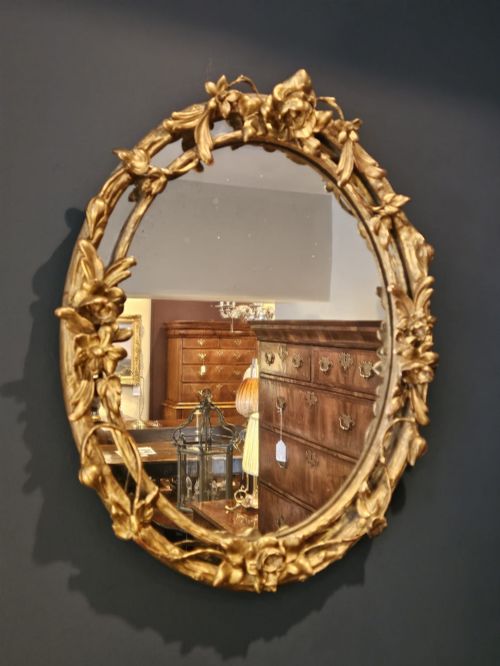
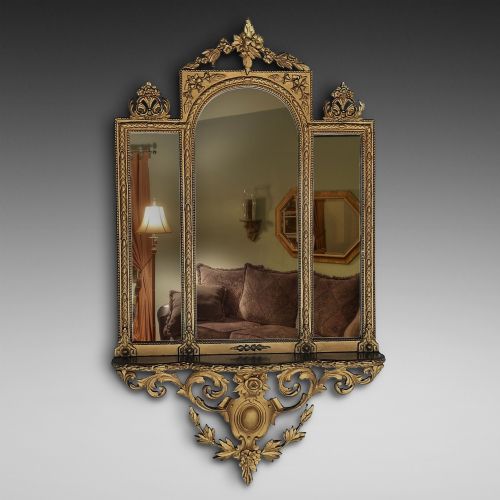
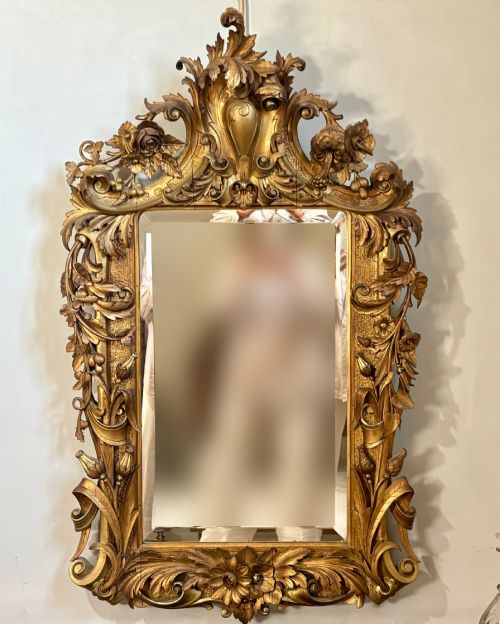
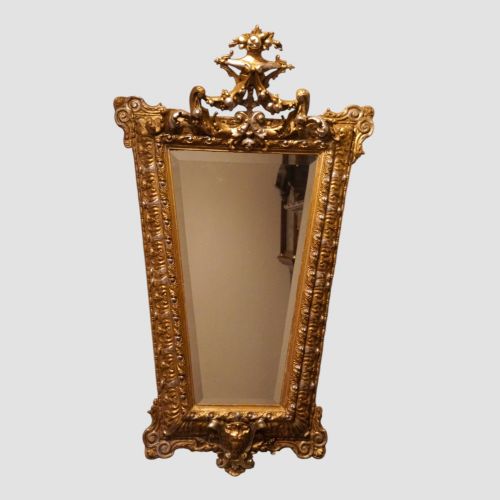
An ornate gilt hanging mirror brings warmth and depth to a room through its reflective glass and gilded frame.
Ornate Gilt Hanging Mirror
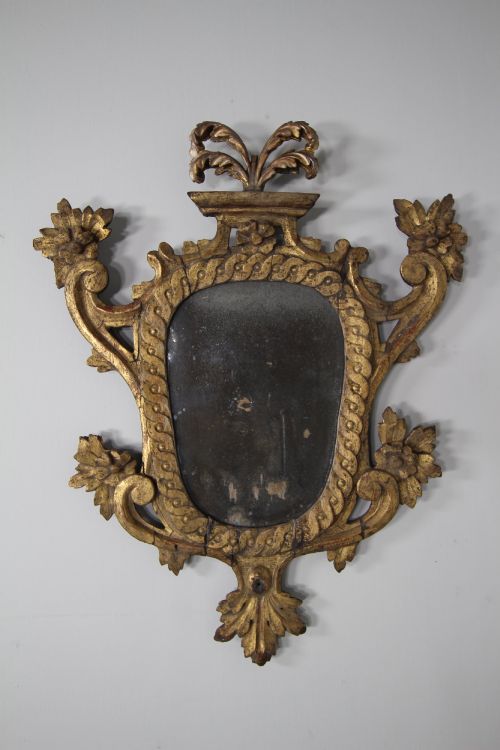
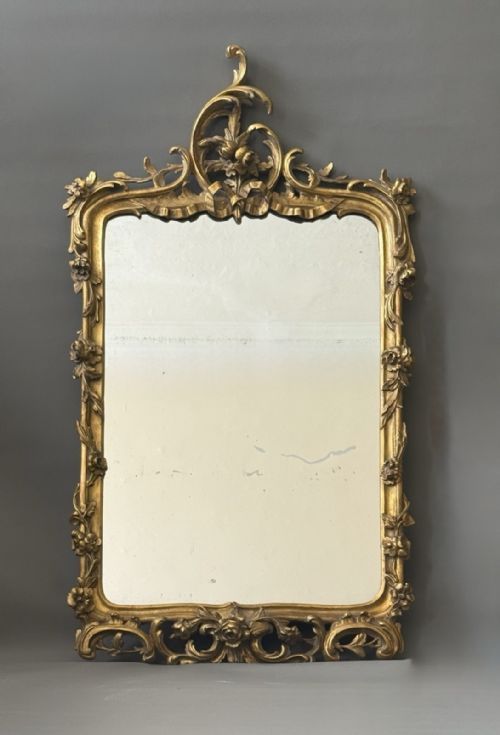
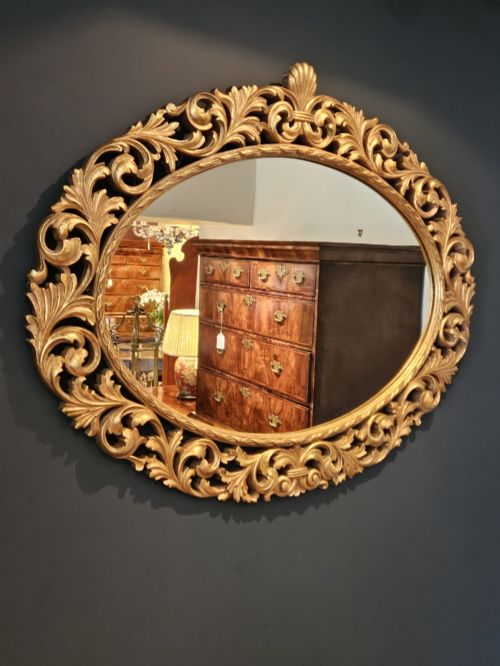
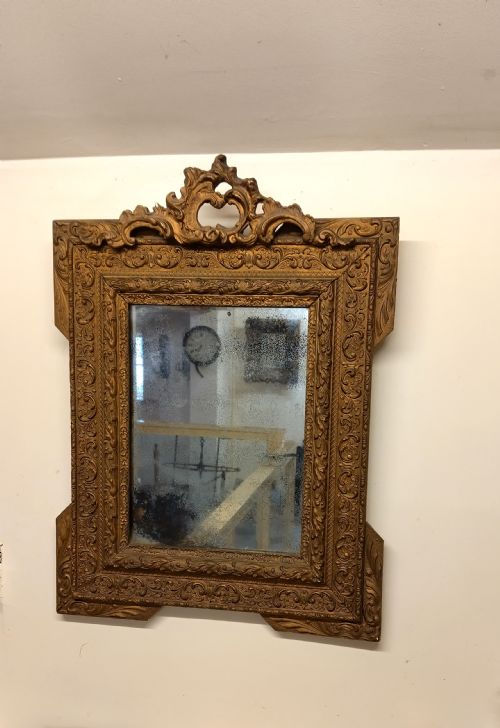
An ornate gilt hanging mirror functions primarily as a decorative wall piece while bouncing light around a interior space. When you search for an ornate gilt hanging mirror, you encounter wall mirrors, console tables with mirrors, and overmantle types originating from various periods.
The pieces span from the 17th century through the Georgian and Victorian eras into the early 20th century. French Rococo revival and Italian Florentine styles appear frequently alongside Louis XVI and Chinese Chippendale influences.
Rectangular, oval, and trapezoidal forms dominate the selection, often shaped with carved timber or gesso. These mirrors hang in domestic settings to anchor a room and provide a traditional focal point.
How they were made
Artisans built the frames using carved wood, gesso, and composition applied over timber substrates. Gilding was achieved through the application of gold leaf or silver-gilt onto prepared surfaces.
Bronze and brass casting techniques created heavy, detailed metal frames particularly in later 19th-century French and English pieces. Glass plates were cut to fit, sometimes featuring antique engraving or bevelled edges.
Several mirrors include antique plates with enough foxing to let you check your hair without seeing your faults.
What varies in quality
The depth and crispness of the hand-carved ornamentation separate standard frames from superior examples. Finely chased gilt bronze and deep relief carving in giltwood reflect higher levels of period craftsmanship.
The condition and age of the mirror plate itself contribute to overall quality. Original antique glass with subtle foxing or hand-engraved detail holds more character than later replacements.
The Ornate Gilt Hanging Mirror Glossary
- Giltwood
- Wood that has been covered with a thin layer of gold leaf. This surface treatment gives frames a bright, reflective metallic finish.
- Gesso
- A plaster-like mixture applied to wood frames to create a smooth surface for carving and gilding. Artisans moulded this paste into intricate scrolls and foliage.
- Rococo
- An artistic style characterised by asymmetry, curves, and shell motifs. This design approach appears strongly in French and Italian mirror frames from the 18th and 19th centuries.
- Pier mirror
- A tall mirror designed to hang on the wall between two windows, often placed above a small console table. These pieces extended the perceived light and space of period rooms.
Ornate Gilt Hanging Mirror: Frequently Asked Questions
How do I hang a heavy gilt mirror safely?
These heavy frames require fixing directly into wall studs or using heavy-duty masonry anchors depending on your wall type. Distributing the weight across substantial brackets ensures the wall structure supports the frame safely.
Consult a professional installer if the mirror lacks original hanging hardware or exceeds standard domestic weight limits. Secure mounting protects both the frame and the glass plate from accidental strain.
Are these mirrors made of solid gold?
The frames consist of timber, gesso, or cast metal covered with an extremely thin layer of beaten gold leaf. Solid gold would prove far too heavy and costly for architectural wall hangings of this scale.
Over the decades, this delicate gold leaf layer develops a soft patina where the underlying red bole or base material shows through. Regular dusting with a soft cloth preserves this metallic surface without wearing away the gilding.
How do I date an antique gilt mirror?
Dating relies on examining the construction methods of the wood backing, the composition of the gesso, and the style of the carving. Georgian and Victorian pieces exhibit distinct joinery and decorative motifs unique to their eras.
Inspect the mirror plate for signs of age such as minor oxidation, distortion, or hand-bevelling. Modern replacement glass often looks entirely uniform compared to original antique plates.
Can I clean the antique glass safely?
Apply a mild glass cleaner to a soft microfibre cloth rather than spraying the liquid directly onto the glass. This prevents moisture from seeping behind the plate and damaging the silver backing or the interior frame.
Keep moisture well away from the gilded edges, as water lifts gesso and gold leaf from the wood substrate. Gentle wiping maintains clarity without harming the surrounding decorative work.