



Ornate Gilt Bronze Mirror
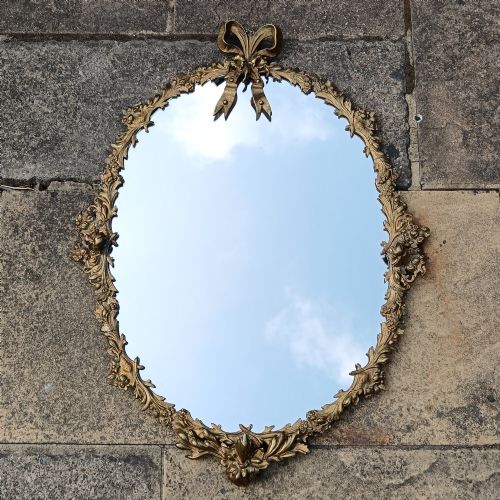
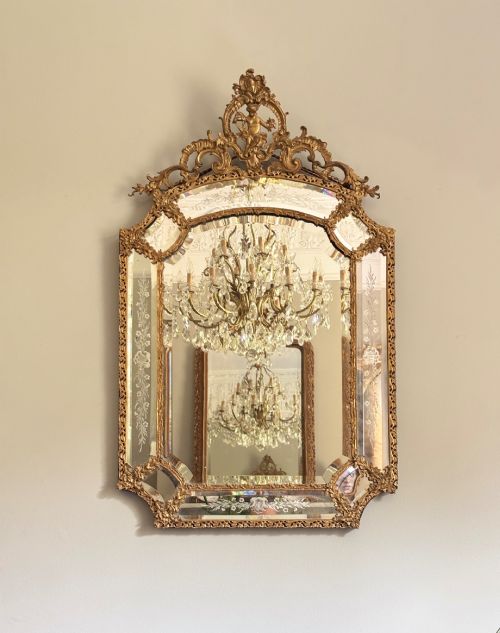
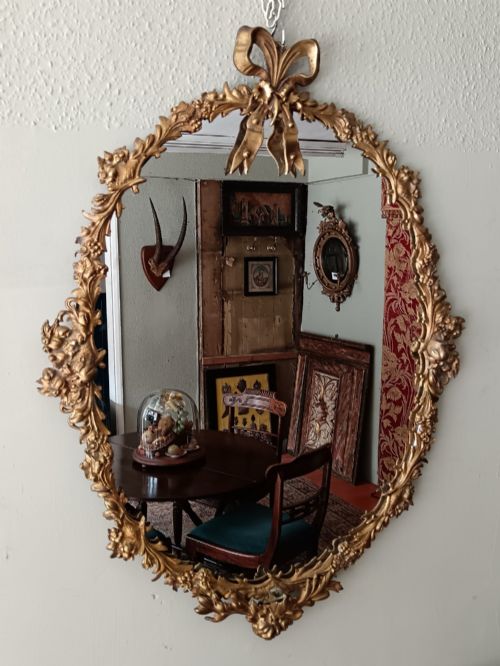
An ornate gilt bronze mirror brings heavy French metalwork and deep reflection into a room, catching light through elaborate Rococo and Louis-style framing.
Ornate Gilt Bronze Mirror
When you search for an ornate gilt bronze mirror, you encounter heavy metal frames designed for tabletops and walls. These pieces mostly date from the nineteenth century, emerging from French workshops during the Rococo Revival, Louis XVI Revival, and Napoleon III periods.
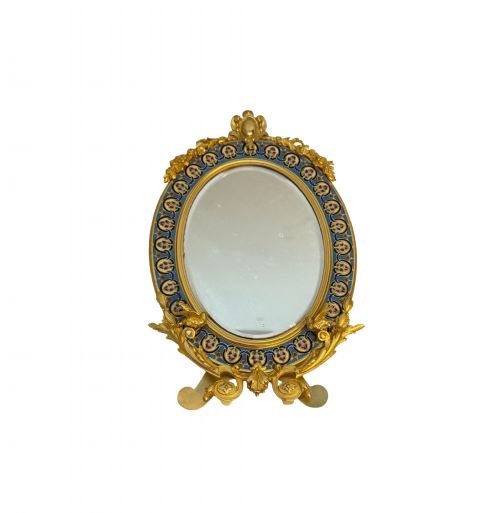
The selection on this page centres upon dressing table mirrors, vanity sets, and wall mirrors. You will regularly find oval table mirrors incorporating champleve enamel alongside the gilt bronze metalwork.
Makers produced these decorative items to sit upon credenzas or hang in principal rooms. The designs lean heavily on historical French decorative schemes, using cast metal to create extravagant scrolls, foliage, and architectural borders.
How they were made
The foundation of an ornate gilt bronze mirror rests upon cast metalwork, often supplemented by ormolu or brass. Workshops used bronze casting to achieve deeply undercut foliage, scrolls, and sculptural figures before applying a gold-coloured finish.
Many nineteenth-century examples incorporate champleve enamel directly into the frame structure. Artisans carved recesses into the bronze, filled them with vitreous coloured pastes, and fired the metal before final polishing.
Ornate Gilt Bronze Mirror Retail Price Guide 2026
Typical asking prices for ornate gilt bronze mirror among the pieces listed under this phrase on Sellingantiques today, from the lower quarter to the upper quarter. They describe what is for sale here now, not the wider market.
Some nineteenth-century vanity sets include matching hand mirrors and picture frames designed to coordinate perfectly with the main dressing table glass.
What varies in quality
The crispness of the bronze casting separates standard items from superior examples. Finer frames display sharply defined chased details in the foliage and figures, whereas lesser pieces show softer, blurred contours from worn moulds.
The integration of secondary materials dictates the overall calibre of the piece. High-quality items combine heavy fire-gilt surfaces with cleanly set champleve enamel panels, maintaining structural rigidity across large wall formats and heavy tabletop stands.
Thiebaut Freres
The Ornate Gilt Bronze Mirror Glossary
- Gilt bronze
- Bronze that has been coated with a layer of gold. This method protects the underlying metal while providing a bright metallic sheen.
- Champleve enamel
- A technique where troughs are dug into the surface of the bronze and filled with enamel before firing. It creates vibrant coloured patterns across the metal frame.
- Ormolu
- Finely ground high-carat gold mercury-gilded to a bronze object. It gives a rich yellow-gold appearance common on French nineteenth-century furniture and mirror frames.
- Rococo Revival
- A nineteenth-century design style mimicking the asymmetrical curves, scrolls, and natural motifs of the eighteenth-century French Rococo movement. Mirrors in this style feature elaborate, flowing borders.
Ornate Gilt Bronze Mirror: Frequently Asked Questions
Where should I place a table mirror?
These mirrors suit dressing tables, chest tops, or sideboards where their decorated backs and easel stands remain visible. They function well on deep wooden surfaces that complement the dark bronze tone.
Keep them away from direct moisture in bathrooms to protect the mercury or silver backing of the glass and the integrity of the gilt surface.
How do I distinguish Rococo from Louis XVI style?
Rococo frames rely on asymmetrical curves, swirling foliage, and C-scrolls without straight lines. They create a sense of organic movement around the glass.
Louis XVI pieces introduce symmetry, straight borders, neoclassical ribbons, and architectural urns, reflecting a return to classical proportions.
Are these mirrors heavy?
Solid cast bronze frames possess considerable weight, particularly when combined with thick bevelled glass and enamel panels. Wall-mounted versions require secure fixings into masonry or heavy studwork.
Tabletop variations rely on sturdy rear easel stands or weighted bases to prevent tipping.
Can I clean the bronze frame?
Dust the frame gently with a dry, soft cloth to prevent particulate buildup in the recessed chased details. Avoid abrasive cleaners or metal polishes that strip the surface gilt.
Professional conservation is recommended if oxidation or heavy grime obscures the original finish.