



Venetian Style Mirror
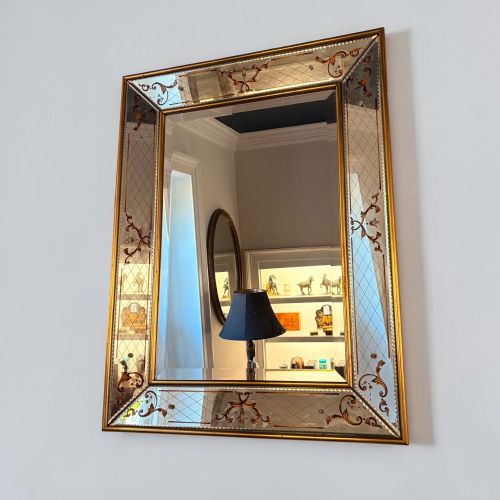
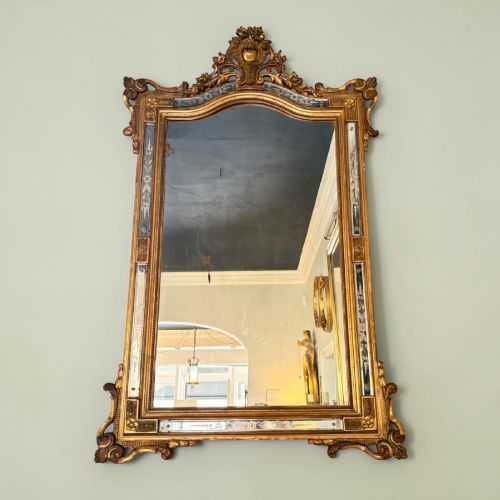
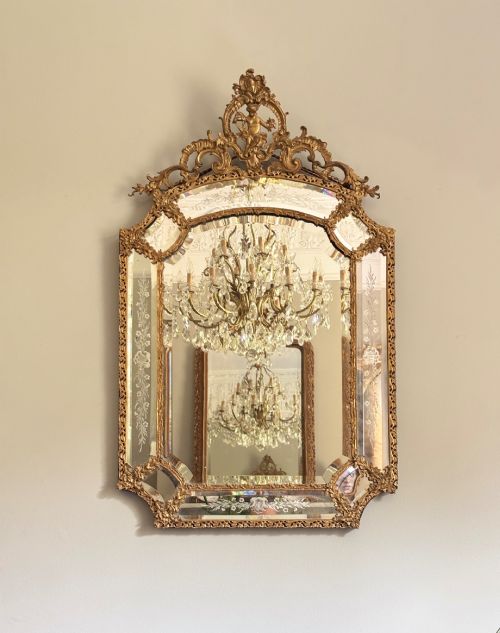
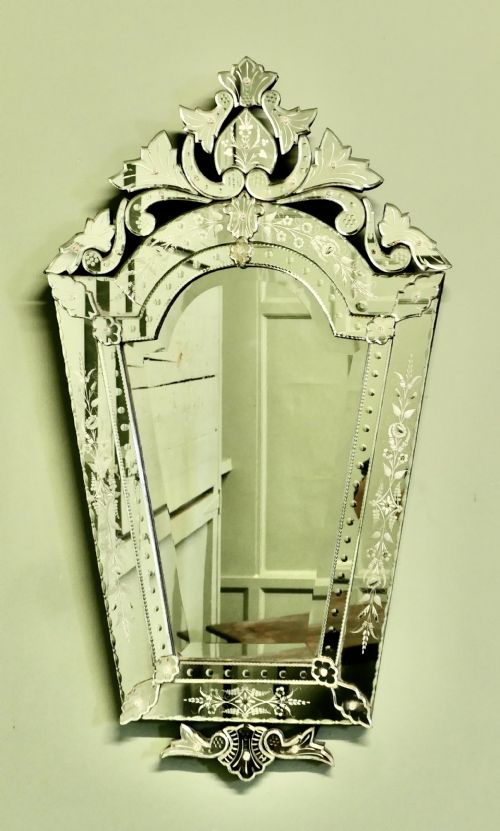
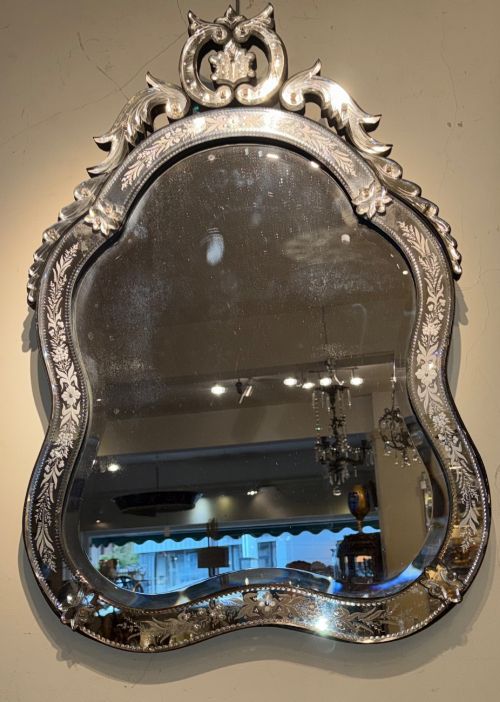
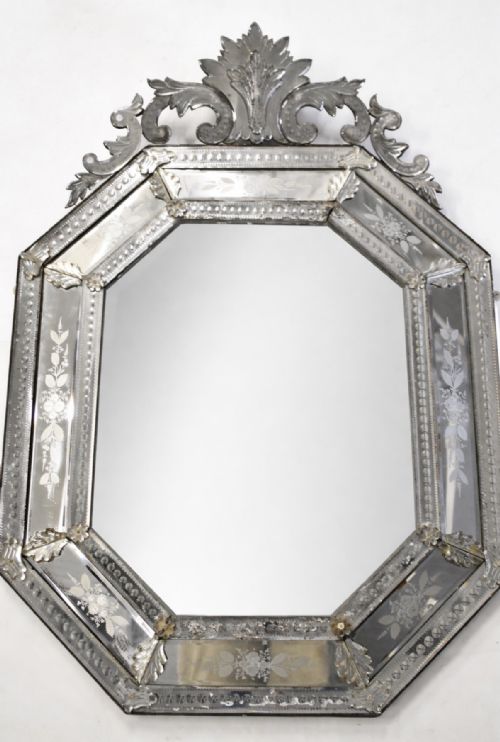
These venetian style mirror pieces bring remarkable etched detail and layered plate glass to a room, offering the unmistakable elegance collectors seek.
Venetian Style Mirror
A venetian style mirror brings decorative etched glass and ornate frames into domestic spaces, drawing on centuries of Italian craftsmanship. When you examine this selection, you encounter pieces that range from nineteenth-century cushion mirrors to twentieth-century examples.
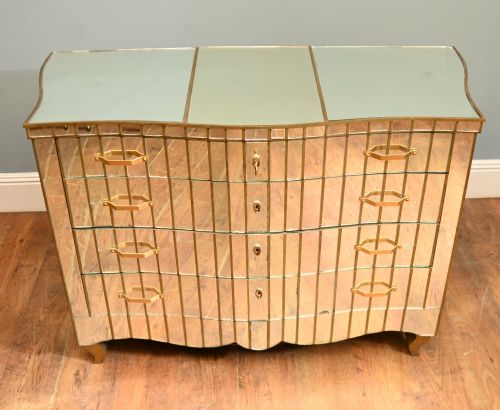
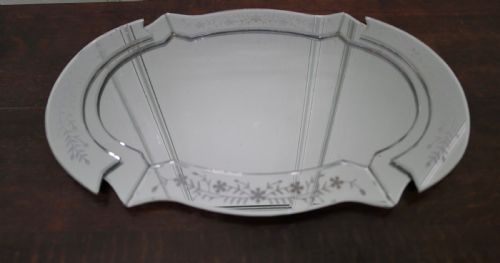
The objects listed here span wall mirrors, pier glasses, and occasional items such as mirrored chests of drawers and serving trays. Nineteenth-century examples often display deep cushion moulding and engraved marginal plates, while later twentieth-century iterations lean toward cleaner art deco silhouettes.
Materials and construction
Makers constructed these frames using timber foundations such as giltwood, gesso, and ebonised wood, applying gold leaf or paint finishes by hand. Carved details often incorporate floral motifs and scrolling flourishes characteristic of rococo designs.
The glass elements rely on intricate techniques including eglomise decoration, marginal etching, and cut-glass pediments. Artisans assembled these mirrors using multiple plate sections secured with decorative glass pins over wooden backs.
Form variations across the site include traditional wall mirrors, pier glasses, commodes with mirrored drawer fronts, and serving trays.
Factors of quality
Quality depends heavily on the crispness of the glass engraving and the depth of the frame carving. Superior examples feature hand-cut plates with precise floral etchings rather than simpler pressed glass substitutes.
The preservation of original gilding and the integrity of the secondary frame materials also dictate standard. Pieces retaining their original backing boards and undamaged cobalt blue or clear marginal strips command greater appreciation among collectors.
The Venetian Style Mirror Glossary
- Cushion mirror
- A mirror with a convex, sloping outer frame panel composed of multiple angled glass sections. This design creates a distinctive multi-faceted reflection around the central plate.
- Eglomise
- A technique involving the application of gold or silver leaf onto glass, combined with painting and etching from the reverse side. It produces a rich, decorative border with a metallic sheen.
- Margin-edged mirror
- A mirror where the main central glass plate is surrounded by smaller, separately secured marginal glass strips. These border pieces are frequently bevelled or engraved.
- Girandole pier glass
- A tall wall mirror designed to hang between windows, typically incorporating attached candle sconces on the frame. They reflect natural light deeper into period rooms.
- Gesso
- A plaster-like mixture applied to wooden frame substrates to provide a smooth surface for gilding and carving. It allows artisans to shape intricate relief ornamentation.
Venetian Style Mirror: Frequently Asked Questions
How do I hang a heavy venetian mirror safely?
These mirrors often carry substantial weight due to their multi-layered glass plates and wooden framing. Ensure your fixings engage directly with wall studs or utilise appropriate heavy-duty masonry anchors.
Professional mirror hangers recommend using a split batten system to distribute the load evenly across the structure of the frame rather than relying on a single central wire.
How can I tell a nineteenth-century mirror from a later copy?
Examine the reverse of the mirror and the composition of the glass plates. Older plates frequently display subtle distortions, hand-beveiling irregularities, and oxidation spots within the silvering.
The backing boards, fixing nails, and the quality of the gesso application beneath the gold leaf also provide reliable chronological indicators.
What is the best way to clean antique mirrored glass?
Avoid harsh commercial cleaning sprays that can seep behind marginal plates or damage fragile eglomise work. Use a soft, dry microfibre cloth to remove dust from the glass and carved frame surfaces.
If moisture is necessary, apply a small amount of distilled water to the cloth rather than spraying directly onto the glass or wooden elements.
Where should I place a pier glass in a room?
Historically, pier glasses hung on the wall space between two windows to maximise available daylight. In modern interiors, they work effectively above mantelpieces or console tables to create an illusion of greater spatial depth.
Consider the angle of opposing light sources to make the most of the engraved marginal plates and bevelled edges.