



Gilt Bronze Vanity Mirror
A gilt bronze vanity mirror brings nineteenth-century French elegance to a dressing room with heavy gilt mounts and bevelled glass.
Gilt Bronze Vanity Mirror
When you search for a gilt bronze vanity mirror, you encounter decorative table mirrors, toilet mirrors, and dressing table mirrors originating mostly from nineteenth-century France. These pieces range from small hand mirrors to large oval tabletop frames supported by sturdy stands.
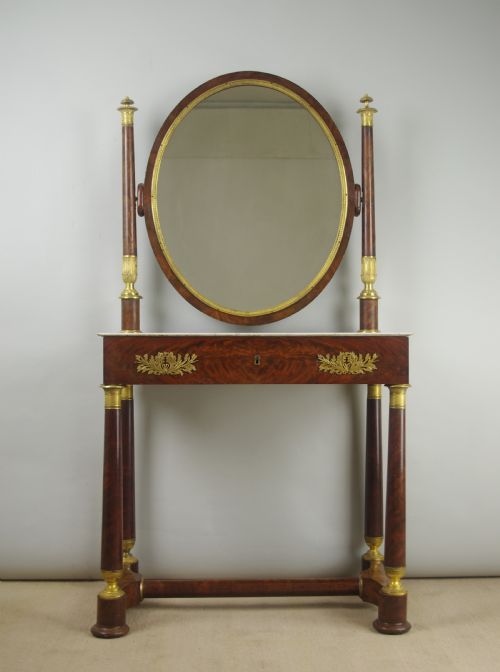
The most common versions on this page are French Empire and Rococo Revival pieces, often incorporating materials such as marble, mahogany, and walnut alongside the principal metalwork. They sit on dressing tables or mantelpieces, designed to reflect light and add ornate detail to a room.
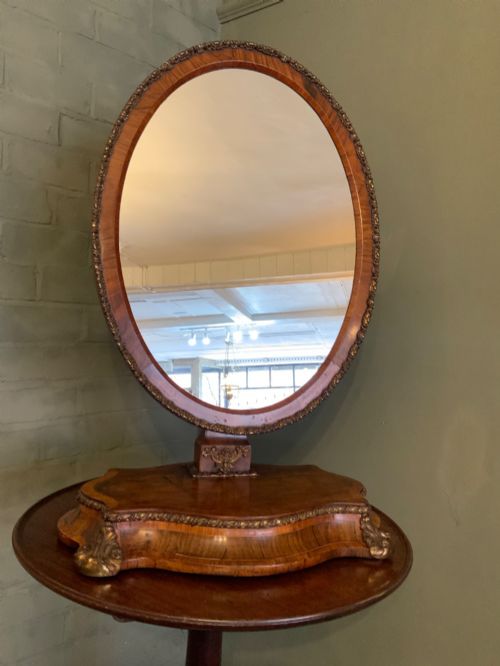
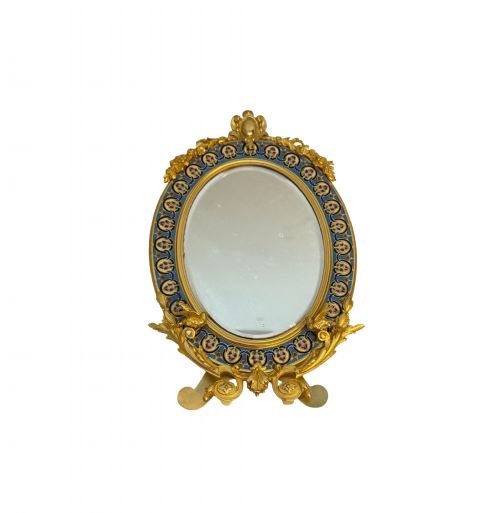
Many examples feature architectural adjustments, such as pivoting frames on pedestals, or decorative embellishments like porcelain plaques and enamel work. Their forms vary from simple rectangular frames to elaborate oval designs surrounded by scrolling foliage.
Materials and construction
The construction relies heavily on cast bronze, finished with fire gilding or ormolu to achieve a bright, durable metallic surface. Artisans shaped these metals through detailed casting and chiselling, creating three-dimensional motifs typical of the period.
Secondary materials such as champleve enamel, Sevres porcelain, and Limoges plaques were integrated into the bronze frames using specialised bezel settings and pins. Structural elements frequently combine mahogany, walnut, and white marble to provide stable bases for the heavy metal mirrors.
Gilt Bronze Vanity Mirror Retail Price Guide 2026
Typical asking prices for gilt bronze vanity mirror among the pieces listed under this phrase on Sellingantiques today, from the lower quarter to the upper quarter. They describe what is for sale here now, not the wider market.
Listings feature materials including glass, gilt bronze, ormolu, enamel, bronze, marble, walnut, and mahogany across nineteenth-century pieces.
Factors that distinguish quality
The crispness of the bronze chasing and the depth of the gilding set superior examples apart from standard production pieces. Master founders ensured that floral motifs and figural details retained sharp edges and smooth, polished highlights.
The integration of secondary decorative elements, such as fired enamel panels or hand-painted porcelain, indicates the level of workshop execution. Superior pieces maintain tight joints in their pivoting mechanisms and use thick, heavy glass without distortion.
Thiebaut Freres·Joseph Meissonnier·F.Bienvue
The Gilt Bronze Vanity Mirror Glossary
- Ormolu
- A gold-coloured alloy of copper and zinc applied to bronze objects through a mercury amalgamation process or later electroplating. It provides a bright, lasting finish that resists tarnishing.
- Champleve
- An enamelling technique where troughs or cells are hollowed out of the metal surface and filled with vitreous enamel powder before firing. This creates colourful decorative patterns flush with the metal.
- Rococo Revival
- A nineteenth-century design style drawing on eighteenth-century French motifs, characterised by asymmetrical C-scrolls, shell work, and naturalistic floral arrangements. It dominates much of the decorative metalwork of the era.
- French Empire
- A neoclassical style spanning the early nineteenth century, inspired by ancient Roman and Greek designs. It favours symmetrical geometry, military trophies, and classical proportions.
Gilt Bronze Vanity Mirror: Frequently Asked Questions
How do I clean a gilt bronze vanity mirror?
Dust the bronze frame gently with a soft, dry brush to prevent dirt accumulation in the chased crevices. Avoid using chemical polishes, as abrasive liquids can strip the delicate gold surface.
Clean the glass mirror plate with a standard glass cleaner applied to a cloth rather than sprayed directly onto the frame. Keep moisture away from any enamel or porcelain inserts to protect the mounting adhesives.
What is the difference between ormolu and gilt bronze?
Ormolu specifically refers to gilded bronze created through historical mercury-gilding techniques, though the term is often used interchangeably with gilt bronze today. Both involve applying a gold layer over a bronze base to create a durable, golden metallic finish.
Pieces from the nineteenth century may utilise either term depending on the exact manufacturing method and period terminology. The visual effect remains similar, offering a warm metallic lustre that does not tarnish easily.
Are these mirrors adjustable?
Many table and vanity mirrors feature pivoting hinges or pedestal mounts that allow the glass frame to tilt to different angles. This mechanism helped users adjust the reflection for grooming and dressing.
Examine the side screws or pivot pins to see if the angle can be tightened or adjusted by hand. Solid bronze fittings ensure the mirror holds its position securely once set.