



Antique Ormolu Wall Mirror
An antique ormolu wall mirror brings brilliant gilt metalwork and reflective depth into a room, capturing nineteenth-century French and English taste.
Antique Ormolu Wall Mirror
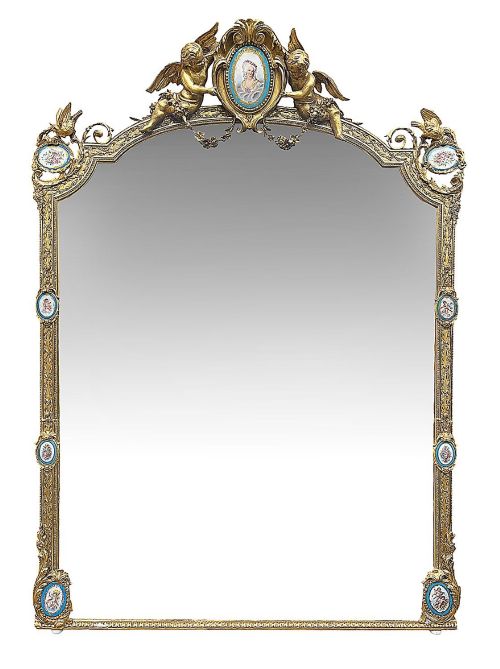
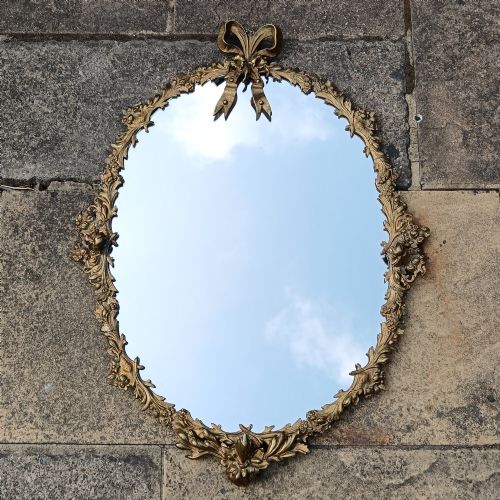
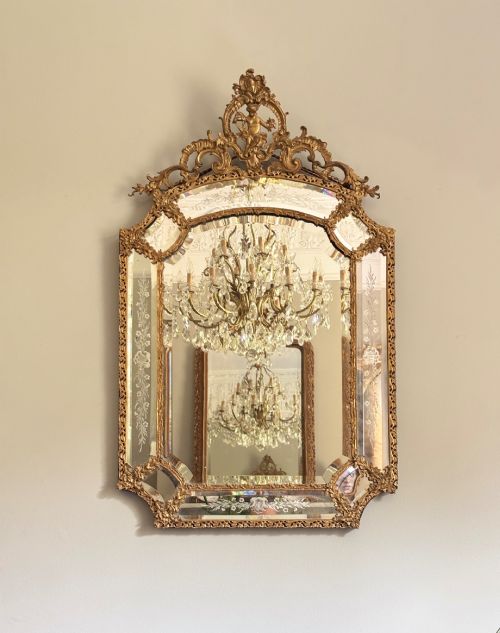
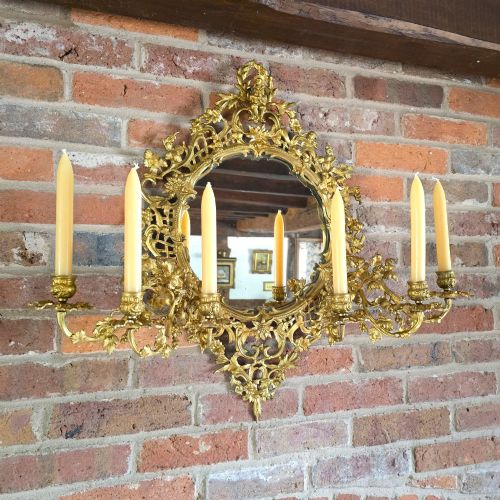
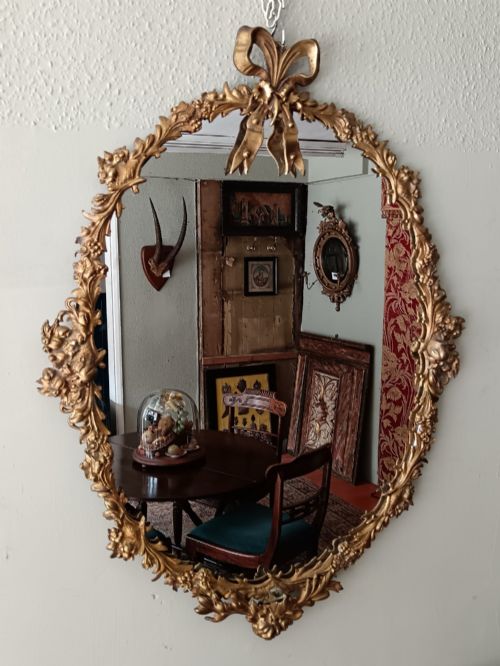
An antique ormolu wall mirror combines glass and heavily cast gilt bronze or ormolu mounts, frequently taking the form of wall mirrors, overmantels, and girandoles. These objects originate largely from nineteenth-century France and England, spanning periods from the eighteen-sixties to the early twentieth century.
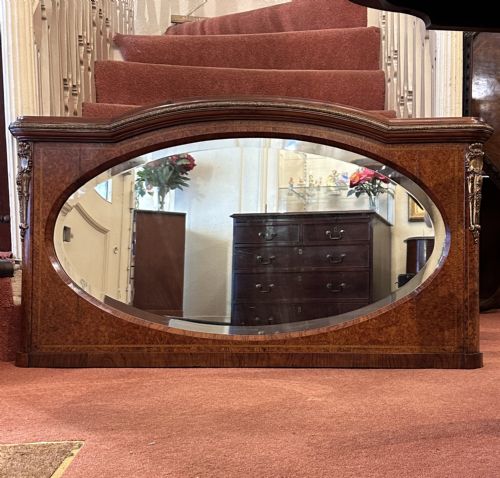
Buyers meet varied styles on this page, dominated by Rococo Revival, Louis XVI Revival, and French Empire Revival designs. Forms range from oval wall mirrors with elaborate crestings to large overmantel mirrors with domed tops and associated console tables or wall sconces.
The materials paired with ormolu include mahogany, burr yew-wood, walnut, and marble, alongside hanging wall cabinets and crystal details. Pieces appear singly or as matched pairs, showing the decorative ambition of nineteenth-century interiors.
How they were made
The manufacture of these mirrors relies heavily on fire-gilding or mercury gilding processes for the bronze mounts, or electrogilding on brass bases, creating the characteristic rich golden surface known as ormolu. Artisans chased and chiselled the cast metal mounts by hand to achieve crisp detail before fixing them to timber frames.
Wooden carcases in mahogany, walnut, and burr yew-wood provide the structural support for the heavy glass and metal elements. Frames are joined securely to bear the weight of cast ormolu appliques, candelabra branches, and marble or crystal components.
Antique Ormolu Wall Mirror Retail Price Guide 2026
Typical asking prices for ormolu wall mirror among the pieces listed under this phrase on Sellingantiques today, from the lower quarter to the upper quarter. They describe what is for sale here now, not the wider market.
Listings feature nineteenth-century and early twentieth-century pieces, incorporating mahogany, burr yew-wood, walnut, crystal, and marble alongside ormolu.
What varies in quality
Quality rests in the crispness of the bronze chasing and the depth of the gilding on the ormolu mounts. Finer examples show sharp relief and careful hand-finishing across acanthus leaves and scrollwork, whereas lesser pieces rely on softer, shallower castings.
The selection of cabinet timbers and the integrity of the original glass plate distinguish better examples. Sound construction in woods like burr yew or figured mahogany paired with heavy, well-cast mounts marks the upper tier of production.
The Antique Ormolu Wall Mirror Glossary
- Ormolu
- Gilt bronze, derived from the French term for ground gold. It involves applying a gold amalgam to bronze and heating it.
- Girandole
- A decorative wall mirror featuring attached candle branches or sconces. The candleholders reflect light directly into the room from the glass.
- Overmantel mirror
- A large horizontal mirror designed to hang specifically above a fireplace mantelpiece. These often incorporate architectural pediments or domed tops.
- Rococo Revival
- A nineteenth-century design style mimicking the asymmetrical curves, C-scrolls, and naturalistic motifs of the eighteenth century. It employs exuberant ornamentation in wood and metal.
Antique Ormolu Wall Mirror: Frequently Asked Questions
How do I clean antique ormolu?
Dust gently with a soft, dry brush to protect the delicate gilt surface. Avoid harsh chemical cleaners that strip the historic gilding.
Keep moisture away from the metal and timber joints. Professional advice should be sought for deep conservation work.
Where should I hang an overmantel mirror?
These mirrors suit placement directly above a fireplace mantel in a reception room or principal parlour. Their scale allows them to anchor large wall spaces.
Ensure wall fixings are robust enough to support the combined weight of the timber frame, glass, and heavy metal mounts.
How do I spot Empire Revival style?
Empire Revival pieces draw on classical Roman, Greek, and Egyptian motifs popular during the nineteenth century. Expect symmetrical designs featuring mahogany woods and martial or architectural ormolu mounts.
Columns, laurel wreaths, and sphinxes frequently appear on these formal mirrors and associated console tables.
Are these mirrors usually French?
Many nineteenth-century ormolu mirrors originate from French workshops following Rococo or Louis XVI revival patterns. English makers also produced comparable pieces, sometimes combining imported mounts with domestic timbers.
Stylistic cues and framing techniques generally indicate the likely country of manufacture.