





Ornate French Plant Pedestal
An ornate french plant pedestal brings classical drama to a corner, lifting greenery or sculpture on a column of marble, brass, or carved timber.
Ornate French Plant Pedestal
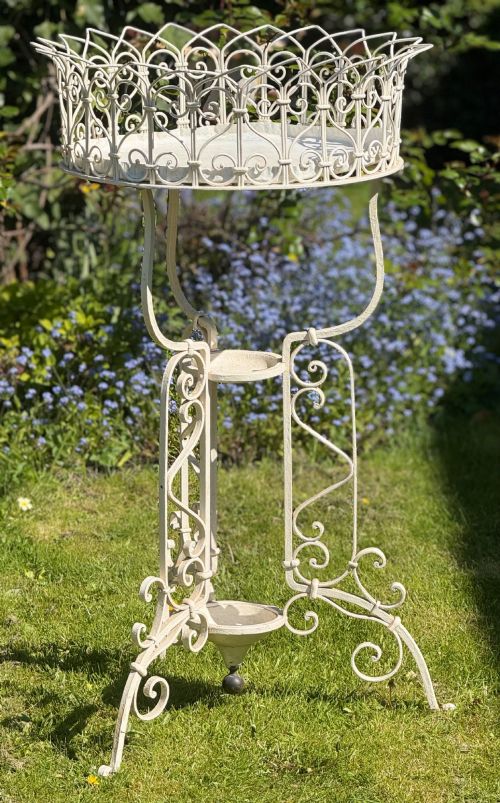
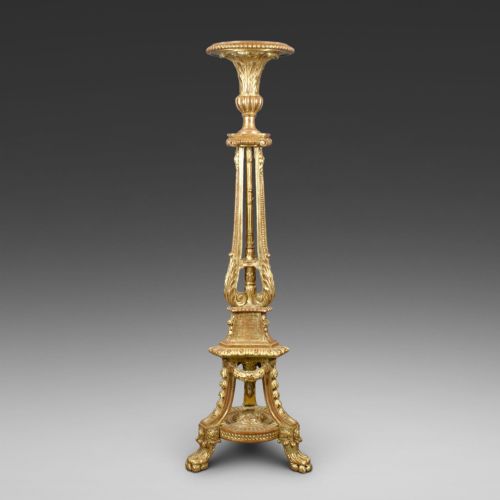
An ornate french plant pedestal takes the form of a tall stand, torchere, or small table designed to elevate flora and decorative objects within a room. When you search for an ornate french plant pedestal, you encounter tall columns and jardiniere stands drawn from nineteenth-century and early twentieth-century traditions.
The pieces appearing on this page span several distinct stylistic revivals, notably Rococo Revival, Neoclassical, and Louis XVI style. Makers drew inspiration from French chateau aesthetics and Belle Epoque elegance to produce decorative supports for the home.
Forms range from multi-tiered plant stands and gueridons to marble-topped torcheres and occasional tables. These structures serve primarily to display plants, busts, and lamps at elevated heights.
How they were made
Construction relies heavily on a combination of heavy natural stone tops and sturdy metal or timber frames. Carved giltwood, gesso, walnut, and mahogany provide structural support while adding decorative warmth.
Metal elements incorporate cast and wrought iron alongside chiseled brass, often paired with contrasting stone surfaces. Insets of marble, onyx, and alabaster form smooth, durable upper surfaces designed to withstand moisture from potted plants.
Surface ornamentation employs traditional gilding and carving techniques characteristic of French regional workshops. Artisans shaped timber into cabriole legs and fluted columns, applying gilt finishes to accentuate intricate motifs.
Materials across these listings include marble, brass, mahogany, onyx, walnut, giltwood, gesso, and wrought iron.
What varies in quality
Quality rests upon the selection and integration of materials, particularly the choice of dense natural stones and substantial timber or cast metals. Heavier, solid components provide better stability for elevated displays than lighter composite substitutes.
The refinement of surface work separates standard production from finer examples. Crisp carving in giltwood, precise chiselling on brass mounts, and polished stone tops indicate higher levels of workshop execution.
The Ornate French Plant Pedestal Glossary
- Torchere
- A tall, slender stand designed to hold a light source or decorative object. These pieces frequently feature elongated shafts and raised platforms.
- Jardiniere
- An ornamental container or stand specifically built to hold plants and flowers. They often incorporate waterproof inserts or fitted trays.
- Gueridon
- A small French table supported by one or more columns, commonly topped with marble. Originating in the seventeenth century, the form persisted through later revival periods.
- Giltwood
- Timber treated with a thin layer of gold leaf or gold paint over a prepared ground. This finish provides a bright, reflective surface characteristic of formal French furniture.
- Onyx
- A banded variety of chalcedony utilised for decorative tabletops and decorative inlays. Its translucent layers offer distinctive natural patterning.
Ornate French Plant Pedestal: Frequently Asked Questions
How were plant stands used?
These elevated surfaces held potted plants and heavy florals to bring greenery closer to natural light near windows. They also served as display pedestals for bronze sculptures and portrait busts.
Positioned in corners or flanking doorways, they broke up monotonous wall lines and added vertical interest to formal entertaining rooms.
Where should I place a pedestal?
A pedestal suits empty corners, hallways, or narrow wall spaces where standard furniture leaves awkward gaps. Placing one near a light source enhances the foliage or sculpture displayed on top.
Ensure the floor is level so that heavy stone tops and tall columns remain completely stable.
How do I clean marble tops?
Wipe marble surfaces with a soft, damp cloth and dry them immediately to prevent water spotting. Avoid acidic cleaners or household detergents that can etch the polished stone.
Using protective pads underneath flower pots helps prevent moisture rings and scratches on the stone.