

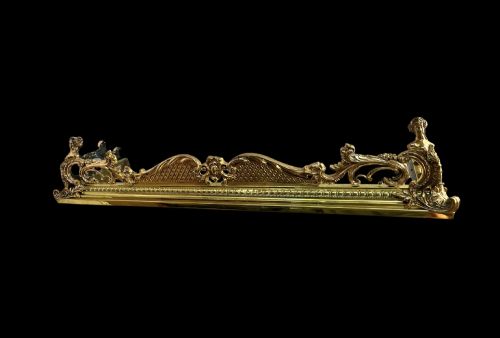
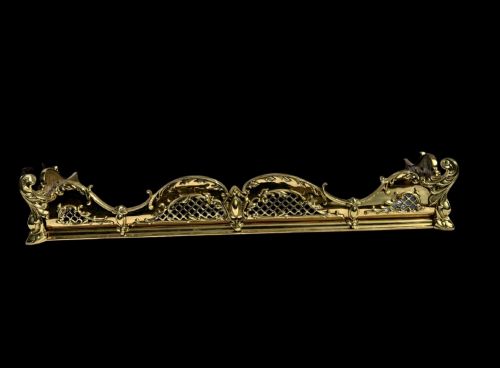


Ornate Fireplace Curb
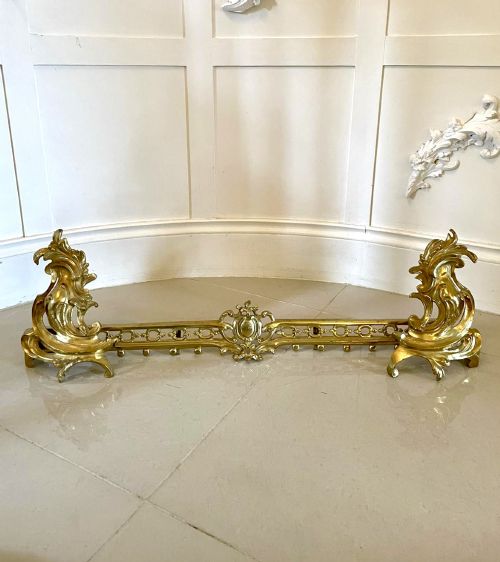
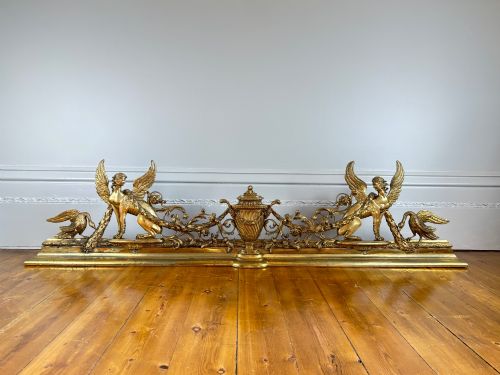
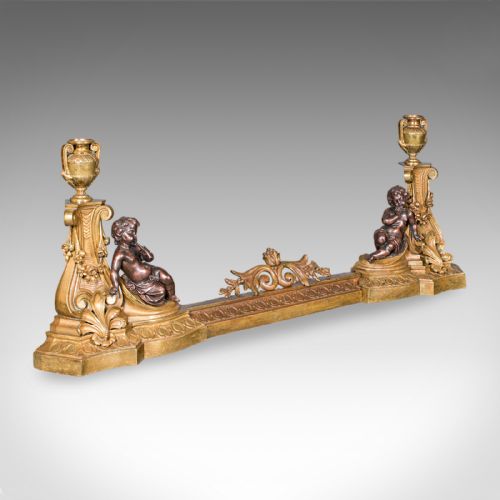
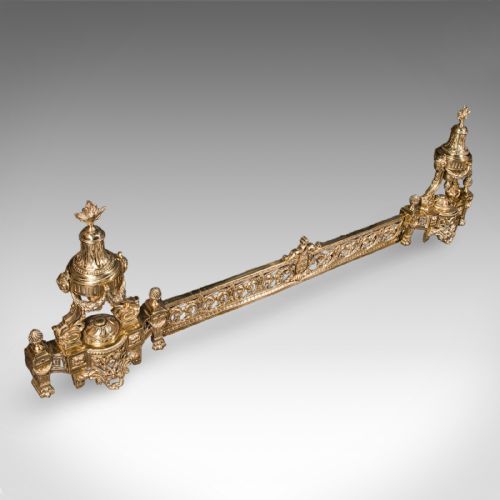
An ornate fireplace curb frames the hearth with metalwork, bringing structure and detail to the Victorian fireplace.
Ornate Fireplace Curb
An ornate fireplace curb, also catalogued as a fender or hearth fender, sits directly on the floor in front of the fireplace opening. These metal barriers stop stray embers from reaching the carpet or floorboards while completing the hearth arrangement.
The pieces on this page are predominantly Victorian productions alongside French Rococo and Neoclassical revival designs. You will encounter extending brass frames, heavy cast iron structures, and elaborate gilt-bronze creations bearing decorative garlands.
Makers and workshops from both England and France produced these items to suit formal drawing rooms and sitting rooms. The selection includes adjustable examples designed to fit varying hearth widths.
How they were made
Foundry workers utilised brass, cast iron, bronze, and steel to construct these hearth barriers. Techniques included sand casting for heavy iron components and precise metalworking for extending brass rails.
Surface decoration involved applied ormolu, gilt-bronze, and polychrome finishes. Makers also incorporated cast brass garlands and pierced metalwork into the frames to achieve intricate French Rococo and Louis XV styling.
Materials recorded across the inventory include brass, cast iron, gilt bronze, ormolu, steel, and copper.
What varies in quality
Construction weight separates standard hearth furniture from superior examples. Heavy cast iron and substantial brass or bronze components indicate higher grade production.
The crispness of the casting and the depth of the gilding or ormolu finish dictate the visual standard of the piece. Pierced metalwork and applied garlands executed with precision distinguish finer workshops from simpler commercial outputs.
E F Caldwell New York
The Ornate Fireplace Curb Glossary
- Fender
- A low metal guard placed around the hearth to contain coals and ash. It also serves to frame the fireplace opening.
- Ormolu
- Finely ground high-carat gold cast and chased onto a bronze base. This technique creates a rich decorative surface seen on French pieces.
- Cast iron
- An iron-carbon alloy poured into moulds to create rigid structural forms. It provides weight and durability for Victorian hearth guards.
- Neoclassical revival
- A style reviving classical Greek and Roman motifs during the nineteenth century. It appears on fenders through symmetrical lines and restrained ornament.
Ornate Fireplace Curb: Frequently Asked Questions
How do I measure for a fireplace curb?
Measure the width of your hearth opening and the depth available in front of the surround. Many period pieces feature adjustable mechanisms to help fit specific hearth dimensions.
Ensure you account for any protruding hearth stones so the metal frame sits squarely on the floor.
Can I adjust the width of these fenders?
Many nineteenth-century examples incorporate a sliding centre section designed for width adjustment. This mechanism allows the frame to span different hearth sizes.
Check the listing details to confirm if a specific piece is fixed or adjustable before purchase.
How do I clean an antique brass fender?
Dust the metal gently with a soft cloth to remove surface particles. Avoid harsh chemical polishes that can strip original patination and historical finishes.
Professional care is recommended for gilt-bronze or ormolu surfaces to preserve the delicate metalwork.
Are these fenders safe for an active fireplace?
These metal barriers were originally designed to catch falling embers from coal and wood fires. Cast iron and heavy brass constructions withstand hearth heat effectively.
Confirm the stability of the frame and keep combustible materials at a safe distance during use.